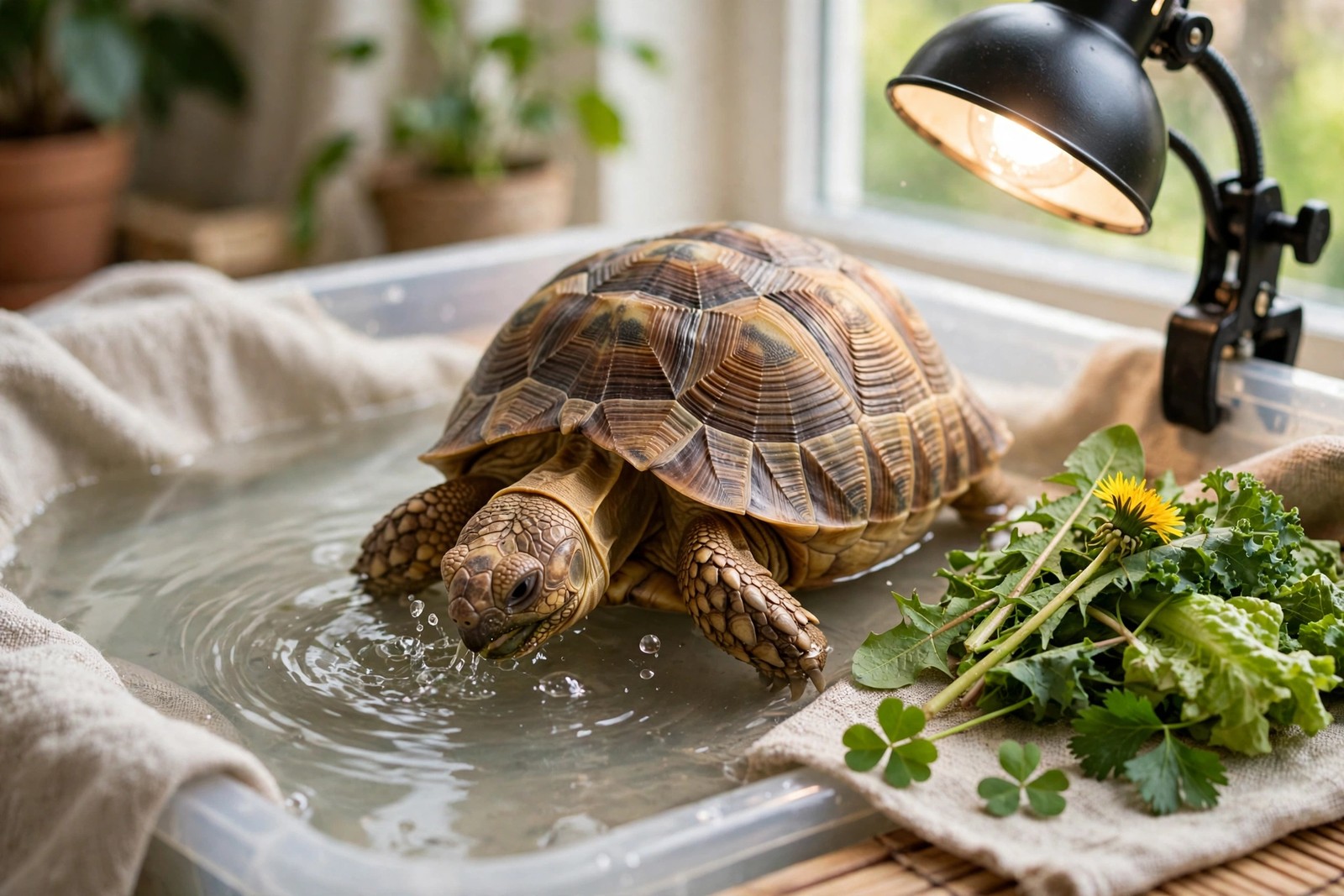
A tortoise does not wake from brumation the way a mammal wakes from sleep. The body restarts in stages — warmth first, then drinking, then digestion, then real appetite — and feeding that ignores the order of those stages works against a recovery that patience would have made smooth. Diet changes in the waking period are mostly about sequence and restraint: the right foods, in the right order, in amounts that follow the tortoise's lead.
Hydration Comes Before Food
Offer hydration first. Lukewarm soaks — shallow, comfortably warm water the tortoise can sit in and lower its head to drink from — are the standard keeper practice in the waking days, offered regularly while the tortoise settles. A brumating tortoise has gone months without drinking, and its systems restart more safely rehydrated. Many tortoises drink deeply in the first soaks and pass waste in the water, both of which are welcome signs that the plumbing is awake. Fresh drinking water stays available in the enclosure at all times alongside the soaks.
Restore the Full Heat and Light Cycle
Appetite follows temperature. Restore heat and lighting to the full normal cycle as the tortoise wakes — the proper basking opportunity and the full day length the species keeps in its active season — because a tortoise that cannot warm up properly cannot digest properly, and food offered to a cool tortoise sits rather than nourishes. Give the tortoise the choice of its warm and cool zones and let it shuttle as it wishes; a tortoise choosing the basking spot for longer each day is a tortoise whose appetite is on its way.
First Foods: Familiar Greens, Small Amounts
When interest in food appears, start with small amounts of familiar leafy greens — the weeds and leaves this tortoise already knows and ate readily before brumation. Familiar matters more than variety in the first days: the gut is restarting, and known foods in modest portions test it gently. Offer a small fresh pile daily, remove what wilts uneaten, and let the tortoise's interest set the pace of growth in portion size. A few bites on day three, half a pile by the end of the first week, and full rations as the second week settles is a healthy shape for the return. Never force-feed a tortoise that is not eating yet; a healthy waking tortoise refusing food for the first several days is following the normal sequence, not defying its owner.
Weigh Before and After, and Know the Vet Line
Weigh the tortoise before brumation and again as it wakes, as standard keeper practice, and compare the two figures. A small change across the winter is unremarkable; a large loss is not, and it routes to a veterinarian rather than to a bigger salad. The same line applies to appetite: eating that has not begun beyond the settling window — that gradual stretch of days to a couple of weeks — or a tortoise that is limp, bubbly at the nose, or losing further weight while awake, goes to a veterinarian promptly. Post-brumation problems reward early visits and punish waiting.
Keep the Recovery Record Together
Write the waking down: both weights, the first drink, the first bite, and the day full portions resumed. KinsLe's Pet Passport packet carries those weights and appetite notes with the tortoise's other records, so if the recovery stalls and a veterinarian takes the case, the timeline arrives complete instead of reconstructed from memory on the phone.
Pet Passport carries those weights and appetite notes on KinsLe, so a slow return to eating can be shown to a veterinarian as a clear pattern.