
The short answer
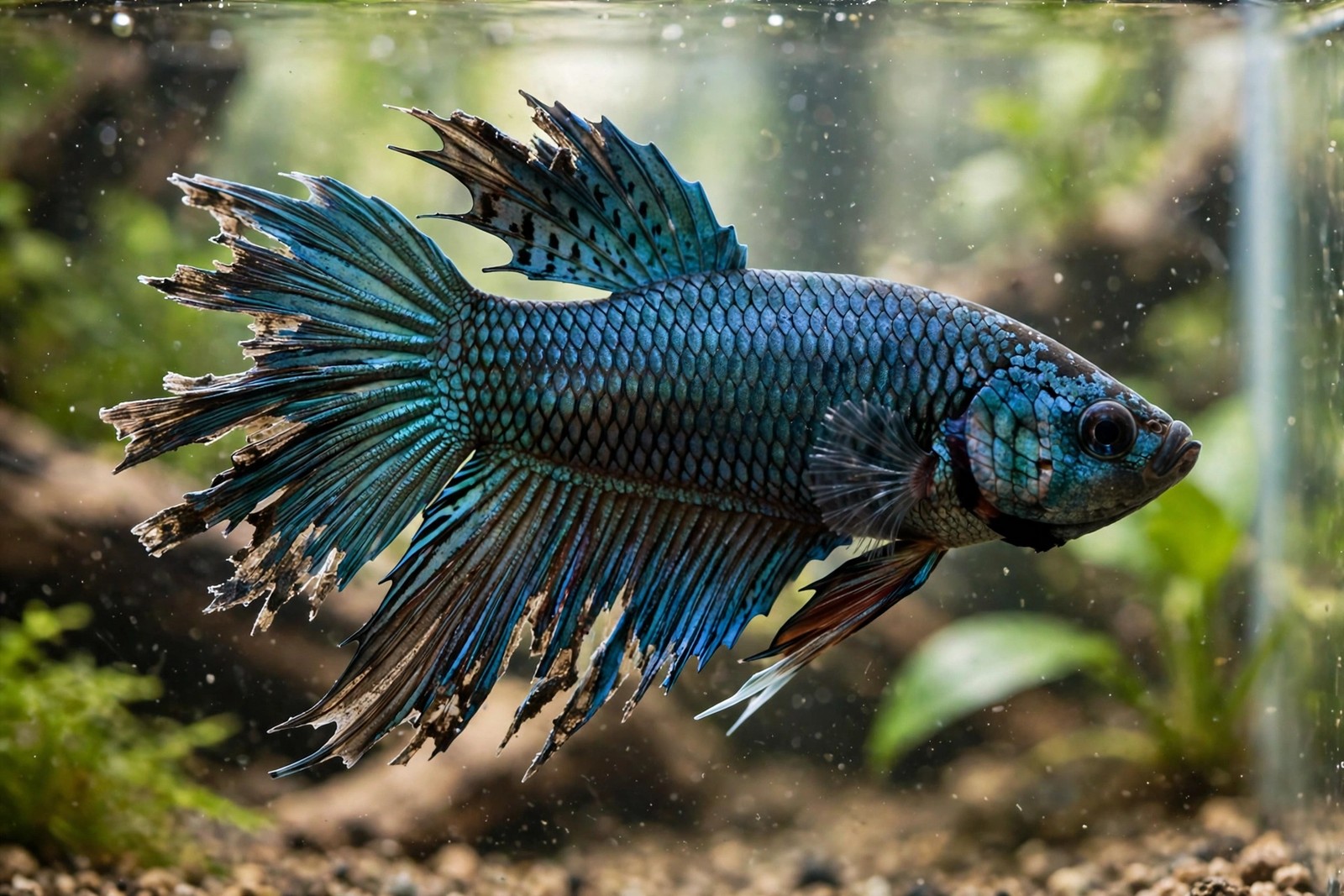
Fin rot usually shows as fins that look frayed, ragged, torn, or discolored along the edges — sometimes with a whitish or darkened rim. Start by testing your water, doing a careful partial water change if the readings are off, and removing uneaten food and waste. If it progresses, see an aquatic veterinarian.
What fin rot actually looks like
Healthy fins are smooth-edged and evenly colored, and they open like little fans. With fin rot, the edges start to look chewed or melted, the fin rays may show through as the tissue between them thins, and the damaged margin is often lighter, milky, or darker than the rest of the fin. On bettas, the flowing tail is usually where it shows first; on goldfish, check the tail and dorsal fin. Early fin rot can be subtle — a slightly uneven edge that was not there last week — which is why comparing your fish to an older photo is genuinely helpful.
Fin rot is less a single disease than a symptom: bacteria that are normally present in aquarium water colonize fins already weakened by stress. Poor water quality is the most common trigger, followed by nipping from tank mates, rough decor that tears delicate fins, and the stress of a recent move or temperature swing.
Your first steps, in order
Test the water first — ammonia, nitrite, nitrate, and pH. Fin rot and bad readings travel together, and no sensible plan makes sense until you know the water is clean. If anything is off, do a partial water change with dechlorinated water matched to the tank's temperature, and vacuum up waste and uneaten food from the substrate. Check that the filter is running properly and that no sharp-edged decorations are shredding fins as the fish brushes past. Then watch closely: mild cases in clean water often stabilize and begin regrowing once conditions improve, visible as clear new growth along the edge.
What not to do — and when to get help
Resist the urge to throw medication at the tank based on a guess. The wrong product, or the right one at the wrong strength, can harm the fish and the filter alike, and this guide will not hand you dosages for exactly that reason. If the rot keeps advancing, reaches the body, or your fish stops eating or becomes lethargic, contact an aquatic veterinarian rather than escalating treatments on your own. Bring your water test results and a short history — when you noticed it, and what changed in the tank recently. KinsLe's Pet Passport keeps your fish's records packet in one place — care notes, history, and documents — so you can share that recent water log and background with a vet quickly instead of reconstructing it from memory. File each dated water reading in words, plus any treatment history, in the Pet Passport log on KinsLe.