
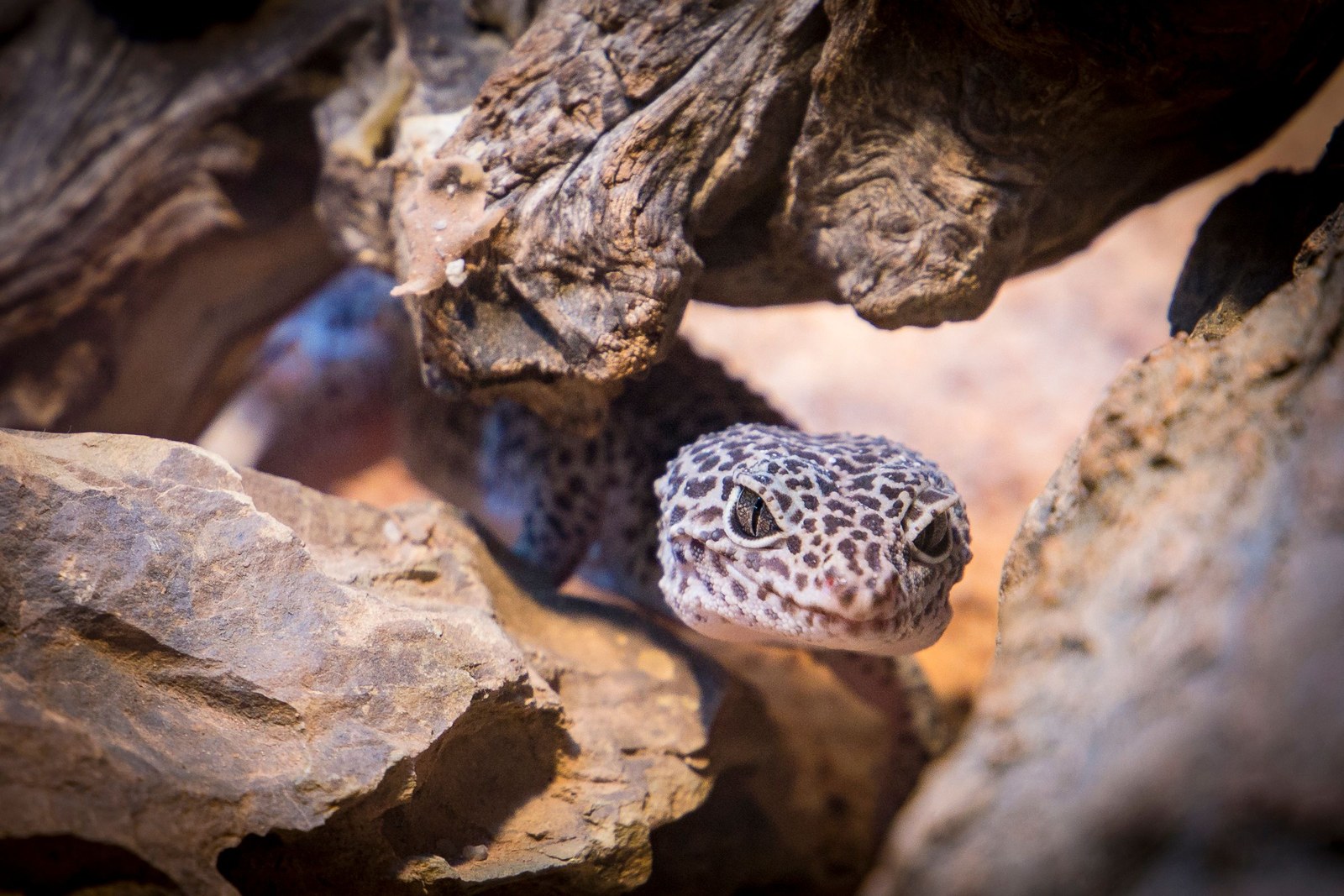
Your leopard gecko needs at least three hides inside its enclosure: a warm hide over the heated area, a cool hide at the opposite end, and a humid hide lined with damp paper towel or moss to support clean shedding. Add a shallow water dish, a small dish of calcium powder, ground-level decor it can climb over safely, and a floor it cannot accidentally swallow. Those basics, arranged well, cover most of what this gentle, ground-dwelling gecko asks for.
Why three hides, not one
Leopard geckos are prey animals at heart, and in the wild they spend daylight hours tucked into rock crevices. A single hide forces an unfair choice: your gecko must pick between feeling safe and being at the right temperature. With a hide at each end, it can thermoregulate without ever feeling exposed. The humid hide, usually placed on the warm side or in the middle, creates a pocket of moisture that loosens shed skin, especially around the toes and tail tip, where stuck shed can cause real trouble if it builds up over several sheds.
Make each hide snug, with a single entrance if possible. A gecko that can touch the walls while curled up feels far more secure than one rattling around in a cave.
Heat from below and gentle decor
Leopard geckos absorb warmth through their bellies, so under-tank heating controlled by a thermostat is the common approach, covering roughly a third of the floor. Always use a thermostat, never guess, and check floor temperatures with a digital probe where your gecko actually lies. Decor should stay low and stable: flat rocks, cork pieces, bridges, and fake plants it can weave through. Avoid tall climbs, because leopard geckos are enthusiastic but clumsy climbers and falls onto hard surfaces can injure them.
For flooring, solid options like tile, textured liner, or paper towel are forgiving for beginners and for young geckos, since there is nothing loose to ingest during enthusiastic insect lunges.
Water, calcium, and the small dishes
Keep fresh water in a shallow, heavy dish your gecko cannot tip. Many keepers also leave a tiny bottle-cap dish of calcium powder without added vitamins in the enclosure, and geckos will lick from it as they need. Dust feeder insects as part of your feeding routine too, and keep variety in the diet with appropriately sized insects.
Position dishes on the cool side so water stays fresher and calcium does not bake under the heat.
Watching sheds and spotting trouble early
Check your gecko after each shed, especially the toes. Retained shed that wraps a toe can restrict circulation, and toes are occasionally lost that way. A lukewarm shallow soak and a gentle cotton-swab nudge can help with a fresh stuck shed, but never pull hard at skin that resists. Repeated shedding problems, weight loss from the tail, lethargy, or eyes kept closed are reasons to see a reptile-savvy veterinarian promptly rather than adjusting things blindly at home.
Asking About the Little Jobs That Slip
Gecko care is full of small, easy-to-forget tasks: dampening the humid hide again, refreshing water, checking the thermostat probe has not shifted. When one of those jobs raises a question — how damp the humid hide should feel, whether the probe's reading matches where your gecko actually lies, or how often the water needs refreshing — bring it to Kinny in KinsLe and talk it through as it comes up. Asking in the moment keeps a small setup worry from becoming a forgotten one. Owners with follow-up enclosure questions can put them to Kinny in KinsLe and get replies from the library behind KinsLe Answers.