
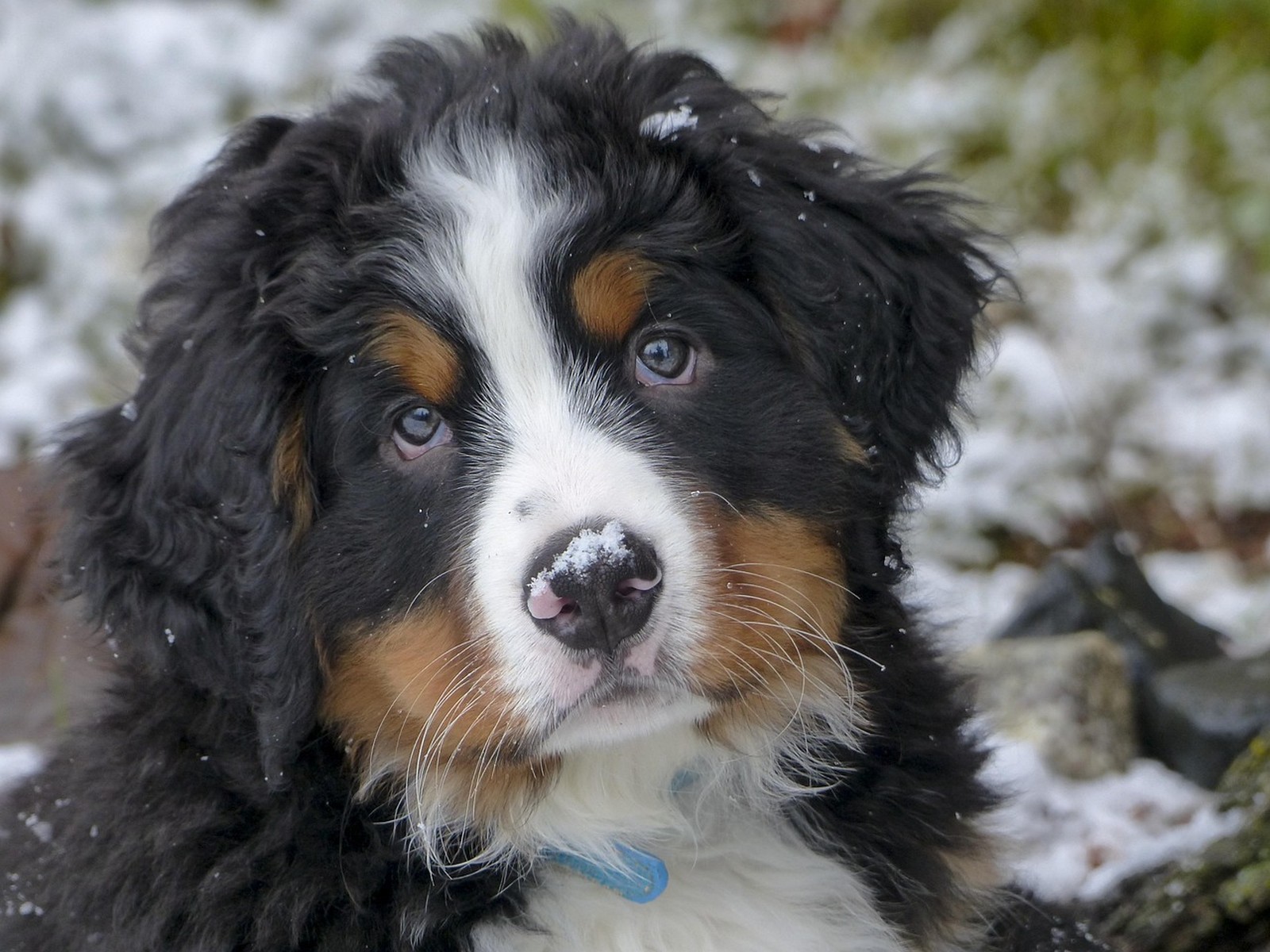
A Bernese Mountain Dog's first year compresses a lot of dog into a short time. The puppy who arrives small enough to carry becomes, within months, a powerful young giant with a thick tricolour coat and an affectionate habit of leaning against legs. Everything important, from manners to joint-friendly habits, is easier taught before the weight arrives.
Early months: manners while the dog is still liftable
Socialise a Bernese puppy generously and kindly. The breed is naturally friendly but can be reserved with strangers if the world stays small, so introduce visitors, children, traffic, and other dogs in relaxed doses. Practise the skills that matter at full size: walking without pulling, settling on a mat in cafés and at friends' houses, greeting people without launching both front paws, and standing calmly to be brushed and examined.
Lead training deserves special urgency. A pulling puppy is a nuisance; a pulling adult Bernese can take an owner off their feet, so reward walking beside you from the very first walks and never let dragging you toward an interesting smell become the puppy's learned method of travel.
Growth: steady, lean, and easy on young joints
Feed for controlled growth rather than maximum size. A Bernese puppy should look covered but not round, and your vet will help you judge body condition at the regular checks this breed needs through its growth phase. Keep a simple record of weights, worming, vaccinations, and any episodes of limping, tummy upset, or reluctance to exercise, because patterns are easier to spot written down than remembered.
Exercise follows the same steady logic. Several short walks and free play on soft ground suit growing joints better than long hikes or repeated stairs, and jumping from cars or furniture should be lifted-and-lowered out of existence while the dog is young. Any persistent limp, bunny-hopping gait, or puppy who lags and sits down repeatedly on walks deserves a vet conversation promptly, not a plan to rest it for a month.
Heat, coat, and the realities of size
Bernese overheat easily under that magnificent coat, so summer walks shift to early morning and evening, water travels with you, and a puppy panting hard in warm weather is a dog to cool down and rest, not encourage onward. The coat itself needs brushing several times a week, right through to the skin, and shedding seasons will test your vacuum and your patience. Add drool to the household budget of realities, too: a Bernese who has just drunk deeply will share the water with your trousers, and most owners keep a cloth within reach of the bowl.
House training and general obedience usually progress sweetly, because Bernese want to please, but adolescence brings selective hearing and a dog discovering its strength. Keep training cheerful and consistent, and remember the dog is still maturing mentally long after it looks finished.
What the year adds up to
End year one well and you have a devoted, steady young dog whose size is matched by good manners. The information load of a fast-growing giant breed is real, though, and KinsLe's Pet Passport helps by holding a Bernese puppy's records together in one packet, ready for every vet visit, boarding handover, or trip away.