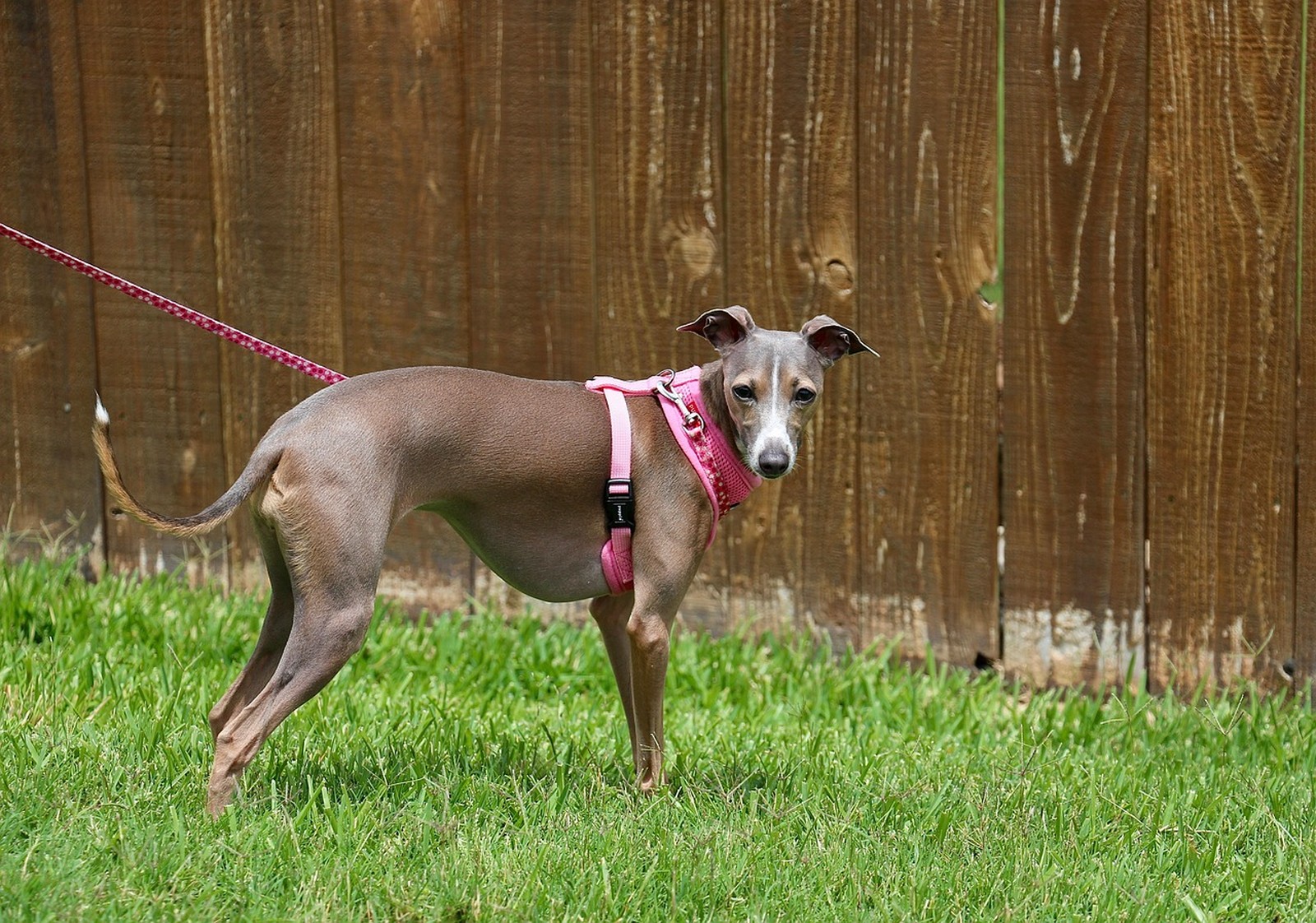
A sighthound, shrunk — not a toy
An Italian Greyhound is a true sighthound in miniature: graceful, quick, sensitive, and built on remarkably fine bones. The first year surprises owners who expected an easy, portable lap dog. What they get is a devoted, intense little companion who wants to be under your blanket, on your lap, or tucked inside your jumper, and who notices every change in household mood.
The breed's elegance comes with fragility. Puppy legs can fracture from jumps off sofas, beds, and arms that a sturdier breed would shrug off, so much of year one is environmental design: ramps or steps to favourite furniture, carried trips up and down stairs for the youngest puppies, and children taught to sit on the floor and let the puppy come to them rather than lifting it.
House training: the breed's famous challenge
This is the part experienced owners warn about honestly. Italian Greyhounds have small bladders, dislike cold and wet weather intensely, and are famously slow to become reliable indoors. A puppy who was progressing beautifully may refuse point-blank to toilet outside in winter rain. Practical owners combine very frequent outdoor trips with an indoor toilet option — pads or a litter arrangement in a fixed spot — and treat it as sensible management for this breed rather than failure.
Punishment is especially counterproductive with a dog this sensitive; fear makes secret puddles, not reliability. Routine, warmth, immediate praise, and clothing that keeps the puppy comfortable outside produce the steadiest progress. A cosy jumper is not a fashion statement for this breed — a warm puppy will toilet outside, a shivering one will hold on until it is back indoors.
Cold, clothing, and comfort
Italian Greyhounds carry almost no body fat and a single fine coat, so they feel cold in houses where other dogs are comfortable. Expect a wardrobe: soft jumpers, a warm coat for winter walks, blankets on every seat, and a bed placed away from draughts, ideally where the sun lands. Walks in cold weather are short and purposeful; exercise on mild days can include joyful, high-speed zooming in secure areas, where the sighthound engine briefly shows itself.
That burst speed matters for safety. Off-lead only in genuinely enclosed spaces, because a startled Italian Greyhound is gone faster than you can react and has little road sense. A well-fitted harness protects the delicate neck better than a collar for everyday walking.
Teeth, food, and delicate systems
Dental care deserves early attention, as small mouths crowd teeth and this breed benefits from brushing habits built gently from puppyhood, plus veterinary checks on retained baby teeth. Appetites can be finicky; measured, good-quality meals and a consistent routine suit better than constant grazing or rich extras, and the visible-ribs-but-not-sharp look is normal for a healthy young sighthound rather than a sign to overfeed.
Separation anxiety is the other common first-year theme. A breed this attached needs alone time taught in tiny, successful steps from the start, with departures and returns kept boring. Sudden long absences after months of constant company are where panic, barking, and indoor toileting troubles usually begin. A puppy who stops eating, drools and paces when left, or injures itself trying to escape confinement needs a proper plan and veterinary guidance rather than simply a sturdier crate.
The reward for all that care
Owners who accept the quirks describe a first year of extraordinary closeness: a warm, funny, elegant dog woven into every blanket and routine in the house. Those tiny, specific preferences — which jumper, which blanket, which feeding routine — are exactly what a future carer would need, and KinsLe records them through Transferrable Profiles, so an Italian Greyhound's profile can pass to a new owner with its delicate first-year history complete.