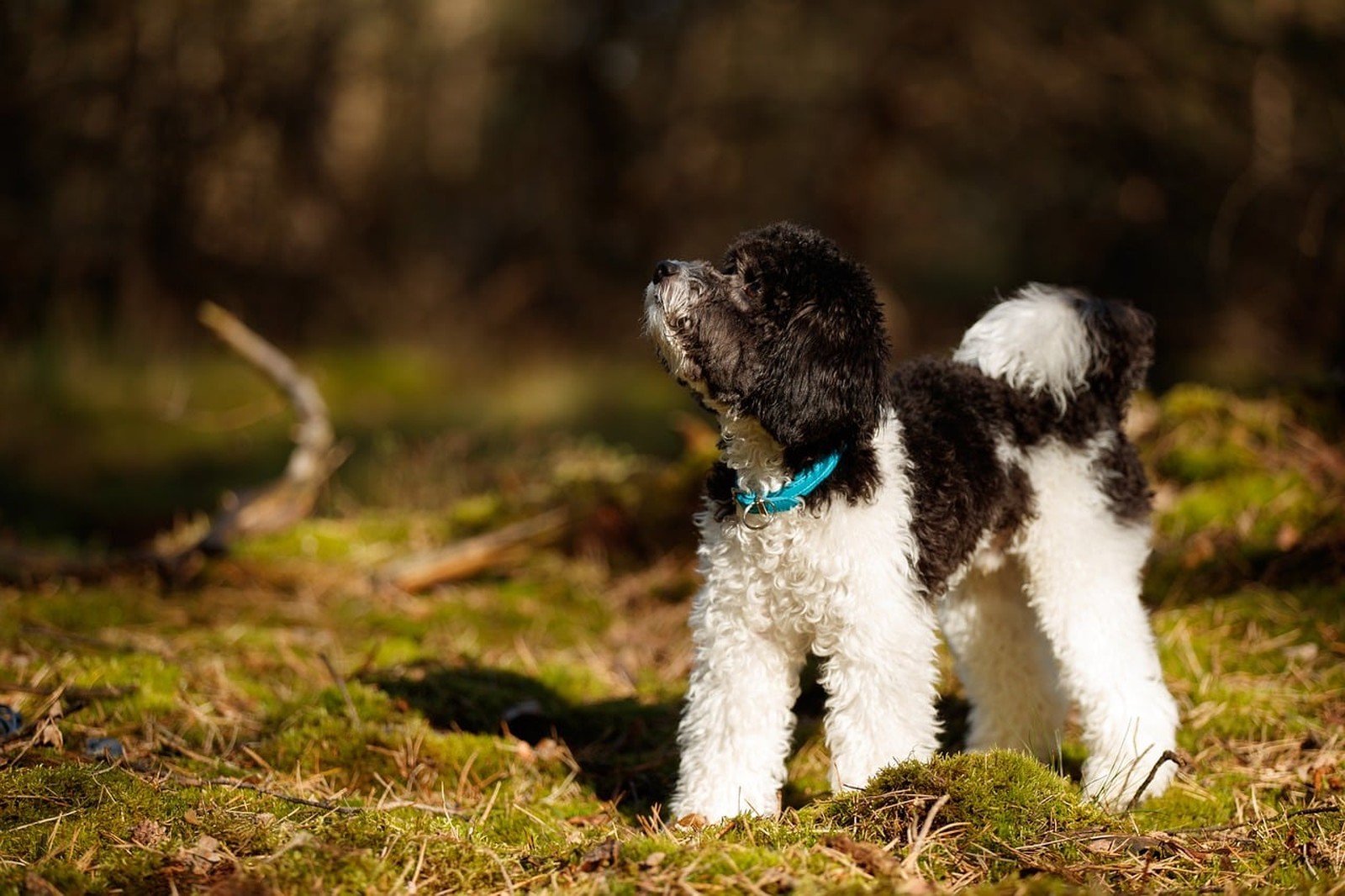
Smarter than the puppy class average
Miniature Poodles descend from working water retrievers, and the miniature version kept the brain. Your puppy will learn cues in a handful of repetitions, figure out how the treat cupboard opens, and start anticipating routines before you have finished teaching them. That intelligence makes training genuinely fun in year one — and means sloppy, inconsistent handling gets learned just as fast as the good version.
Channel the mind deliberately. Trick training, scent games, puzzle feeding, and varied walks give a Poodle puppy the stimulation it needs, while endless repetition of already-mastered cues produces a dog who switches off or invents variations. Short, playful, varied sessions suit this breed beautifully.
The coat runs your calendar
The famous low-shedding coat comes with a trade: it grows continuously and mats where friction and moisture meet — behind ears, under collars, in armpits, and anywhere a puppy gets wet and is left to dry in curls. Brushing to the skin several times a week, not just over the top layer, prevents the painful matting that ends in a shave-down, and most owners book professional clipping on a regular cycle through the year, choosing a practical puppy trim rather than an elaborate style.
Start grooming manners early. A puppy who learns that clippers, brushing, nail care, and being handled on a table are safe and rewarding becomes a dog groomers welcome. Many Poodles are also sensitive around feet, so patient paw handling in short, treat-paired sessions pays off for years of trims ahead. Tear staining under the eyes is common in light-coloured Minis; gentle daily wiping keeps it cosmetic rather than sore, and red, gunky, or squinting eyes deserve a veterinary look.
A small athlete, not an ornament
Do not let the styling fool you: Miniature Poodles need proper exercise. Daily walks with off-lead play in safe areas, retrieving, and even swimming for confident individuals keep body and brain settled. An under-exercised Mini becomes a shrill, restless house dog, barking at windows and inventing grievances; a well-exercised, well-trained one is a cheerful, adaptable companion who travels easily and joins in everything.
Socialisation shapes that adaptability. Poodle puppies can be reserved or sound-sensitive, so early positive exposure to traffic, visitors, children, other dogs, and household noises builds confidence. Barking is the breed's default announcement system, so teach a quiet cue and reward calm watching from the start rather than battling a habit later.
Teeth, tummy, and small-dog health notes
Small mouths crowd teeth, and Miniature Poodles benefit from brushing introduced gradually in puppyhood plus veterinary attention to retained baby teeth, which can trap food and misalign adult bites. Appetites vary — some Minis are enthusiastic, others picky — so a steady routine with measured meals beats coaxing with ever-richer extras, which teaches fussiness. Keep your puppy lean under all that coat by feeling ribs weekly, because the hair hides weight changes in both directions.
A Poodle puppy who stops eating entirely, vomits repeatedly, or develops sudden hind-leg skipping or limping should see a veterinarian rather than being monitored at home indefinitely. Most first-year vet visits, though, are routine, and the breed is generally sturdy when groomed, exercised, and fed sensibly.
One year in, a polished companion
By the end of the year, owners who kept up the brushing and the brain work usually have an elegant, funny, deeply tuned-in little dog. That grooming rhythm and training history are part of the dog's care, and KinsLe preserves them through Transferrable Profiles, letting a Miniature Poodle's profile pass intact to a new owner with its first-year routines still attached.