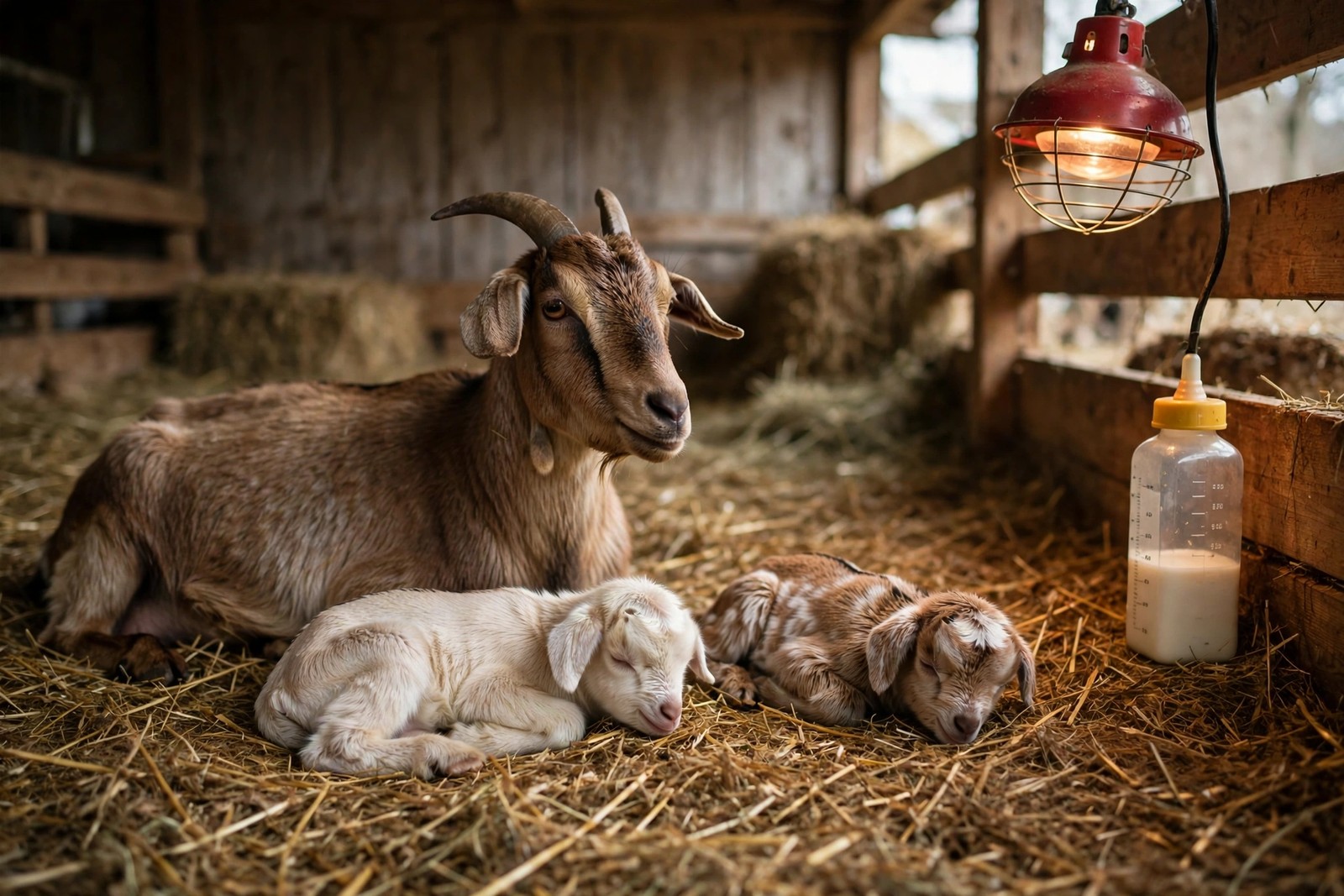
A goat kid's first day decides much of its first month. Kids are born with almost no immune protection of their own, they chill quickly because they are small and wet, and a kid that misses early feeds can fade before an inexperienced keeper realises anything is wrong. The extra care kids need is therefore front-loaded: warmth, colostrum and observation in the first hours, then disciplined feeding and hygiene while they grow.
The First Hours: Colostrum and Warmth
Colostrum — the doe's first milk — carries the antibodies a kid needs, and the gut absorbs them well only in the first hours after birth, with absorption falling steeply through the first day. Watch each kid actually nurse: a kid that butts the udder, wags its tail while sucking and settles with a full, rounded belly has fed; a kid that cries, hunches, or keeps searching probably has not. Check that the doe's teats are flowing and not plugged, and that a first-time mother is standing for her kids rather than walking away from them.
Keep the kidding pen deeply bedded, dry and out of draughts, with a safe heat source for a weak kid under supervision. A cold kid should be warmed before it is fed, because a chilled kid cannot digest milk properly; your vet can talk you through decisions for a kid too weak to suck, and that call is worth making early rather than after a night of decline.
Dam-Raised and Bottle-Raised Feeding
Dam-raised kids still need daily checks: weigh or heft each kid regularly so a falling growth curve shows up before visible thinness, and confirm the doe has milk on both sides. Bottle-raised kids — orphans, or triplets the doe cannot support — need measured milk or milk replacer mixed exactly to its instructions, offered little and often through the day at first. Overfeeding at one sitting is a genuine danger in bottle kids and can trigger serious digestive upset, so smaller, more frequent feeds beat heroic single bottles.
From around a week old, offer clean water, fine hay and a little starter feed to nibble; intake stays tiny for weeks, but rumen development begins with those early nibbles. Weaning is gradual, driven by solid-food intake and steady weight rather than by the calendar alone.
The Vet-Set Jobs: Disbudding, CDT and Coccidia Vigilance
Three timed jobs belong on the kid calendar, and your vet sets the exact timing for your herd. Disbudding, where horn buds are removed, is done in the first days of life while the buds are small, and it is a job for an experienced hand with proper pain relief arranged through your vet. CDT vaccination protects against serious clostridial diseases and tetanus; kids receive it on a vet-set schedule that depends in part on the doe's own vaccination status, so keep the dates recorded per kid rather than assumed for the group.
Coccidia deserve specific vigilance in kids from a few weeks old onward, especially in warm, wet weather. Scouring, straining, poor growth and a pot-bellied look in a kid of that age warrant a prompt vet call and a faecal sample rather than a wait-and-see weekend. Clean, dry bedding, feed and water raised off the pen floor, and uncrowded pens are the everyday controls that reduce the parasite load kids face.
Daily Kid Checks That Catch Trouble Early
- Brightness and appetite: a kid that stops bouncing, isolates itself, or loses interest in feeding is telling you something the same day.
- Bellies and bottoms: check for scouring, bloating, or a hollow, tucked-up look after feeds.
- Navel and joints: a swollen, hot navel or a stiff, swollen joint in a young kid needs veterinary attention promptly.
Kids raised with this rhythm — fed on schedule, weighed, watched and recorded — rarely surprise you. Putting each bottle feed, daily kid check and vet date into KinsLe Care Teams, assigned to a named person and time-stamped when done, means no kid's feed or CDT date depends on someone remembering a busy morning correctly.