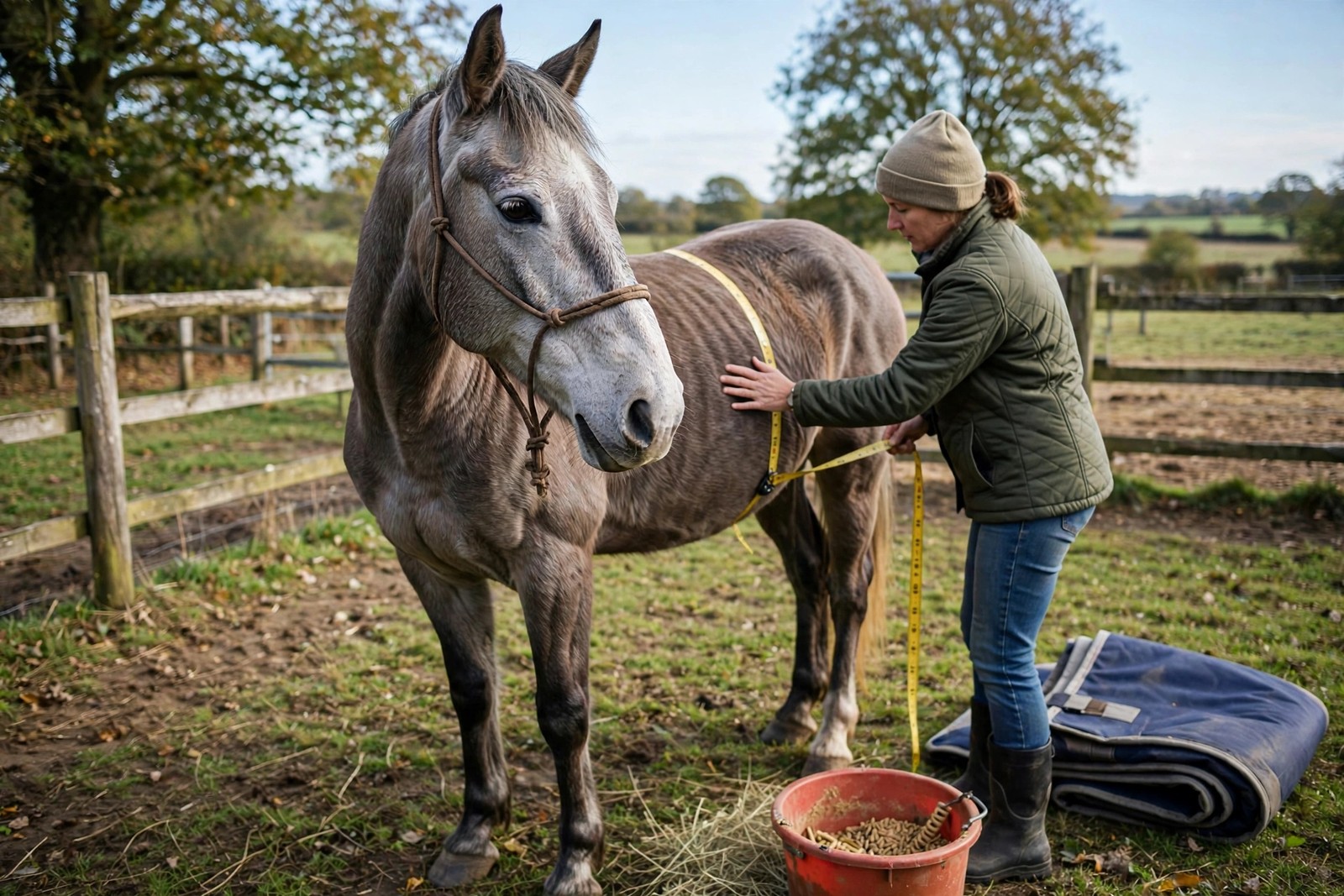
An older horse often looks fine at a glance while several small systems quietly lose ground at once: teeth wear down, digestion extracts less from the same hay, joints stiffen, and hormone conditions creep in behind a long coat. Senior care is the discipline of checking those systems on a schedule, so you are adjusting feed and management in response to findings instead of reacting to a thin, uncomfortable horse in midwinter.
Teeth First, Because Teeth Decide the Ration
Book dental checks at least twice a year for a senior. Worn, loose or missing molars, sharp points and wave mouth all reduce how thoroughly a horse can grind forage, and the early signs are easy to miss: quidding, where chewed hay drops from the mouth in rolled balls; slow eating; whole grains or long hay stems appearing in droppings; and weight slipping despite a ration that has not changed.
When teeth can no longer do the work, the ration must do it instead. Soaked feeds, chopped forage and senior feeds designed to be chewed easily can replace some or all long hay, but the change should follow the dentist's or vet's findings rather than guesswork, because a horse still coping well with hay does not need its diet rebuilt. Weigh or condition-score monthly and write the result down; a slow half-grade drift is invisible day to day and obvious on paper across a season.
Screening for PPID and Other Quiet Conditions
PPID, often called equine Cushing's, is common in older horses and frequently under-recognised because its early signs mimic ordinary ageing: a coat that sheds late or grows long and wavy, loss of muscle over the back and quarters, a pot-bellied outline, increased drinking and urination, and laminitis appearing without an obvious trigger. If you notice that cluster, ask your vet about testing; diagnosis and any treatment plan belong to the vet, and management you control — clipping a heavy coat in warm weather, watching sugar-rich grazing for a laminitis-prone horse, and keeping feet trimmed on schedule — supports whatever plan the vet sets.
Those twice-yearly checks also let the vet listen to the heart, check the eyes, and review lumps or slow-healing wounds.
Joints, Hooves and Daily Movement
Arthritic joints do better with motion than with rest. Daily turnout and gentle, regular exercise keep a stiff senior moving freely for longer, whereas a weekend of hard work after five quiet days is the pattern that leaves an old horse sore. Warm up slowly, favour straight lines and forgiving ground over tight circles and deep surfaces, and treat new reluctance — shortened stride, difficulty rising, lying down less because getting up is hard — as information for the vet rather than as stubbornness.
Hoof care stays on a regular trimming cycle even if the horse is retired and unshod, because long toes lever arthritic joints at every step. In wet weather, check feet daily for thrush in the frogs, which takes hold quickly in a horse that stands in one spot for long periods. Deep, dry bedding and rugs adjusted as an older horse's fat cover thins protect comfort in winter.
Feeding and Watching the Senior at Meals
Feed seniors individually where you can, because herd feeding hides the one horse that is being moved off its bucket or taking twice as long to finish. Soak feeds for a horse with poor teeth to reduce choke risk, keep water accessible and checked in freezing weather — an older horse that drinks less because water is icy eats less dry feed too — and review the ration whenever weight, teeth or workload changes rather than running last year's plan by habit.
None of this is complicated, but it is scattered: dental findings, screening results, monthly weights and trimming dates live in different notebooks unless you gather them. Keeping them together in KinsLe Pet Passport means the next vet, dentist or holiday carer sees your senior's whole picture — teeth, tests, weights and current feeds — in one packet instead of reconstructing it from memory.