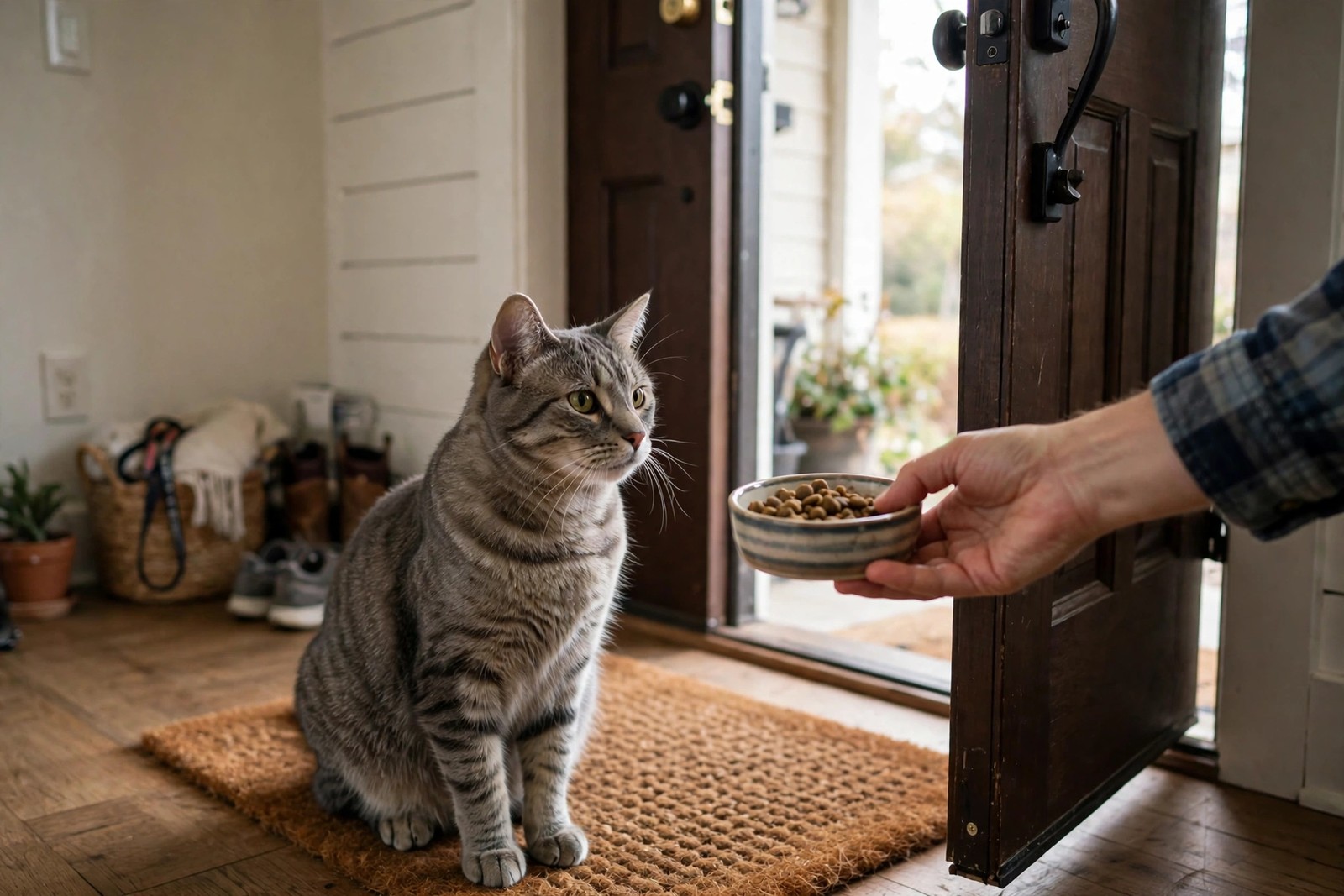
Plan ahead: choose a trusted person who has a key, knows your cat's routine, and is authorized with your vet, and keep written care instructions they can find in minutes. The time to build this plan is now, while it is hypothetical — a delayed flight, a hospital visit, a car breakdown two towns away — because during a real crisis you will have neither the calm nor possibly the phone battery to explain where the food is kept.
Choose the Right Person (and a Backup)
Pick someone who lives close enough to reach your home quickly, is genuinely comfortable with cats, and has agreed — explicitly, in a real conversation — to be your emergency person. A neighbor who adores your cat but travels monthly is a fine backup, not a first call. Name two people if you can, in order, and make sure they know each other exists in the plan. Then handle the access details: a spare key handed over or in a lockbox, the alarm code, and where the carrier lives, because a cat who must go to the vet will absolutely choose that day to hide under the bed.
Tell your veterinary clinic who is authorized to bring your cat in and make decisions, and ask how they handle payment authorization in an emergency so there are no surprises at the worst moment.
Write Instructions a Stranger Could Follow
Your emergency instructions should cover feeding amounts and times, water, litter routine, any medications with exact instructions and where they are stored, hiding spots, quirks — the door that must stay closed, the plant she chews — and your vet's address and phone number. Include your own contact details and your backup person's. Keep the document somewhere findable: on the fridge, in a labeled envelope by the door, and as a copy your emergency person holds at their home.
Test the plan mentally once: if you vanished for 48 hours starting now, what happens at tonight's feeding? If any step depends on someone guessing, write it down.
Think Beyond One Night
A single missed evening is an inconvenience; several days is a care situation. Consider what your emergency person should do if you are unreachable for longer — when to call the vet, whether your cat can stay with them or does better at home with visits, and how expenses get covered. Decide your preference in advance and write it down.
Keep the Plan Alive
Plans rot quietly: keys move, the backup person relocates, medications change. Revisit your instructions whenever the routine changes and at least once a year — confirm your people are still willing and able, refresh the key arrangement, update the medication list. A five-minute annual check keeps the plan real instead of theoretical.
Coordinating Your Circle With KinsLe Family Sharing
KinsLe's Family Sharing gives your cat a per-pet care circle with clear roles, so the trusted people in her life can step in and coordinate if you are delayed — feeding, medications, and updates handled by the people you have already chosen, with the routine visible to them. Combined with your written instructions and a clinic that knows their names, it turns "what happens to my cat?" from a worry into a settled plan. Through the Family Sharing view on KinsLe, your care circle can see the feeding, medication, and hiding-spot notes and coordinate a visit when a delay keeps you away.