
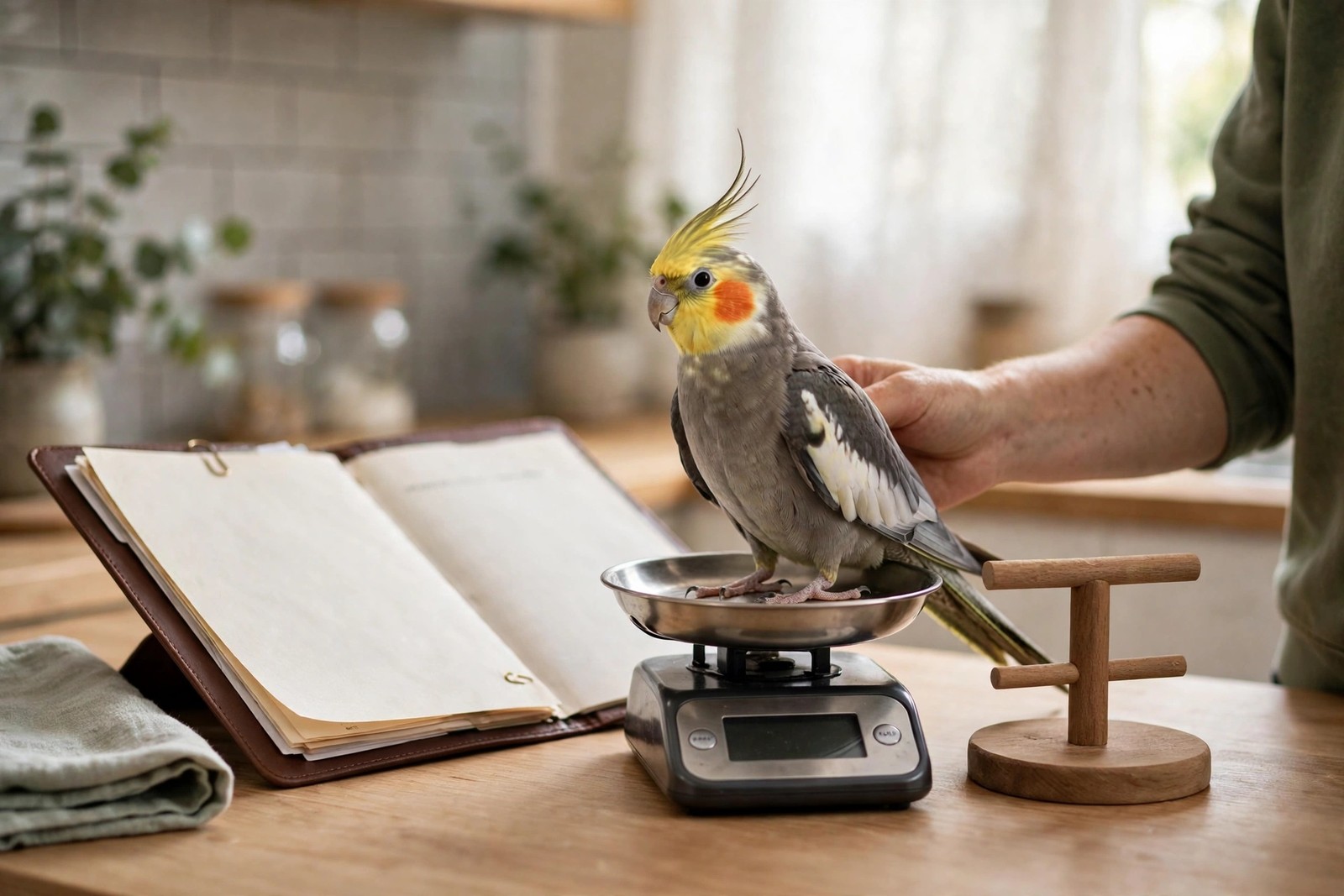
Keep a record for your bird that includes its hatch date if known, species, band or microchip number, where and when you got it, every vet visit summary, test results, medications, diet notes, and a running weight log. Birds hide illness expertly and live for decades — a budgie may reach ten years, a cockatiel twenty, and a macaw far beyond that — so your file often becomes the longest, most reliable memory your bird's care team has. In an emergency or a rehome, those details are gold.
The Identity and History Basics
Start with identity: species and mutation, sex if known and how it was determined, hatch date or estimated age, band number exactly as engraved, and any microchip details. Record the source — breeder, rescue, or previous owner — with dates, because early history explains everything from diet habits to disease exposure. Add clear photos of your bird and its band. This information identifies your bird if it ever escapes, supports a smooth transfer if life circumstances change, and gives a new veterinarian an instant starting picture instead of a blank page and a shrug.
The Health Records That Matter Most
File every vet visit summary, even routine wellness checks, plus lab results such as disease testing your vet performs, any imaging, and discharge instructions. Keep a medication history with what was prescribed, when, and how your bird responded — written by your vet's guidance, in your own notes. Track diet changes, supplements, and any reactions. Note significant events: egg laying, injuries, feather changes, unusual droppings episodes, and behavior shifts, with dates. Vets think in timelines, and a dated log turns your vague “he's been quieter lately” into evidence they can actually work with.
The Humble Weight Log
Weighing is the single most useful home habit for bird owners. Use a kitchen scale with a perch, weigh weekly at the same time of day — ideally in the morning before breakfast — and record the grams. Birds conceal sickness until they cannot, and a steady downward trend on the scale is often the first objective sign something is wrong, visible days before behavior changes. Bring the log to every appointment. A sudden change in either direction, or any weight shift paired with fluffed sitting, reduced appetite, or tail bobbing, is a reason to call your avian vet promptly rather than watch and wait.
Organizing It So You Can Find It Fast
Keep one folder — paper, digital, or both — and add to it the day things happen, not in a yearly catch-up. Store a backup copy outside your home, since the file is useless in a house fire or a lost phone. Include emergency information on top: your avian vet's number, the nearest emergency clinic that sees birds, and who should care for your bird if you are incapacitated. For long-lived parrots, this file is also a kindness to the future — a complete history makes any eventual transition to a new home vastly less stressful for the bird.
How KinsLe Helps
KinsLe's Pet Passport is built to be that file: it is the records packet for your bird, holding vaccines, medications, allergies, and documents together in one shareable place. You can share it directly with vets and sitters, so a new clinic, a boarding facility, or an emergency vet gets the hatch date, band number, and weight history in minutes instead of a scramble through drawers. Store hatch date, band details, and vet history together in the Pet Passport archive on KinsLe, so the record follows your bird for life.