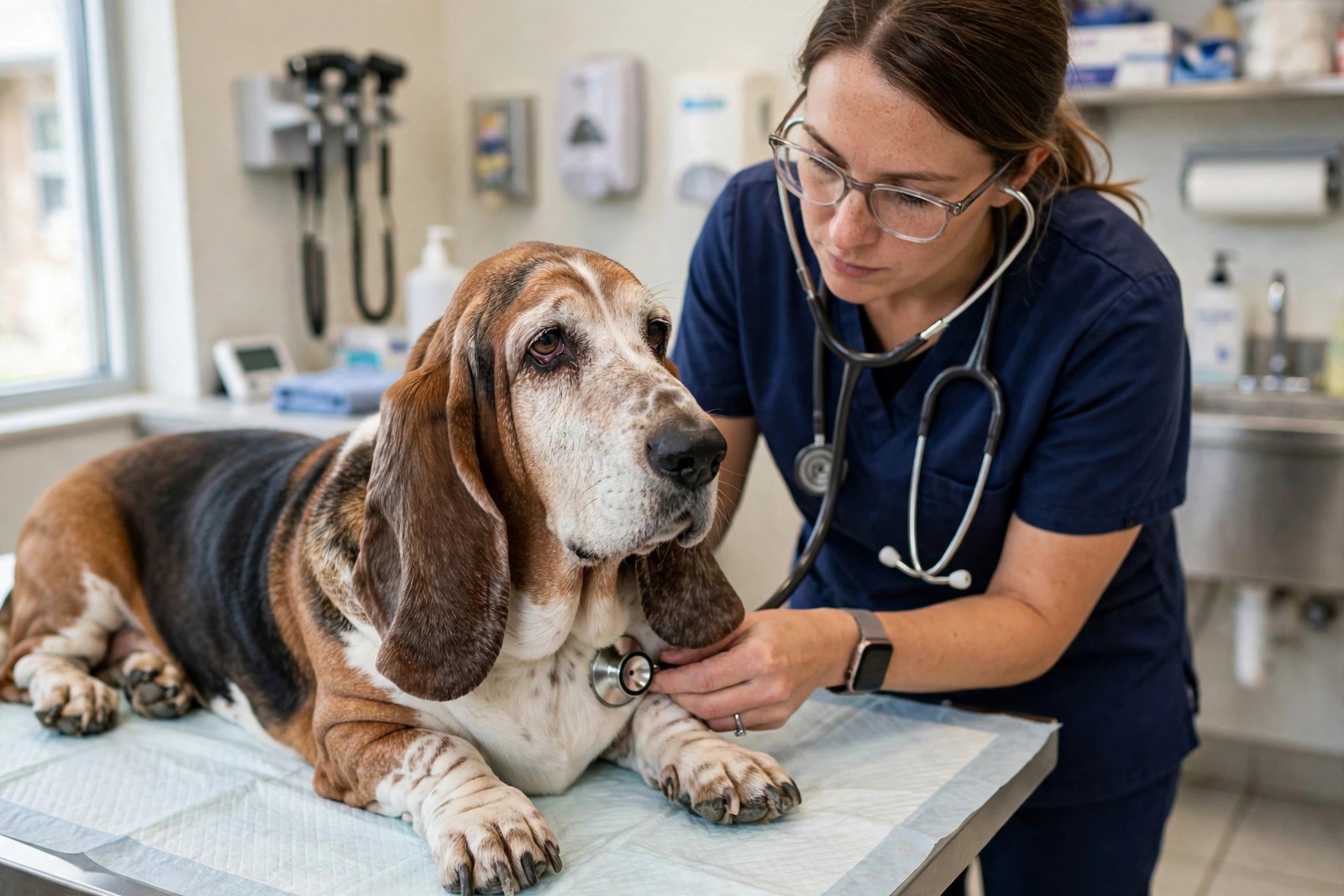
Ears, back, weight and eyes dominate the health picture for a Basset Hound growing older. Build the checks around them into twice-yearly senior vet visits, keep weight lean — extra pounds quietly worsen almost every age-related problem on that list — and report changes in appetite, thirst, mobility or behaviour early rather than writing them off as old age. Everything here is general information about what to monitor and discuss; your veterinarian, who can examine your dog, decides what any individual dog actually needs.
The Basics First
Start with the ears, because those long, heavy flaps limit airflow and Basset ears collect moisture and wax: look and sniff inside each ear weekly, and mention head-shaking, scratching or a new odour at the next visit rather than waiting. The back is the second priority — a long spine carried low needs a slim dog above it, ramps or steps instead of sofa leaps, and prompt attention to any reluctance to climb, jump or be lifted. Eyes, skin folds and weight belong on the same regular round.
Steps That Make the Difference
Work through these in order and give each one time to become routine before you judge it:
- Book twice-yearly senior visits and ask for ears, back, eyes and weight to be checked together
- Weigh him regularly and adjust food before extra pounds load his spine further
- Look and sniff inside both ears weekly for redness, wax build-up or a yeasty smell
- Use ramps or steps for cars and furniture rather than letting him jump down
- Note changes in appetite, thirst, mobility or behaviour and report them early
Keep the findings from each visit together, visit by visit, so a slowly rising weight or a recurring ear problem shows as a pattern rather than a series of surprises.
Keeping It Going
A Basset's senior checks work best as a steady rhythm rather than a response to crises: the same ear look each week, the same weigh-in each month, the same questions raised at each senior appointment. Note ear odour or head-shaking on the day you notice it, and mention any new stiffness over steps or into the car at that same appointment rather than in passing months later. A slim Basset who is checked this steadily gives his vet dated evidence to work from, not guesswork. If this Basset ever changes household, his profile travels too — Transferrable Profiles in KinsLe passes his examination notes and everyday routines to the new owner intact.