
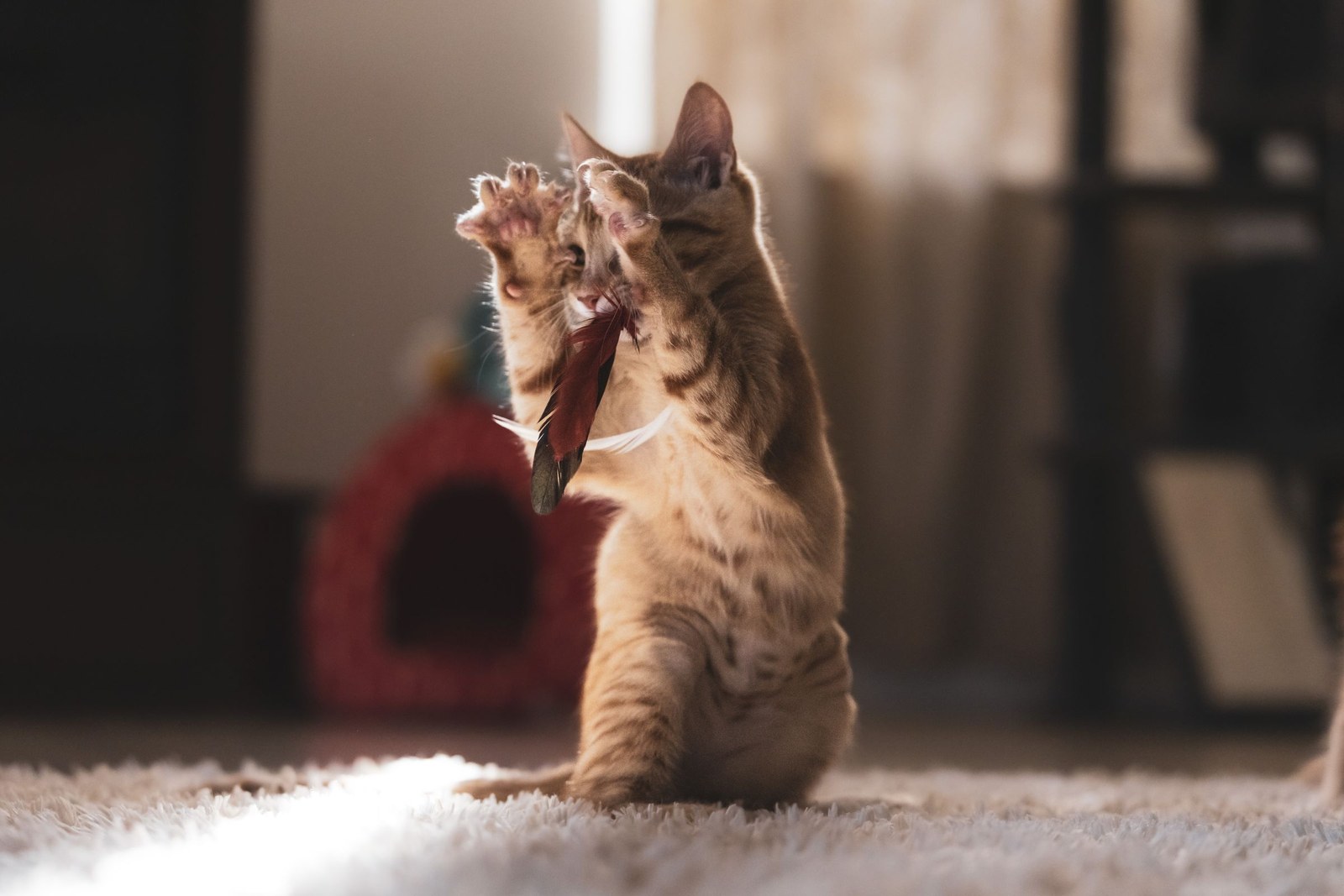
Indoor cats are safer from cars, predators, and fights, and they do live longer on average — but life inside carries its own health risks. The big four are weight gain, boredom-related stress, urinary problems, and dental disease, all made more likely when a cat's world is small, predictable, and short on movement.
Why weight creeps up indoors
An outdoor cat patrols, climbs, and hunts its way through the day. An indoor cat may move between a food bowl, a sofa, and a sunny windowsill. Free-feeding dry food on that activity level adds pounds quietly, and extra weight raises the strain on joints and increases the risk of other long-term problems. Weigh your cat every month or two — ribs should be easy to feel under a thin layer of fat — and measure meals instead of topping up the bowl. Food puzzles, scatter feeding, and a short play session before dinner all burn energy in a way that feels like hunting, not exercise.
Boredom, stress, and behaviour
Cats are territorial hunters, not ornaments. Without novelty, an indoor cat can become anxious, over-groom, yowl at night, scratch furniture, or pick fights with a housemate cat. Rotate toys weekly rather than leaving them all out, offer cardboard boxes and paper bags to explore, and give your cat vertical territory — a tall scratching post, shelves, or a window perch. Two 10- to 15-minute interactive play sessions a day, ending with a small meal or treat, mimic the hunt-catch-eat pattern and settle many restless cats noticeably.
Urinary and dental risks owners miss
Indoor cats, especially males and stressed cats in multi-cat homes, are prone to urinary issues, partly because they may drink less and use a litter box they find too dirty, too exposed, or too close to another cat's territory. Provide one box per cat plus one extra, scoop daily, and place fresh water in a few quiet spots away from food — some cats strongly prefer a fountain. Dental disease is the other silent one: by middle age many cats have painful tooth and gum problems that show only as slower eating or bad breath. Lift the lip at home now and then, look for red gums or tartar, and let your vet check teeth at every visit.
When to call the vet sooner
Don't wait for the annual visit if you notice straining in the litter box or crying while urinating, blood in urine, a sudden stop in eating for more than a day, rapid weight change, persistent vomiting, or a cat who hides and stops grooming. A male cat who cannot pass urine at all is an emergency and needs veterinary care the same day. Indoor status protects against accidents; it does not protect against illness, and cats hide discomfort well.
Sharing the routine at home
None of this has to rest on one person's memory. With KinsLe's Family Sharing, your cat's per-pet care circle can include the whole household with roles, so play sessions, measured meals, water refreshes, and litter duties are visible to everyone rather than assumed. When each person can see what has already been done, your indoor cat gets consistent stimulation and feeding instead of double dinners and forgotten boxes. Family Sharing on KinsLe lets everyone at home check the play, measured-meal, and litter routine before assuming a task is still undone.