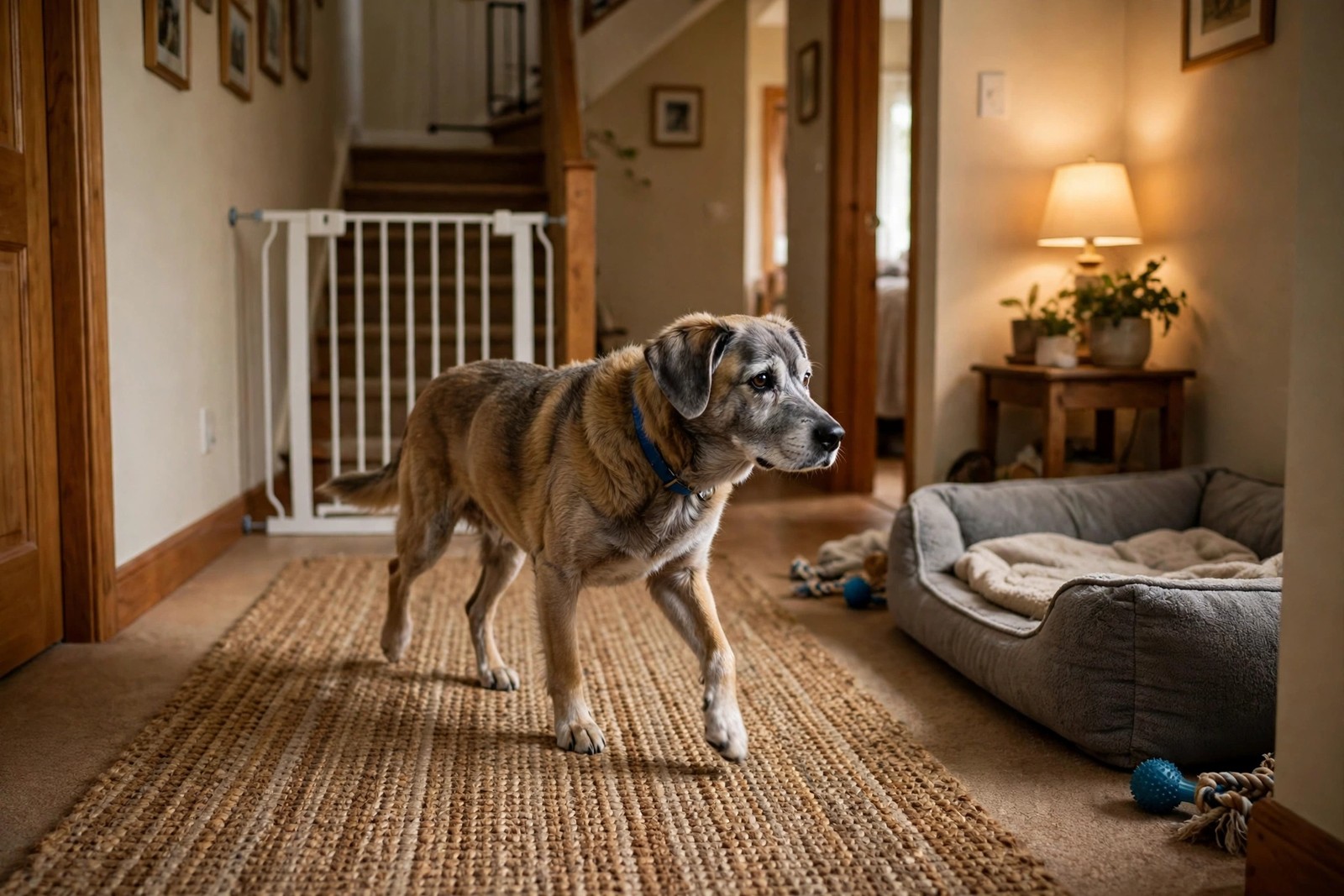
A dog losing her sight does not need a new home; she needs the old one to stop changing. Dogs build a detailed mental map of their house and navigate it by memory, scent, and touch long after their eyes fade. Every change below protects that map — and the confidence she moves with inside it.
Freeze the layout
Make a household rule: furniture stays where it is. The sofa, her bed, her water bowl, and the route from the back door to her sleeping place become fixed landmarks, and moving any of them "just for the weekend" can leave her bumping into edges she trusted as empty space. If a change is unavoidable, walk her through the new layout on a lead several times, letting her sniff and feel her way, before she has to find it alone at night.
Then clear her routes. School bags, shoes, delivered boxes, and a chair left pulled out are all shin-height surprises to a dog who cannot see them. Pad or remove the sharp corners she passes closely — the edge of a low coffee table on her path to the door is a classic eye-height hazard for a taller dog. Keep doors either fully open or fully closed, never half-ajar at nose height.
Gates, texture, and scent landmarks
Fit a secure gate at the top of the stairs, and another at the bottom if she might try to climb up and get stranded. Do the same thinking for any drop or danger in the house: open balconies, unfenced pools, and cellar steps should be blocked as a matter of routine, not remembered in the moment. Outside, walk the garden fence line for gaps, keep her on a lead anywhere unfenced, and consider a lead even in the garden until you have watched her navigate it confidently.
Give her information through her feet. A runner along a hallway, a distinct mat at the back door, and a different-textured mat beside her bed tell her where she is without her eyes. Many owners add a consistent scent landmark at key points — for example, her own bedding carrying her familiar scent at her sleeping place, and a dab of a food-safe scent on a cloth at the water station — kept the same each time it is refreshed, so smell confirms what texture suggests. Keep those cues stable; rotating them defeats the purpose.
Change how people behave
Speak before you touch her, every time, including in her own home. A hand arriving silently on a sleeping, sight-impaired dog startles her, and a startled snap is a preventable accident, not a behaviour problem. Announce yourself entering a room, warn her before lifting or grooming, and teach visitors and children the same rule before they meet her. New people should let her approach and sniff rather than reaching for her.
Outdoors, become her early-warning system: keep a steady lead, name steps and kerbs with the same words each time, and let her stop and investigate changes rather than hurrying her past. Keep to familiar walking routes while her confidence rebuilds, and add a low-light walk at home too — many dogs with fading sight cope in daylight and lose the last of their vision in dim hallways, so gentle night lighting along her route to the door genuinely helps.
Sudden blindness, a painful or cloudy eye, bumping into things that began abruptly, or distress alongside the sight loss all warrant a prompt veterinarian visit rather than home adjustments alone.
Writing the fixed furniture positions, gate rules, and speak-first rule into KinsLe's Family Sharing profile means family, visitors, and sitters all protect the same mental map your dog relies on to move safely at home.