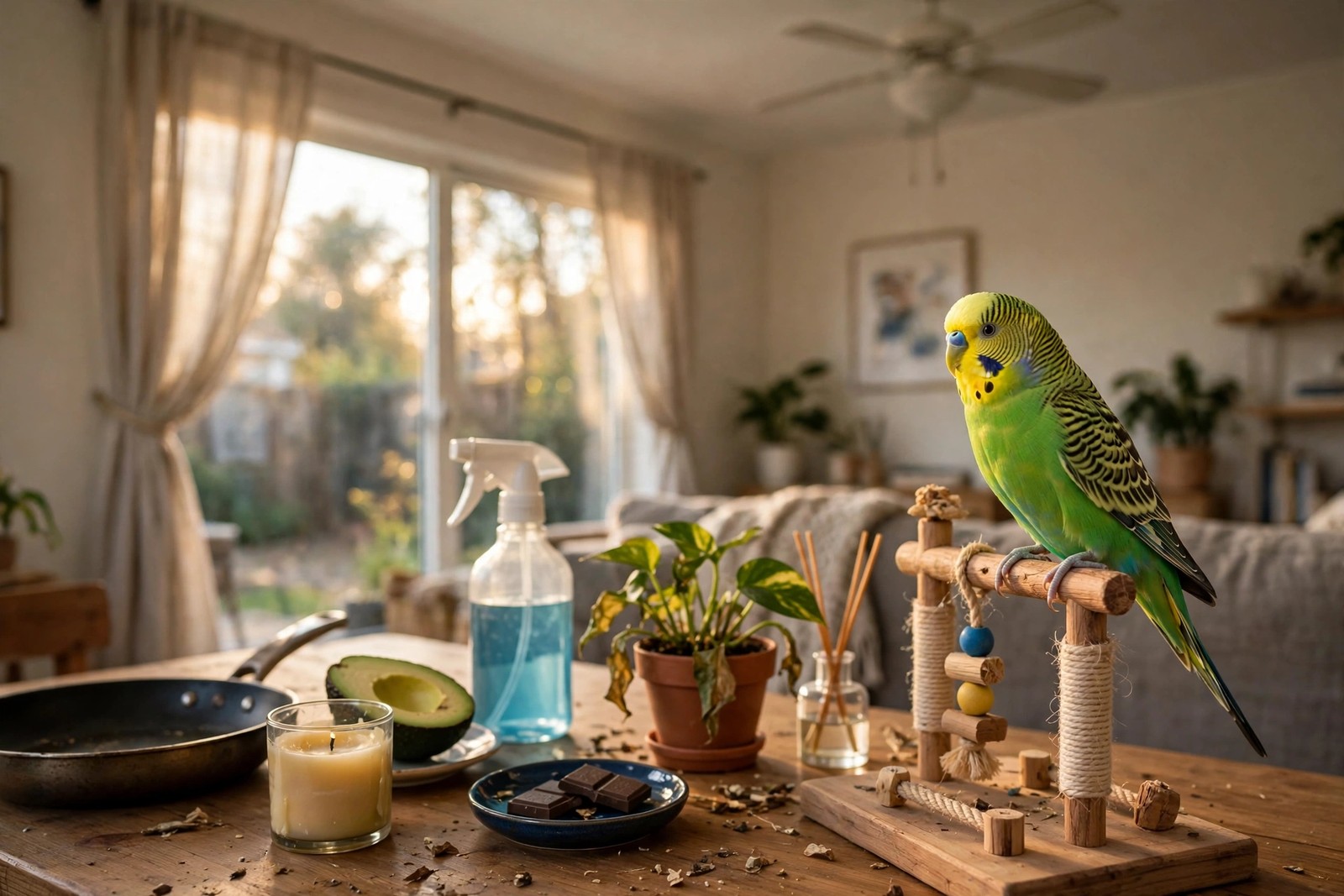
A bird's breathing system moves air through its body far more efficiently than a mammal's, which is wonderful for flight and terrible in a modern kitchen. Most household bird deaths are not dramatic poisonings; they are a pan left heating, a spray used in the next room, or a fan nobody remembered was on. This list is organised by how the danger reaches the bird.
Fumes and Sprays: The Urgent Category
Overheated non-stick coatings release fumes that are odourless to us and can kill a bird within minutes — a bird found suddenly dead after cooking is a recognised pattern, not bad luck. The safe household rule is blunt: never let non-stick pans overheat or sit empty on heat, ventilate hard while cooking, and keep the bird's cage out of the kitchen entirely. Treat self-cleaning oven cycles the same way and move the bird well away before starting one.
Aerosols of every kind belong on the banned-near-bird list: air fresheners, hairspray, spray polish, oven cleaner and insect sprays. Scented candles, wax melts, plug-in fragrances and incense load the air with particles a bird's lungs handle badly, so the bird room stays unscented. Paint fumes, cigarette and vape smoke, and carbon monoxide from faulty heaters complete the airborne set. When in doubt, if you can smell it strongly, the bird should not be breathing it.
Physical Dangers During Out-of-Cage Time
Ceiling fans injure or kill free-flying birds every year; the rule is absolute — fan off, confirmed off, before the cage door opens. Open water is a drowning risk in surprisingly small amounts: toilet lids down, no unattended pans soaking, no open buckets when the bird is out. Windows and mirrors cause collision injuries, so keep flighted birds to rooms where glass is curtained or marked until they have learned the room. Curtain and blind cords, reclining chair mechanisms, and doors left to swing in a draught round out the room check.
Things a Bird Can Chew or Eat
Birds explore with beaks, and two metals matter: lead, found in some old paint, solder, curtain weights and stained glass, and zinc, found in some cage coatings, galvanised fittings and household hardware. Chipped or flaking versions of either are a chewing hazard worth removing rather than monitoring. Keep medicines, cleaning chemicals and cosmetics in closed cupboards, not on the surfaces a bird lands on.
Food shared carelessly is the last route. Avocado is genuinely toxic to birds, as are chocolate, caffeine, alcohol, onion and garlic in quantity, fruit pips and apple seeds, and anything heavily salted. The bird's treat list is short and known; everything else stays off the plate it can reach.
Print the airborne rules for the kitchen door, because guests cook and spray without knowing. Loading that same danger list into KinsLe's Family Sharing, attached to your bird's profile, means every family member and regular visitor works from one version — including the rule about the oven's self-clean cycle.