
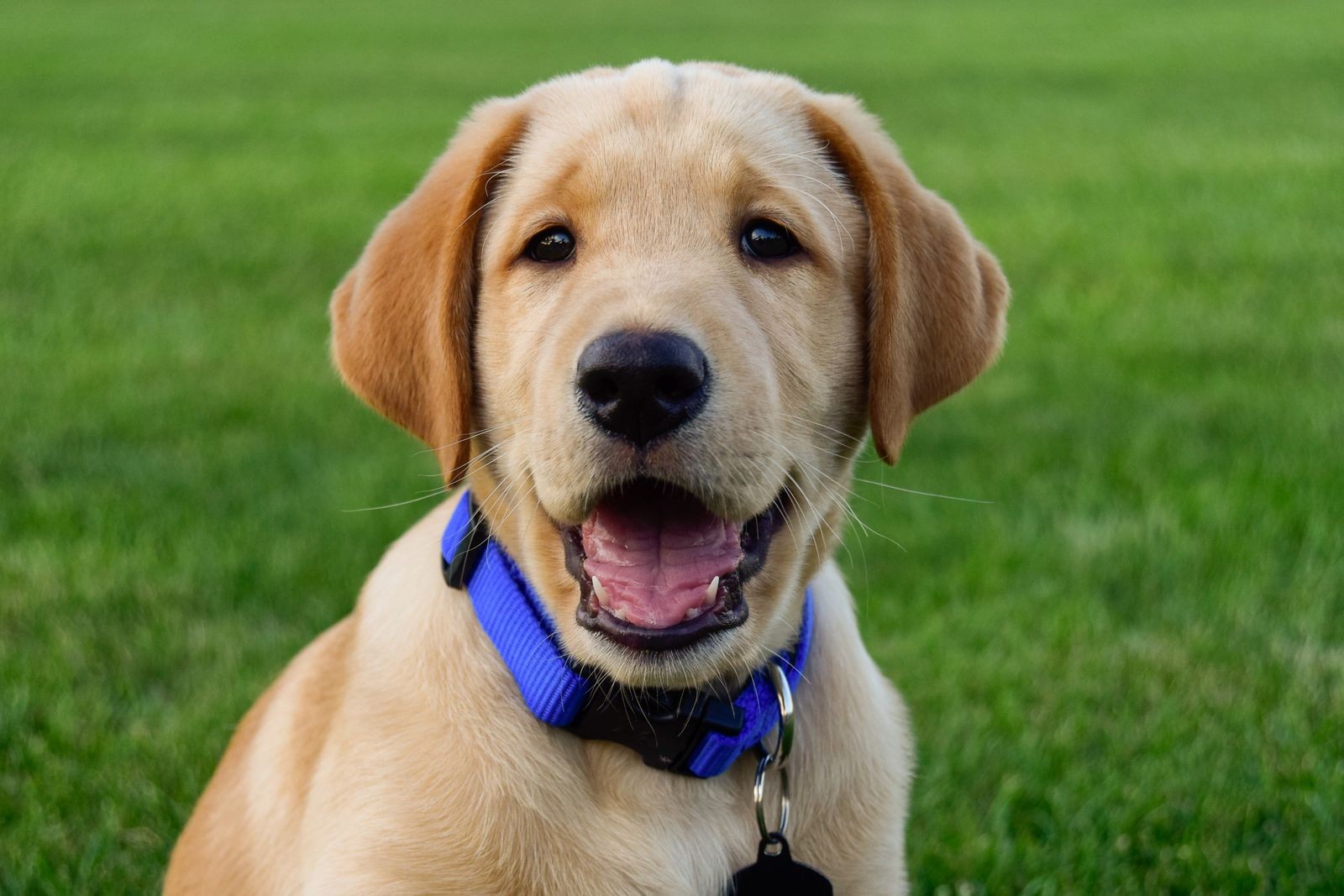
From day one, fit a lightweight collar carrying your current contact details, and put permanent identification on the agenda for your first veterinary visit — because ID only protects your puppy if it reaches you quickly and the details stay up to date. Young puppies slip collars, dart through doors left ajar by visitors, and get carried off by curiosity in seconds; identification arranged before you ever need it is what turns a frightening hour into a happy phone call.
The collar tag: simple, visible, immediate
Start with a lightweight, well-fitted collar — you should be able to fit two fingers snugly between collar and neck — with a tag or engraved plate showing at least your mobile number. Many owners add a second number and their surname or postcode rather than the puppy's name, so a finder can reach a person without knowing anything else. Check the fit weekly: growing puppies outgrow collars astonishingly fast, and a collar that was right last month can be too tight, or loose enough to slip over the head, this month.
Remember the limits. Collars come off — they snag, get chewed by playmates, or are removed for baths and never quite make it back on. A tag is essential, but it should not be the only layer.
Permanent identification with your vet
Talk to your veterinarian at the first visit about permanent identification, such as a microchip, and about registration — and then keep that registration current whenever you move or change numbers. A chip that points to an old address or a disconnected phone number fails at exactly the moment it is needed. Ask the practice to scan and confirm the chip is readable and correctly registered at routine visits, and keep the registry details in your own records so you can update them yourself.
In some places certain identification is legally required for dogs, and your veterinarian or local authority can tell you what applies where you live. Even where it is not required, the principle holds: one visible layer for the person who finds your puppy today, and one permanent layer that survives a lost collar.
Practical safety habits that back ID up
- Photograph your puppy weekly as they grow — markings and size change fast, and a current photo is gold if you ever need to describe them
- Keep your phone number consistent and voicemail set up, so a finder can actually leave word
- Puppy-proof doors and gates now, before a growth spurt makes the garden fence interesting
- Never leave a young puppy unattended in a garden, even a fenced one, while identification and recall are still new
If your puppy does get out, act immediately: search nearby, alert neighbors, contact local vets and shelters with a description and photo, and make sure every ID layer you set up has your current number.
A QR layer that reaches you directly
Every pet on KinsLe has a unique QR ID on its profile through Verified QR ID Pet Profiles, adding another way for a finder to reach you — and Lost Pet Alerts are free in every profile. Setting that profile up on day one, while you are fitting the first collar and booking the first vet visit, means your puppy's identification grows in layers from the very start: tag, permanent ID, and a scannable profile that connects a finder straight to you.
Set that layer up today, and a neighbor who finds your puppy can scan the collar code to open its Verified QR ID Pet Profiles entry on KinsLe and contact you directly.