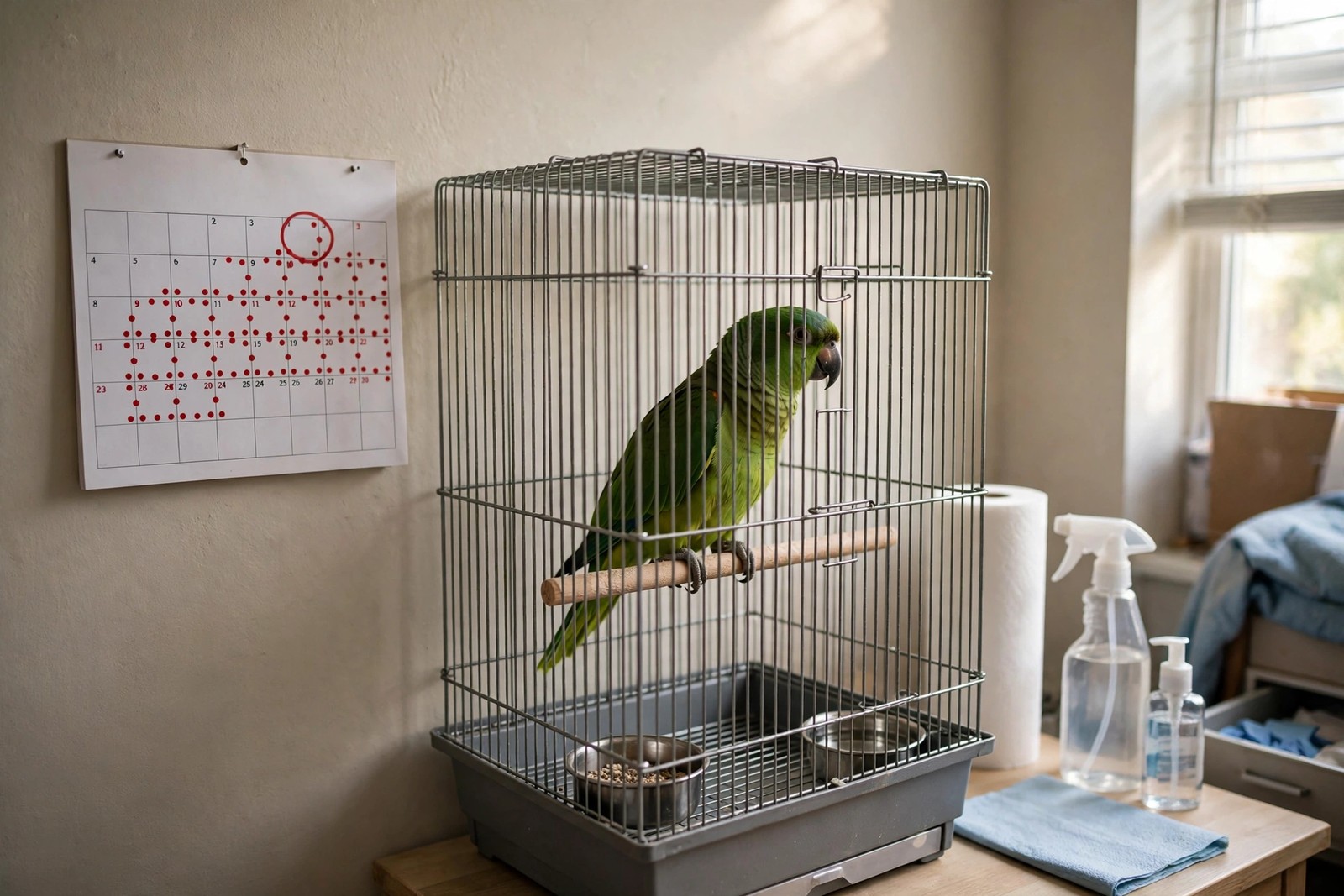
A second parrot should never move straight in beside your first. Quarantine protects the bird you already have from infections a newcomer can carry without looking ill, and the written record you keep during it is what your avian vet will actually work from.
How Long Quarantine Should Last
Plan on 30 to 45 days as the usual quarantine window, and note the exact start date and the earliest date the birds could meet. The new parrot lives in a separate room, ideally with separate airflow, its own cage, bowls, perches, and cleaning tools. Care for your resident bird first each day, then the newcomer, and wash hands and change your top between them, because feather dust and dried droppings travel easily on clothing. Record in your notes where quarantine is happening, who is allowed to handle the new bird, and any extension your vet advises if results are slow or a symptom appears.
The Test Results to Record
Write down each test by name, with the date the sample was taken, the result, and the clinic that ran it. The core panel avian vets commonly run for a new parrot covers psittacine beak and feather disease, polyomavirus, psittacosis, which is a chlamydia infection that can also affect people, and bornavirus. Alongside those results, note the physical examination findings, the bird's weight on arrival and weekly afterwards, any faecal testing, and the source of the bird, including the breeder or rescue name and the bird's hatch and weaning details if known. A result marked pending is worth recording too, so nothing is quietly forgotten at week four.
The Daily Log Worth Keeping
Short daily entries carry the real value. Note droppings and any change in colour, volume, or consistency, how much of the offered food is actually eaten, water intake, vocalisation, posture, and breathing. Weigh weekly at the same time of day, since a downward weight trend in a bird that still looks bright is often the first measurable warning. Log any sneezing, tail bobbing, discharge, feather damage, or time spent fluffed and quiet at the cage bottom, with the date you first saw it. Call an avian vet promptly about breathing changes or a bird that stops eating, rather than waiting for the scheduled recheck.
Ending Quarantine and Introducing the Birds
Quarantine ends when the planned period has passed, all recorded results are back clear, and the vet is happy at the recheck; note that clearance in writing. Introductions then happen gradually, with cages in the same room at a distance first, supervised time out together later, and your notes continuing through the first shared weeks. Keeping the whole file, from day-one weight to the clearance note, in KinsLe's Pet Passport means the quarantine history travels with your new parrot to every future vet visit, boarding stay, and sitter handover instead of living in a drawer.