
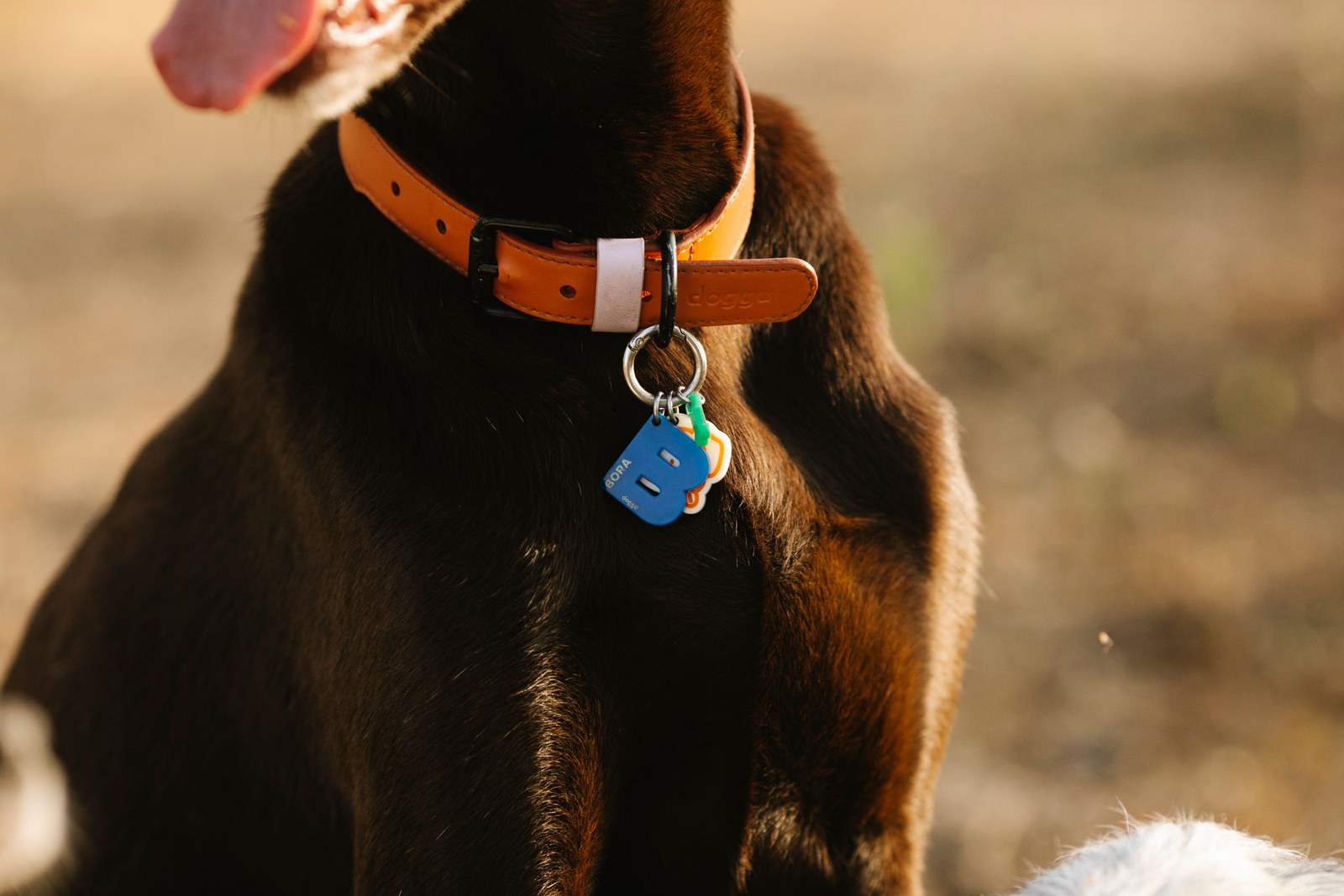
Your dog's ID tag should carry your dog's name, your mobile phone number, and a second backup number if it fits. A phone number is what reunites dogs — far more useful to a finder than your address — and it should be engraved deeply enough to stay readable for years.
Rank the Information by What a Finder Needs
A finder holding your dog on a sidewalk needs three things in five seconds: what to call the dog, proof this dog is owned and loved, and a number that reaches a human fast. That is why your mobile number outranks everything else. Add a backup number for a partner, family member, or close friend, because your phone might be off, lost, or out of signal precisely when your dog is out too.
Your dog's name helps a finder calm and hold them — dogs respond to their own name, and a nervous dog who hears it from a stranger often settles. If your dog has an important medical need, a short note like "needs daily meds" can add urgency and prompt a faster call or a vet visit, without turning the tag into a medical chart.
Leave your home address off. It takes space, dates quickly when you move, and a finder does not need it to help. An address can also invite unwanted visits; a phone conversation is safer and faster for everyone.
Readability Is the Whole Point
A tag nobody can read is decoration. Choose engraved metal over printed or painted tags that fade, and check the text every few months — tags wear against collar rings and other tags, and worn lettering is one of the most common reasons finders cannot reach owners. Replace tags when numbers start to blur, when you change your number, or when a puppy tag gets outgrown.
Size the tag to the dog. A tiny tag on a large dog can hold two numbers easily; a toy breed's tag may only fit a name and one number, so choose ruthlessly and consider a second tag or collar embroidery for the backup contact. Make sure the tag hangs flat, is not chewed into sharp edges, and is attached with a sturdy ring or clip that will not pop open in brush.
A Digital Backup for the Physical Tag
Tags can be lost with the collar itself, so back yours up. KinsLe's Pet Pass gives your dog a verified ID card with up-to-date details kept in their profile, so the information a finder needs does not live only on a small disc of metal. If your number changes, updating the profile is quicker than ordering new engraving, and the Pet Pass travels with your dog's records wherever they go.
Do a tag check tonight: read it in low light, call the number printed on it, and update anything stale. Pet Pass on KinsLe stands behind that engraved disc as verified identification for your dog, carrying current contact numbers a finder can act on if the collar goes missing.