
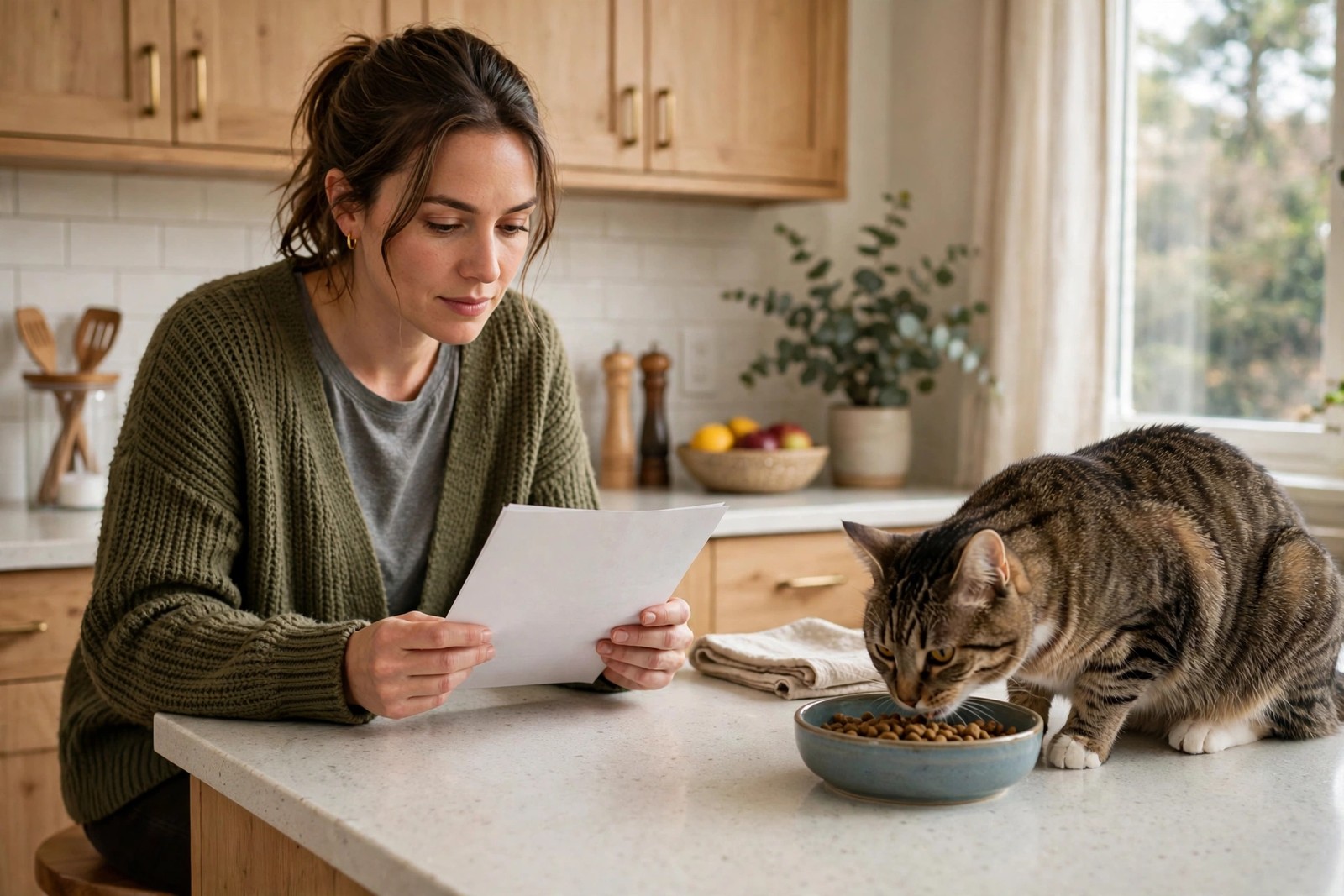
Leave written instructions that cover feeding amounts and times, litter duty, medications, hiding spots, vet and emergency contacts, and the small quirks that keep your cat calm — because a sitter cannot guess the details that make your home routine work. A quick chat at the door is easy to misremember; a clear written brief, plus a short trial visit before you travel, protects your cat and gives your sitter confidence.
Feeding, Water, and Litter: Be Specific
Vague notes like 'feed twice a day' cause most sitter problems. Write the brand and type of food, the measured amount per meal — half a tin, a third of a cup — where the food is stored, and what to do with leftovers. Note treats and their limits, especially if your cat is persuasive. If she is fed with an automatic feeder or a puzzle toy, show the sitter how it loads.
For water, say which bowls to refresh daily and whether she prefers a fountain topped up. For litter, specify how often to scoop, where waste goes, how much to top up, and where spare litter and liners live. Cats who find a dirty box may simply stop using it, so this detail matters more than it sounds.
Health, Medication, and Warning Signs
List any medications with the exact routine you follow — what it is, when you give it, how you give it, and where it is kept — and be honest about how your cat takes it. A sitter who knows she accepts a pill hidden in a treat will do better than one left to improvise. Note allergies, ongoing conditions, and recent quirks like a reduced appetite or a healing scratch.
Then add a short 'call me or the vet if' list: not eating for a full day, repeated vomiting, straining in the litter box, hiding somewhere new and refusing to come out, or any injury. Include your vet's name, address, and phone number, the nearest emergency clinic, and a local contact who can help or authorise care if you are unreachable on a flight.
The Quirks Section Sitter Notes Often Miss
This is the part that turns adequate care into calm care. Write down:
- Favourite hiding spots, and which ones are safe to leave her in
- Rooms, cupboards, or windows that must stay closed
- How she likes to play, and the wand toy or routine that settles her in the evening
- Whether she enjoys being picked up — or firmly does not
- Household hazards: a wobbly screen, a recliner she crawls inside, houseplants to keep her from
Add your home basics too: alarm or lock quirks, bin day, and how you want daily updates — a photo and a line of text each evening suits most owners.
Do a Trial Visit First
Invite the sitter over while you are home. Let your cat meet them at her pace, walk through feeding and litter locations together, and watch the sitter practise any medication routine. A cat who has met the sitter once, in a calm context with you present, is far less likely to hide for the entire first real visit.
Sharing Instructions the Simple Way With KinsLe
Instead of a fading paper note on the counter, KinsLe's Care Pass shares exactly that per-pet care information with your sitter through one temporary, scoped link — and your sitter needs no account or app to open it. Feeding, routines, contacts, and quirks travel together for each cat, so nothing depends on a single sheet of paper staying put.
Good instructions are a kindness to your sitter as much as to your cat — they remove guessing on both sides. Your sitter can follow measured feeding amounts, the litter routine, and any medication routine throughout that sitting by opening the Care Pass instructions on KinsLe.