
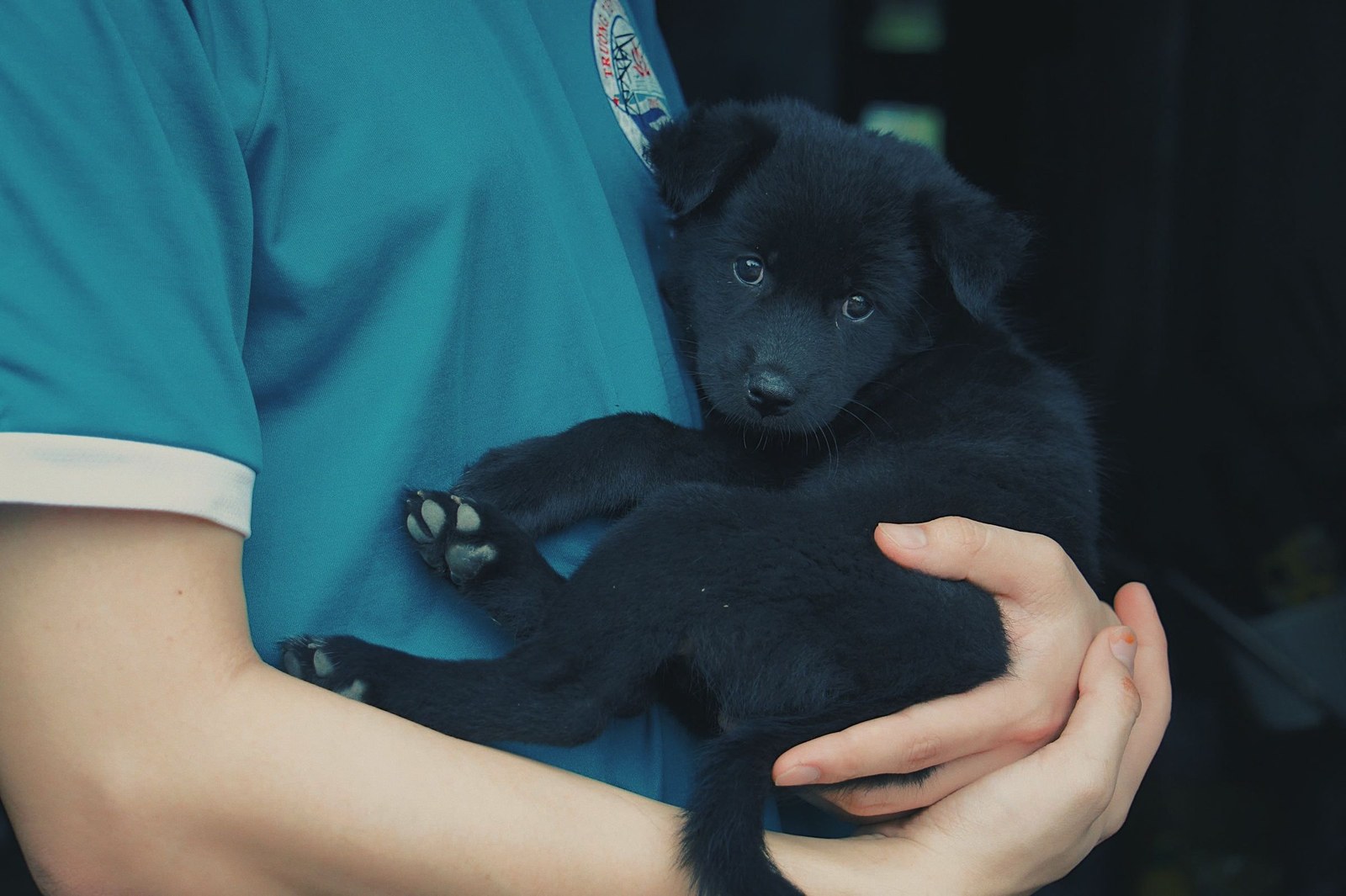
Bite inhibition is your puppy's ability to control how hard they bite — to mouth, hold, and play with a soft jaw instead of clamping down with full force. It is one of the most important safety skills a dog ever learns, and puppies begin learning it with their littermates long before they come home to you.
How puppies learn a soft mouth
In the litter, play is constant feedback. When one puppy bites too hard, the other yelps and stops playing, and the game — the thing the biter wants most — disappears. Bitten puppies also bite back. Within weeks, most puppies discover that a softer bite keeps friends playing and a hard bite ends everything. Their mother reinforces the lesson with calm corrections of her own.
That learning window continues at home, roughly through the first four to five months, which is why early feedback matters so much. A puppy who never gets clear feedback during this period can grow into an adult who never learned to moderate pressure — and an adult jaw, even in a friendly, overexcited dog, can do real harm.
Teaching bite inhibition step by step
You are now the playmate giving the feedback, and the sequence matters:
- Play normally with a toy, keeping things calm enough that your puppy can still think.
- If teeth press noticeably hard on your hand, mark the moment — a calm "too hot" or a quiet yelp — and freeze. Stop moving, stop playing.
- Turn slightly away for five to ten seconds. That short, boring pause is the lesson: hard bites make fun stop.
- Resume play when your puppy is calmer. Repeat, and your puppy starts choosing the pressure that keeps the game alive.
- Over the following weeks, gradually raise your standard — first respond to the hardest bites, then to medium ones, until even excited mouthing stays gentle.
Reward soft mouths too. When your puppy mouths feather-light or redirects onto a toy, praise and keep playing: gentle keeps the fun going, hard pauses it.
Common mistakes that undo the lesson
Pushing a puppy away, tapping their nose, or holding their mouth shut turns feedback into a confrontation — some puppies get frightened, others treat it as an even better wrestling game. Shouting has the same problem: arousal goes up, and bite inhibition is a skill a puppy can only practise when arousal is manageable.
Watch for the pattern behind hard bites. They often arrive when a puppy is overtired, has been playing too long, or is in the wild evening hour many owners call the witching hour. Ending play before your puppy boils over — and building in enforced naps in a crate or quiet pen — prevents more hard bites than any correction afterwards.
Safety note
Teach children the pause too, but never make a child responsible for training through hard bites: an adult should supervise, step in, and end games that get too intense. If your puppy's biting is paired with growling, stiff body language, or guarding, or if gentle progress stalls completely, ask your vet to refer you to a qualified behaviour professional for hands-on help.
Keeping the whole family consistent
Bite inhibition only sticks if every person responds the same way, every time. KinsLe Messenger, the per-pet communications hub on your puppy's profile, is a natural place to pin the household plan — hard bite, freeze, pause, resume calm — so a partner coming home from work or a grandparent visiting for the weekend gives identical feedback instead of mixed signals. The KinsLe Messenger hub on KinsLe keeps that household response where everyone can see it, so hard bites get one consistent pause from every person.