
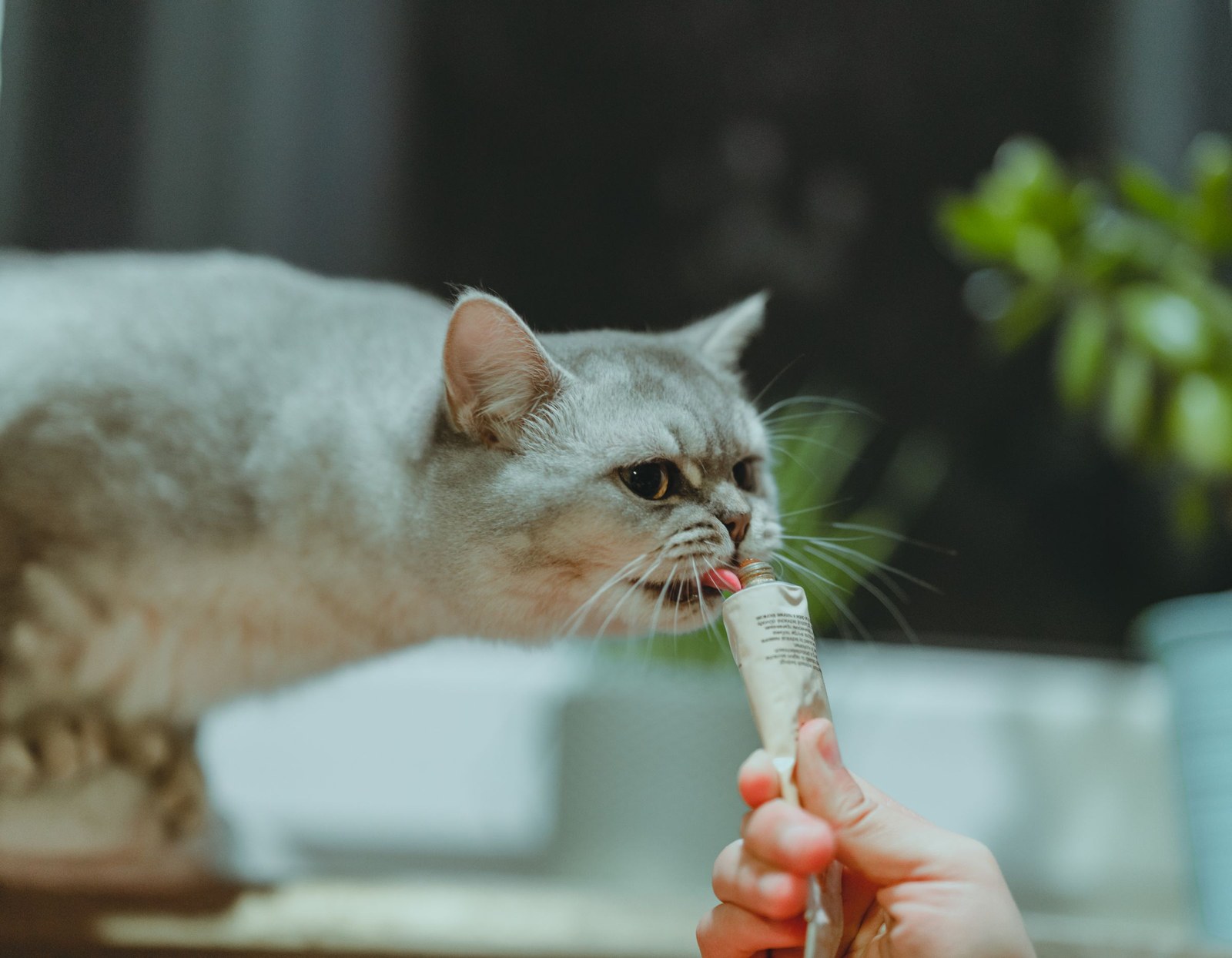
Clicker training is a way of talking to your cat in real time: the clicker makes a short, identical sound that marks the exact instant she does something you like, and a tiny treat follows within a second or two so she connects the sound, the behavior, and the reward. Because the click is faster and more consistent than your voice, it tells her precisely which action earned the treat — the nose touch, the paw lift, the moment she chose her mat — instead of leaving her to guess.
Why a click works better than praise alone
Praise is wonderful but sloppy as information. "Good girl!" arrives at different moments, in different tones, and usually while you are also moving, laughing, or reaching for the treat bag — all noise to a cat trying to solve a puzzle. The click is a clean signal: same sound, same meaning, every time. It also buys you a beat of grace. Once a cat understands the click promises a treat, you can mark the behavior instantly and deliver the treat a moment later, which matters when you are training something fast or at a distance, like a recall across the house.
Step one: charge the clicker
Before teaching anything, teach the sound itself. Pick two or three short sessions in a quiet room, armed with about ten pea-sized treats she genuinely loves — a bit of plain cooked chicken, a lick of tuna paste, or her favorite soft treat broken small.
- Click once, then immediately give a treat. Do not ask for any behavior.
- Wait until she looks away or sniffs around, then click and treat again.
- Repeat the full set of ten, then put the clicker away and do something else.
By the end of the second or third session, most cats visibly perk up and look for the treat at the sound. That look is the whole foundation: the click now means "yes, that — and payment is coming."
Your first real behaviors
Start with something she already offers naturally. Target training is the classic opener: hold a chopstick or your fingertip a short distance from her nose, click the instant she touches it, treat, and repeat. Within a session or two she will be following the target onto her mat, into her carrier, or off the counter — which quietly makes the clicker a household tool, not a party trick. Keep sessions to two or three minutes, end on a win, and train before a meal when treats have maximum value. If she wanders off, the session is over; never chase or coax her back.
Troubleshooting and safety
Use tiny treats and subtract a little from her meals on training days so enthusiasm does not become extra pounds. Some cats find the click itself sharp — muffle it in your palm or use a pen cap or a soft tongue-click instead. And never click without paying during the learning phase; a clicker that lies is just noise.
When you want hands-on coaching — timing is easier to learn by watching — KinsLe's Pet Services Directory helps you find local trainers, along with groomers, vets, and sitters in your area. Through the Pet Services Directory listings on KinsLe, a trainer based in your area can coach your timing on those first target touches in person.