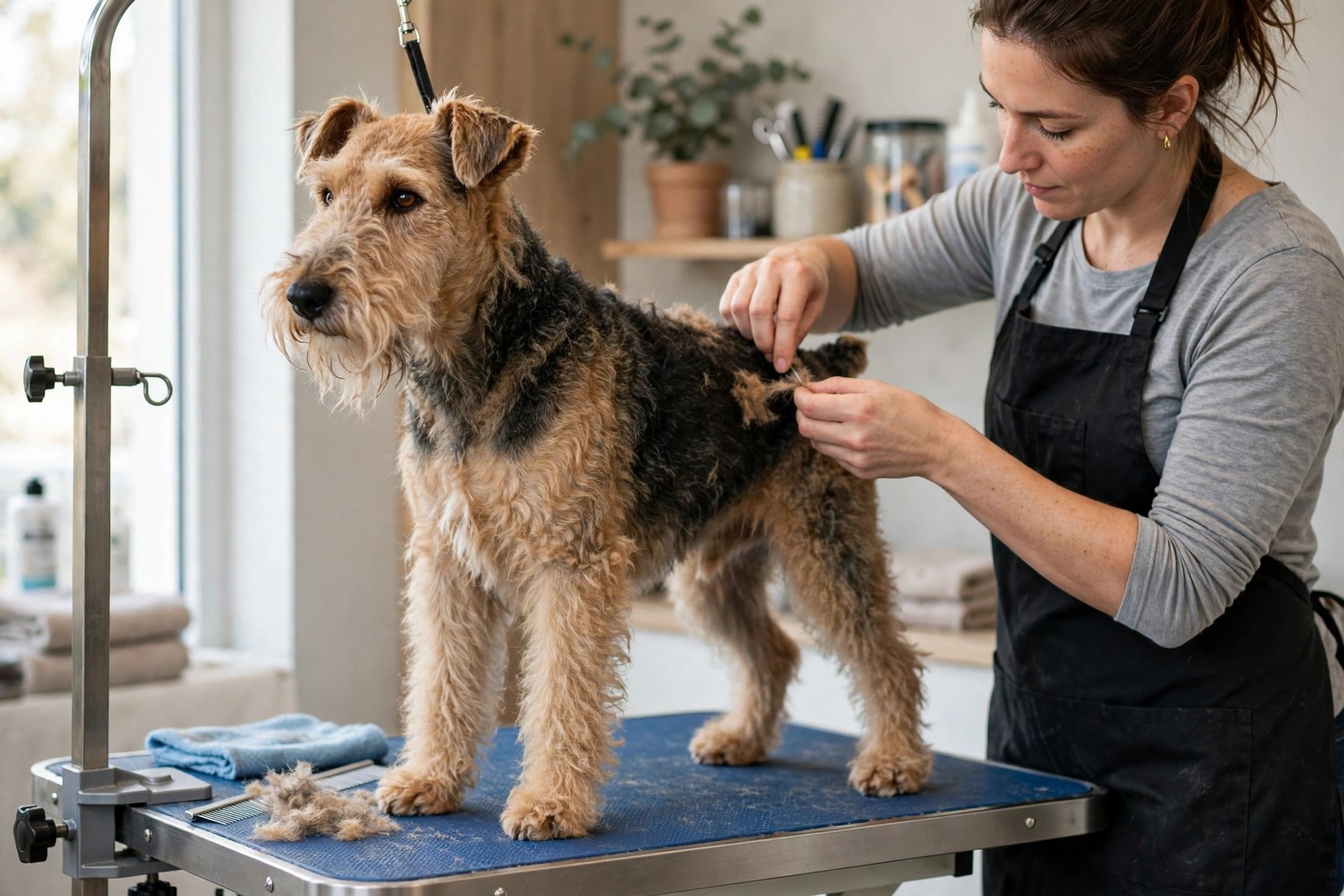
Hand-stripping sounds mysterious until it is described plainly. Working groomers pull loose, spent outer hairs from the root, clearing space for fresh wire hair to emerge. Nothing is shaved and nothing is cut to a uniform length. Each dead hair is pulled from the follicle when the coat is ready to release it, leaving room for the next wire hair.
How a coat becomes ready to strip
A wire coat grows in cycles. As a section matures, the outer hairs loosen and the coat looks blown, faded or overlong. At that stage, a groomer can grip small amounts of the dead topcoat between finger and thumb, sometimes protected by finger coverings, or draw a stripping tool through the coat to take the loose hairs out.
Technique matters because the aim is to remove only hair that is ready. Pulling at tight, growing coat is uncomfortable and can damage the result. A groomer experienced with the breed reads the coat in sections, because the jacket, head, legs and furnishings may not be ready at the same time. Many stripped coats are maintained on a rolling pattern, with part of the coat worked little and often rather than the whole dog stripped bald in one long appointment.
Owners trying it at home should learn on a small area, work briefly and stop if the dog objects repeatedly. The dog's comfort is information, not disobedience to push through.
The real choice for a pet dog
A pet wire-haired dog does not strictly need hand-stripping. Clipping is acceptable, kinder to many owners' schedules and often more comfortable for a dog that dislikes being handled for long periods. The choice should be made without guilt, provided the trade-off is understood.
Clipping cuts the dead topcoat instead of removing it from the root. The soft undercoat makes up more of what remains, so over repeated clips the coat usually feels softer, looks paler and loses some of the harsh, weather-resistant character of a stripped coat. Once a coat has been clipped for a long time, returning to a fully stripped texture can be slow and may not be complete. For a family pet whose role is walks, play and companionship, a softer and paler coat may be a price the owner happily accepts.
When stripping is worth the effort
Stripping matters where the traditional coat itself is the point: a show dog presented in a harsh jacket, or an owner who values the texture, colour and weather-shedding quality that stripping preserves. It can also suit a dog that tolerates the process calmly and a household able to keep the rolling appointments the coat needs.
It is a poor fit if sessions become a battle, if the dog must be restrained through obvious discomfort, or if appointments are so rare that every visit becomes a marathon. Short sessions protect both comfort and coat quality. A good groomer will say when a section is not ready, when the dog has had enough for the day, and when clipping part or all of the coat is the sensible compromise.
Before deciding, ask to feel a stripped coat and a clipped coat on the same breed if possible. That tactile difference explains the debate better than any photograph, and it helps you choose based on the dog in front of you rather than on tradition alone.
Care Teams in the KinsLe app gives that rolling grooming rota a visible owner, so sessions stay short and coat checks happen on schedule.