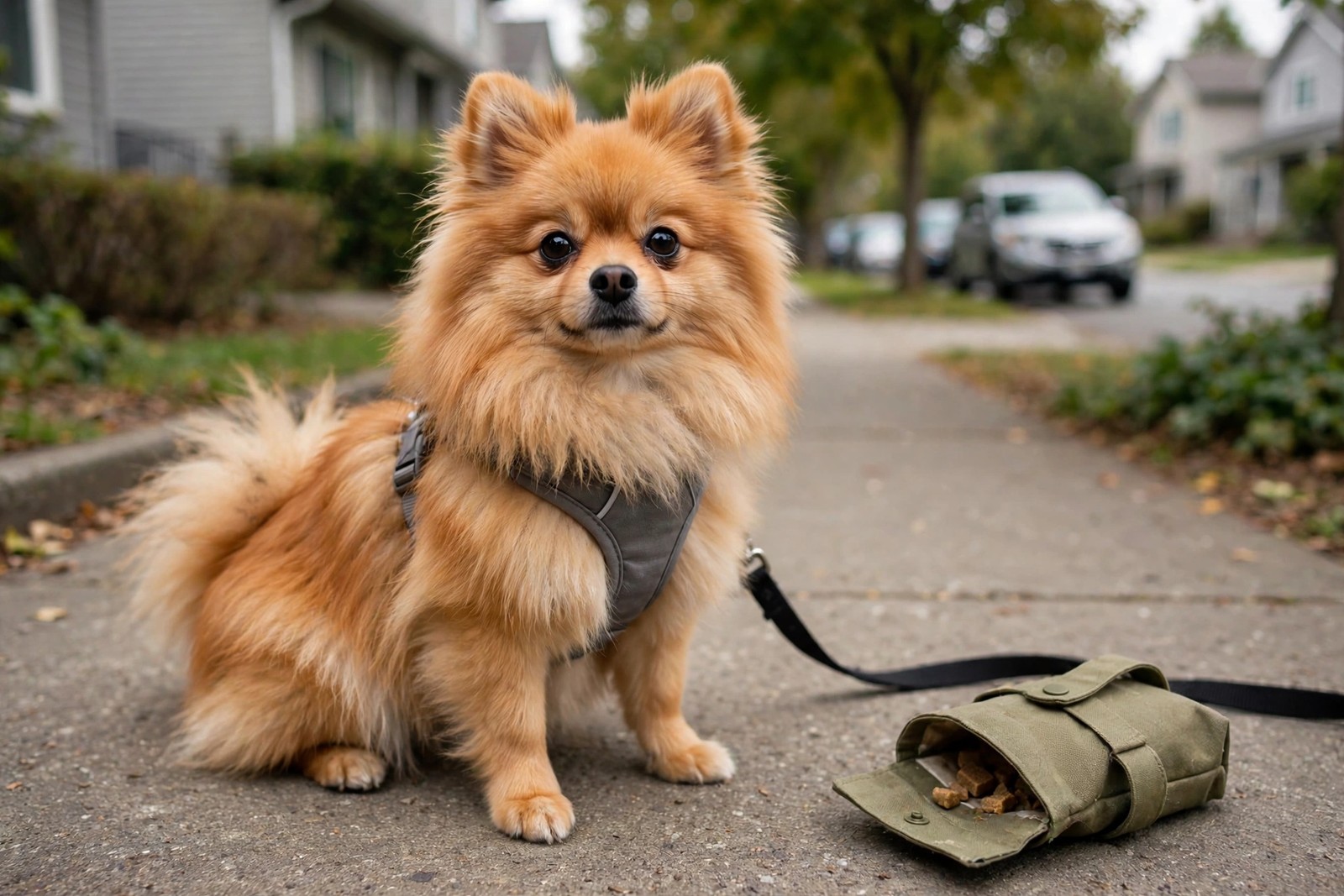
Pomeranian days are busy, bright and narrated. This foxy little dog of 3 to 7 pounds (about 1.5 to 3 kilograms) typically announces visitors, deliveries, neighbourhood cats and suspicious leaves with equal conviction, then trots off satisfied that the household has been properly informed. Exercise needs are modest in distance: 20 to 40 minutes of walking across the day, plus indoor play and training games that give the busy mind something legitimate to solve. Walks are social events where a Pom often attempts to greet or challenge dogs ten times its size, so a harness, a sensible lead and calm redirection protect both pride and body. Fragility hides under the confidence, and rough play, falls from arms or sofas and boisterous toddlers can injure small bones, so handling rules matter from the first day.
Managing the Alarm System Honestly
The voice deserves its own plan. Pomeranians often bark to alert, to demand and to celebrate, and households fare better when they teach a reliable quiet cue, reward pauses generously and manage triggers such as window access to a busy street. Barking that earns attention, even annoyed attention, tends to repeat, while a dog who is thanked, checked and then settled learns that one announcement suffices. Training generally goes well because the breed is bright and people-focused, although sessions should stay short, varied and rewarding, and house-training a tiny dog requires frequent trips outside and real consistency, since small accidents are easy to miss and easy to learn from, for the dog. Alone time builds gradually, in a safe pen or room with chew options, rather than through sudden long absences.
Brushing to the Skin Two or Three Times a Week
The famous coat is a double structure: a soft, dense undercoat under longer guard hairs, and brushing two or three times a week means parting the coat and working in sections down to the skin, not polishing the surface fluff. Skipped sessions let the undercoat compact around the neck, chest and hindquarters, where mats then pull at the skin. Seasonal shedding increases the workload for a few weeks at a time. Teeth need equal honesty about effort: small jaws crowd their teeth, so gradual toothbrushing, dental checks during grooming and veterinary advice about tartar or loose teeth belong in ordinary care. Eyes, ears and tiny paws get a quick check in the same sitting, and nails need regular trimming because light dogs wear them down slowly.
Evenings Centre Stage
By evening a Pom usually claims the household's attention as a right. Expect a dog installed on the cushion beside its favourite person, performing spins and bright-eyed begging at dinner, and sleeping within earshot of the family. Food portions are small and should be weighed rather than guessed, since a few daily extras show quickly on a 2-kilogram frame, and training rewards work when they are tiny fragments delivered often. Households wanting a quiet, self-effacing pet may find the commentary wearing, while owners who enjoy a theatrical, devoted companion usually find the trade delightful.
Daily logistics in a Pom household include protecting a confident dog from physical misjudgement. Ramps or steps beside sofas and beds reduce jump-down injuries, visitors are briefed to let the dog approach from floor level rather than scooping from above, and dropped food, pills and small objects are retrieved quickly because a dog this size reaches floor debris first and is affected by quantities a larger dog would shrug off. Food storage, bin lids and handbag zips all become part of ordinary Pom-proofing.
Barking patterns, dental notes and brush cadence travel with this dog inside KinsLe Transferrable Profiles whenever a household change happens.