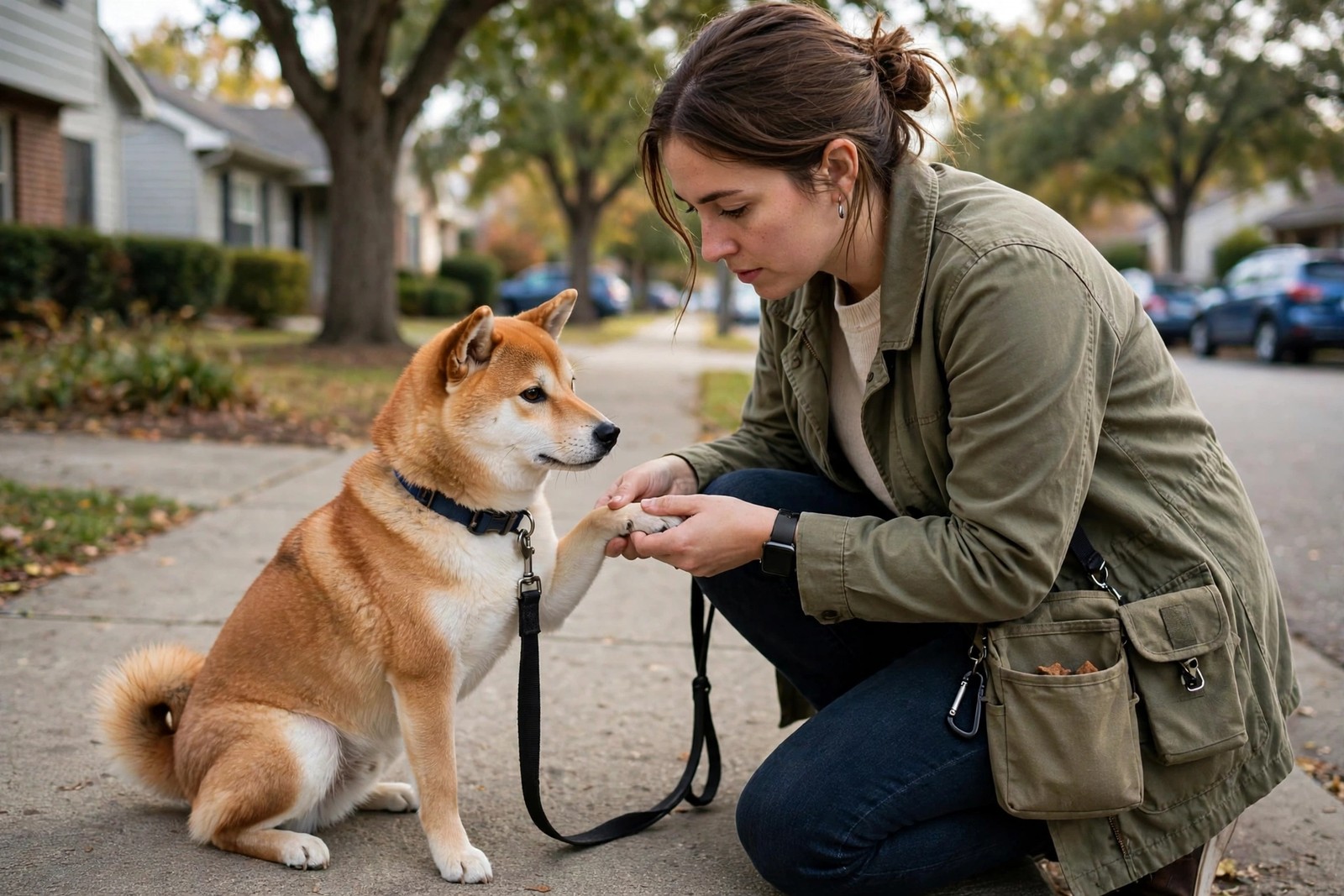
Shiba days run with feline self-possession. A healthy adult typically needs an hour to ninety minutes of exercise, delivered as proper walks with sniffing time, exploratory detours and enough novelty to engage a bright, independent mind. Many Shibas keep themselves fastidiously clean, groom like cats, avoid mud where larger breeds would wallow and object to wet pavements with visible distaste. That independence shapes every outing. Off-lead reliability is hard-won in this breed, and a loose Shiba with a squirrel in view may treat recall as a suggestion open to review. Secure fields, long lines and double-checked harnesses are therefore the working standard. Doors, gates and garden fencing deserve the same discipline at home, because a dog this quick and curious can slip through a gap during a delivery without any announcement.
Affection on Negotiated Terms
Household relationships follow Shiba rules. The breed often bonds deeply with its own people while rationing physical affection, choosing when to approach, when to accept stroking and when to retire to a private vantage point. Visitors usually receive a calm assessment rather than a welcome ceremony, and children need clear guidance about respecting a dog who dislikes being grabbed or cornered. Early social learning matters greatly: puppies who meet varied people, sounds and handling in positive, unhurried doses tend to grow steadier, while forced interaction teaches suspicion. Training works well as negotiation, with short sessions, clear payoffs and no battle of wills, since pressure typically produces a dog who simply leaves the discussion, mentally or physically.
Light Grooming With Two Annual Exceptions
At 17 to 23 pounds (about 8 to 10.5 kilograms), a Shiba is a sturdy small dog whose dense double coat usually needs brushing only once or twice a week. Twice a year the undercoat blows out, and brushing becomes a near-daily, high-volume exercise for several weeks while the new coat comes through. Nails, teeth and tolerance of handling are the long-term project. Many Shibas dislike nail trimming and restraint, and some produce the famous Shiba scream when handled against their will, so cooperative practice from puppyhood, touching paws, lifting lips and rewarding calm stillness in tiny steps, pays for itself at every veterinary visit. Report persistent skin irritation, hair loss outside the normal coat blow or changes in appetite or energy to your veterinarian rather than waiting for the next routine appointment.
Evenings at a Chosen Distance
Evenings tend to be quiet and orderly. A walked, fed Shiba often selects a spot with a view of the room, supervises without fuss and joins the sofa on invitation or personal initiative, rarely both. Food portions should be measured, since a self-controlled manner can coexist happily with steady weight gain, and body condition is easy to check under the coat by hand. Owners who admire cats often understand this breed instinctively, while owners wanting constant, demonstrative devotion may feel underappreciated despite the deep, quieter bond on offer.
Money and effort in a Shiba household concentrate on security and patience rather than grooming or food. A well-fitted escape-resistant harness, a long line for open spaces, secure fencing checked at ground level and a solid crate or pen for safe downtime are the core purchases, while food for a dog of this size stays modest. The less visible investment is time in cooperative care: veterinary teams who allow unhurried appointments, gradual muzzle training for safety during examinations and micro-steps of handling practice at home all protect a dog who experiences restraint as a serious matter.
Escape routes, handling notes and coat-blow timing remain attached to this Shiba inside KinsLe Transferrable Profiles when care changes hands.