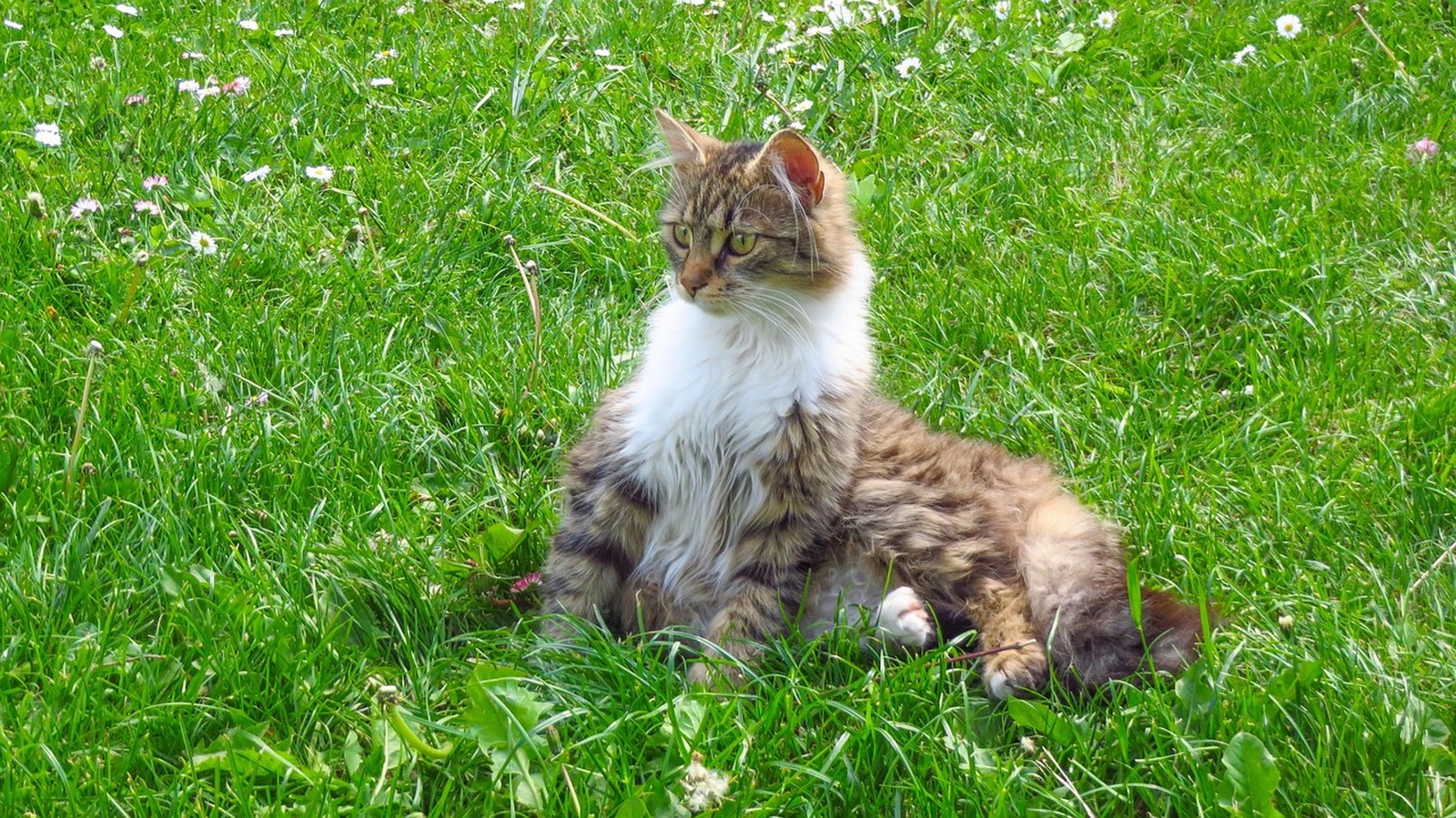
Loose fur ends up on sofas because it leaves the cat wherever the cat happens to be. The fix is to collect it deliberately, on your schedule, at the one place it is guaranteed to gather: the grooming session. Brushing is the whole strategy, but the tool, the frequency, and the technique all change with coat type.
Match the Tool and Frequency to the Coat
Short-haired cats shed steadily all year and respond well to one thorough session a week. A fine-toothed metal comb draws out dead undercoat that a brush skims over, and finishing with a dampened rubber grooming glove or a slightly damp hand lifts the strays the comb loosened. Long-haired cats need several shorter sessions a week rather than one marathon, because their loose hair tangles into the standing coat and forms mats behind the ears, in the armpits, and along the belly. Work a slicker brush through in layers, then follow with a wide comb: if the comb glides to the skin, the session is done; if it snags, loose hair remains. Medium and double coats sit between the two, and during the heavy spring and autumn coat changes, every cat benefits from doubling frequency for a few weeks rather than fighting the fallout daily.
Technique That Actually Collects Hair
Brush in the direction the coat lies first, then gently against the growth on tolerant cats to lift the undercoat, always with light pressure, because pressing a slicker hard enough to scratch skin teaches the cat to leave. Keep sessions short and end them before the tail starts lashing or the ears flatten; a cooperative five minutes twice a week collects more hair than a wrestling match once a month. A treat or a meal straight after grooming builds the association that makes the next session easier. Work over a hard floor or a washable blanket rather than the sofa, and brush just before you vacuum or lint-roll soft furnishings, so whatever the session shakes loose is cleaned up in the same pass instead of redistributed.
Tools for Cats Who Refuse Brushes
Some cats accept hands but not hardware. Grooming gloves, worn while stroking and fussing the cat as normal, collect a surprising amount of loose hair and suit nervous cats and kittens being introduced to grooming. A slightly damp microfibre cloth stroked along the coat works on the same principle for short coats. Start these cats with thirty seconds of contact and stop while things are still calm; tolerance grows from sessions that end well.
Diet, Hydration, and When Shedding Is a Symptom
A complete diet and reliable water intake keep skin and coat in normal condition, and a cat who drinks poorly may shed more heavily, so fresh water in a spot the cat actually uses is part of fur control. Shedding itself is normal, but bald patches, flaky or reddened skin, scabs, a greasy coat, or a sudden change in how much hair is coming out are not grooming problems: they are reasons for a vet visit, because skin disease, parasites, pain, and stress all show up in the coat. Hairballs that increase sharply despite regular brushing deserve the same conversation.
Turning brushing into a scheduled task shared through KinsLe Care Teams, with each session marked complete, keeps the routine steady even when one person's week gets busy.