
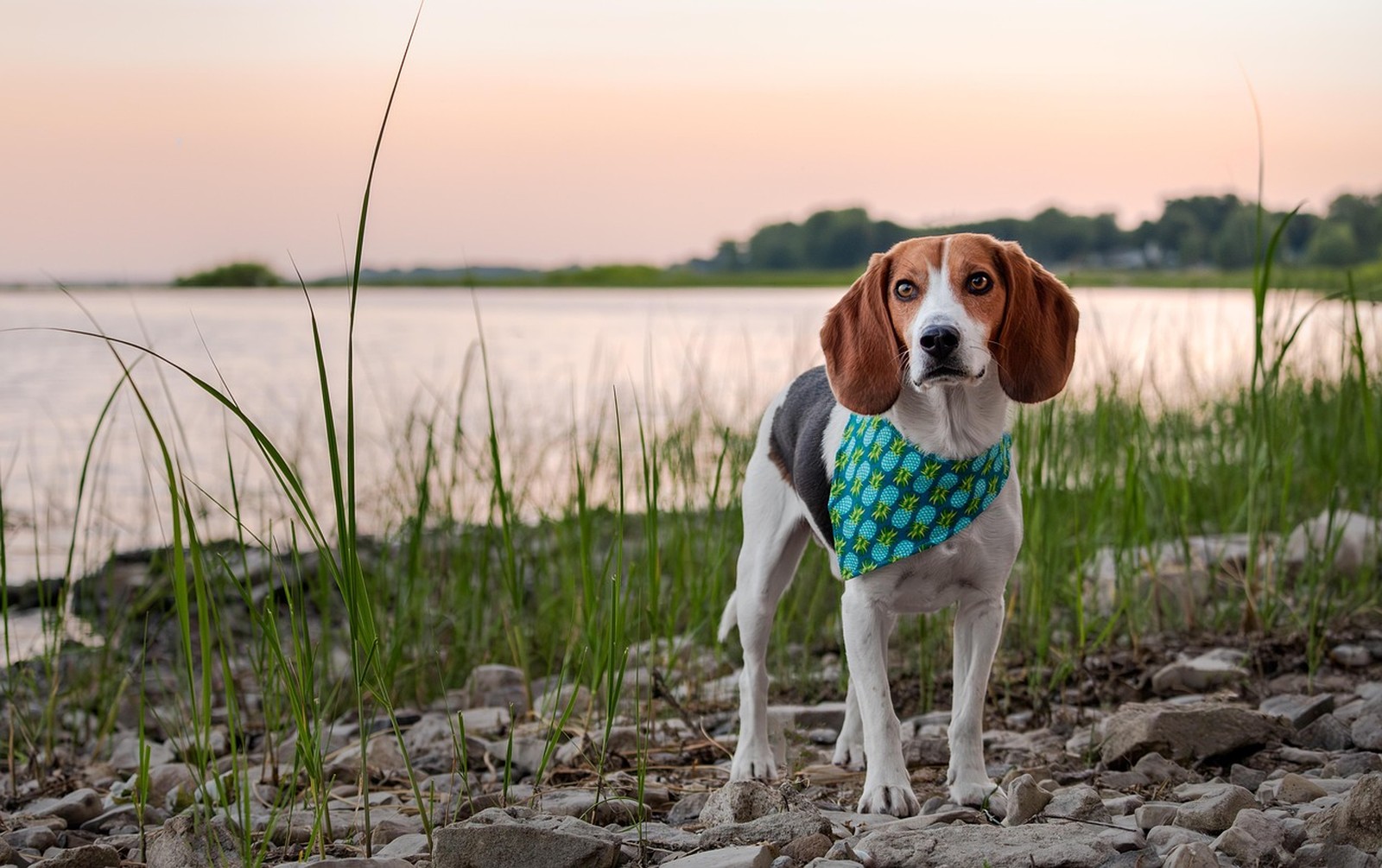
Put a Beagle and a Basset Hound side by side and the family resemblance is obvious: long ears, pleading eyes, tricolor coats, and noses that run their lives. Both were bred to follow scent for hunters on foot, the Beagle as a lively rabbit hound and the Basset as a slower, lower dog for tracking in dense cover. Living with them, though, is a study in tempo, because one is a busy small athlete and the other is a heavy, deliberate dog who conserves energy like it is money.
Build and Physical Presence
A Beagle stands taller on longer legs, compact and sturdy, and comes in two size varieties, both light enough to scoop up in an emergency. A Basset Hound is far heavier than he looks: short legs under a long, massive body, loose wrinkled skin, and a weight that surprises everyone who tries to lift one. That build has daily consequences, since a Basset should not be doing endless stairs or jumping from furniture, ramps and ground-floor living suit him, while a Beagle handles stairs and car jumps without a second thought.
Ears and skin care differ too. Both breeds need regular ear checks because those long, heavy ears trap moisture, but the Basset adds skin folds to wipe, droopy lower eyelids that collect debris, and a tendency to drool that a Beagle owner simply does not factor into daily life.
Energy and Exercise
This is the deciding difference for most homes. A Beagle is an energetic dog who needs a solid daily workout of walks, sniffing games, and play, and who becomes noisy, destructive, and escape-minded when under-exercised. A Basset needs real daily exercise too, and skipping it invites weight gain and boredom, but the pace is a steady amble with long sniffing pauses, and at home the Basset is a professional-grade napper.
Both breeds follow scent past the point of recall, so off-lead freedom belongs in secure areas for each. The Beagle is the more determined escape artist, climbing and digging out of gardens in pursuit of smells, while the Basset is more likely to wander off nose-down and then be genuinely difficult to hurry home.
Voice, Personality, and Trainability
The Beagle's bay is bright, musical, and carries a long way, and the breed is famously merry, sociable, and pack-oriented, usually loving other dogs and greeting the world as a friend. The Basset's voice is deeper and more mournful, and the personality matches: gentle, patient, comically stubborn, and devoted without the Beagle's buzzing cheerfulness. Bassets are often outstanding with children precisely because so little rattles them.
Neither hound trains like a herding breed. Both work for food, both lose focus when a scent arrives, and both respond to patient, reward-based training delivered in short sessions. The Beagle usually learns the game faster and then improvises; the Basset understands perfectly and decides whether today is a compliance day, which owners either find hilarious or maddening, with little middle ground.
Feeding, Weight, and Choosing
Both breeds are champion food-seekers with slow satiety signals, and both gain weight readily, the Basset especially, since his low build shows extra pounds as strain on legs and back. Measured meals, controlled treats, and resisting those eyes at the table are lifelong disciplines in either breed, and both shed more than newcomers expect from short coats.
Choose the Beagle for an active household wanting a cheerful, portable hound who joins every outing at full enthusiasm. Choose the Basset for a slower home wanting a calm, funny, affectionate dog whose exercise is a daily stroll rather than a workout. Whichever hound comes home through rescue or rehoming, KinsLe's Transferrable Profiles transfers his profile with his measured feeding routine and known history intact, so the new household does not have to relearn his limits the hard way.