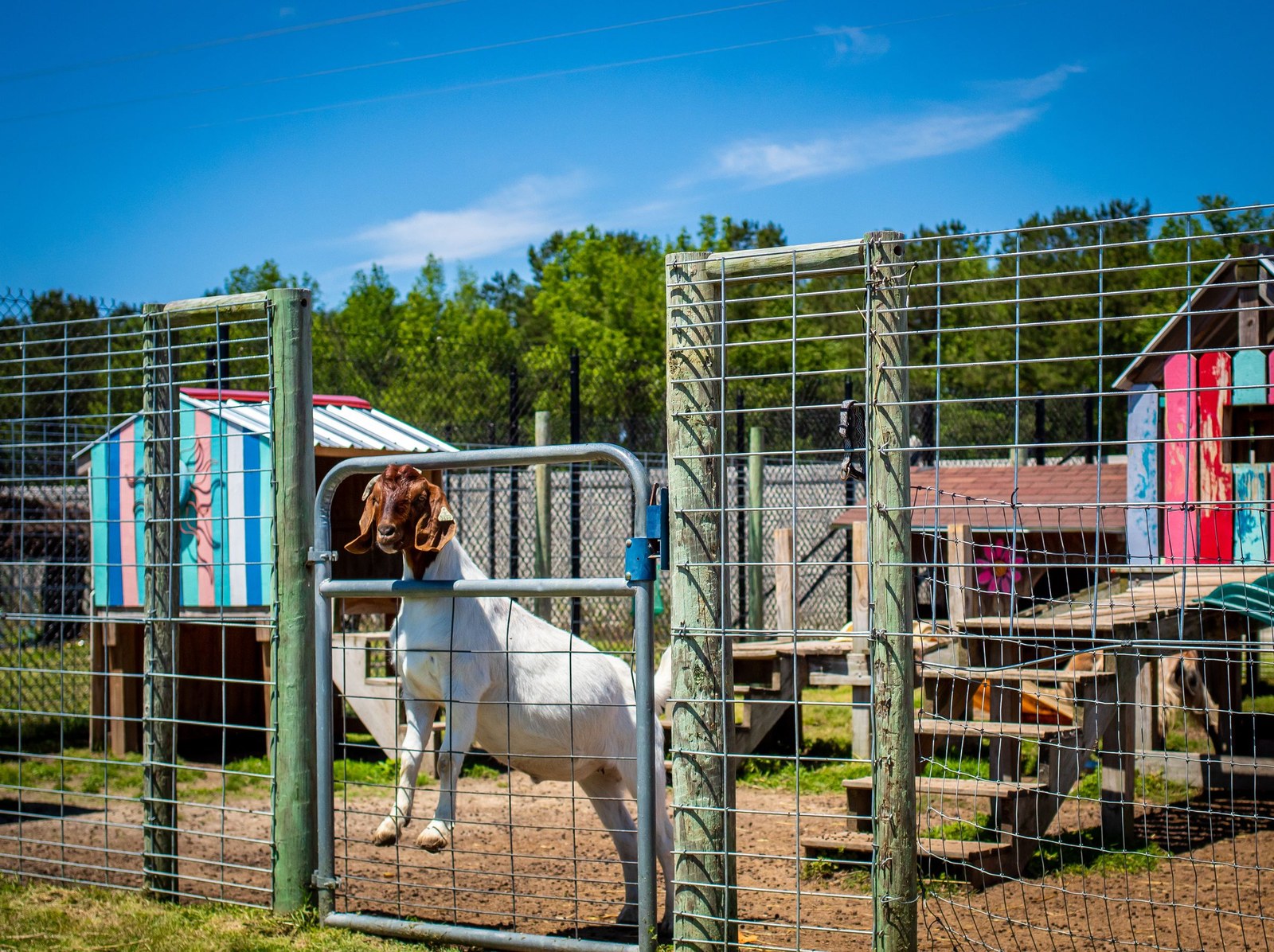
Goats need fencing they cannot climb, squeeze through, or push under: sturdy woven wire or rigid stock panels, typically 4 to 5 feet high, pulled tight on solid posts, with secure, goat-proof gates. A single strand of wire, loose netting, or a decorative garden fence will not hold a motivated goat — and sooner or later, every goat is motivated by whatever is on the other side.
Why Goats Beat Ordinary Fencing
Goats are built to test fences. They stand on hind legs to browse, rub hard against posts and wire to scratch, climb anything with footholds, and squeeze through gaps that look impossibly small — kids especially. They are also social and curious: if one goat finds a weak spot, the herd learns it within the hour.
That combination rules out several common choices. Barbed wire injures goats without reliably containing them. Loose chain-link gives climbing footholds and can trap heads. Plain high-tensile strands spaced for cattle let goats walk through between wires. Horned goats add another hazard — they can catch horns in wide-spaced woven wire, so mesh size and horn status need to be planned together.
What Actually Works
Reliable goat fencing usually combines strength, tightness, and height:
- Woven wire (field fence) with small openings, especially near the bottom, on well-set posts with braced corners, pulled genuinely tight
- Rigid welded stock panels for smaller pens, sacrifice areas, and kidding pens, secured so they cannot be lifted or bowed out
- Electric offset wire as a supplement — a strand at goat nose height inside a physical fence teaches respect for the boundary and stops rubbing and climbing pressure
- Gates that latch positively, ideally self-closing, with gaps at the sides and bottom too small for a kid
Height needs depend on breed and individual. Many goats respect a solid 4-foot fence, but athletic breeds and known jumpers need 5 feet, and bucks in breeding season deserve your strongest pen, not your most convenient one. Keep climbable objects — spools, stumps, shelters, hay feeders — well away from the fence line, since a goat on top of a spool has effectively lowered your fence by two feet.
Walk the Line, Often
Even the best fence fails by inches. Walk the perimeter regularly, looking for sags, lifted bottom edges where goats have worked soil away, fallen branches, holes dug by dogs or wildlife, and gate hardware loosening. Fix small problems the day you spot them — a goat will enlarge a small gap overnight, and a herd loose near a road or a neighbor's garden is a serious safety and liability problem, not a funny story.
After storms, check for fallen trees on the fence and for electric shorts from debris before you assume the fence is still doing its job.
Kid-proofing deserves a separate pass before kidding season: newborn and young kids slip through openings adults cannot, and they wander away from their mothers quickly.
Logging Fence Fixes With KinsLe
A fence problem spotted by one person often never reaches the person with the tools. KinsLe Family Sharing is the per-pet care circle with roles, so anyone in your farm circle who spots a sagging section, a loose gate, or a branch on the wire can log it where the whole circle can see it against the goats' shared care notes. The fix stops depending on someone remembering to mention it at supper.
That shared record also builds a history — the corner that sags every spring gets a proper brace, not a third temporary patch. Through the Family Sharing view on KinsLe, every person helping with the goats can read the latest fence notes — a lifted bottom edge, a loose gate latch, a branch pressing on wire — in one shared place.