
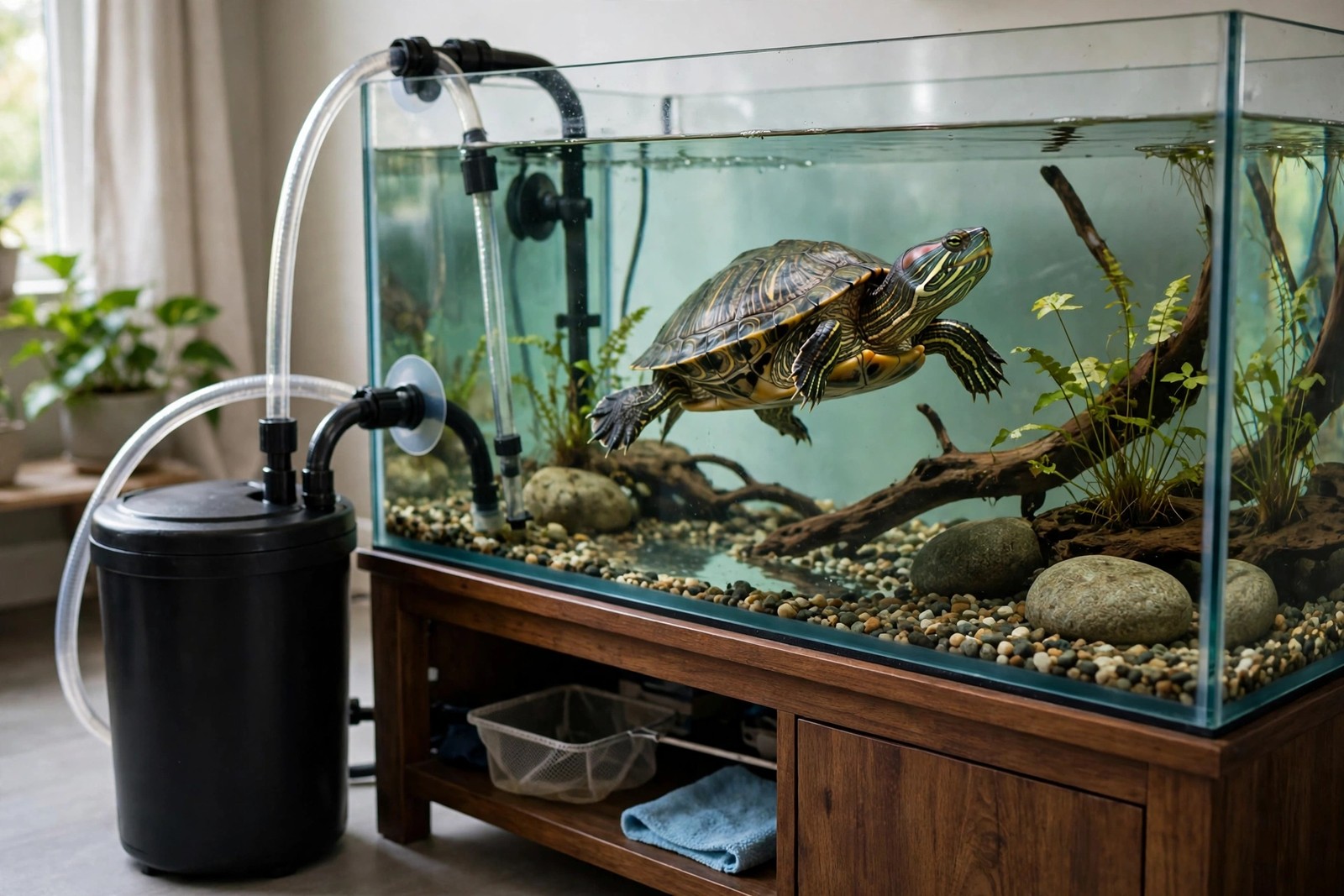
An aquatic turtle tank needs a filter rated for at least two to three times the tank's volume — so a 40-gallon setup should have filtration sold for an 80- to 120-gallon fish tank. Turtles produce far more waste than the fish those ratings assume. Canister filters are popular for larger turtle setups because they hold plenty of media, move a lot of water, and keep it clearer between changes.
Why Turtle Filtration Has to Be Oversized
Fish ratings assume a relatively light waste load. A red-eared slider, cooter, or painted turtle eats larger meals, produces bulkier waste, and constantly stirs the bottom, resuspending debris that a small filter cannot capture. An undersized filter may run constantly yet still leave water hazy, smelly, and quick to foul after feeding.
Think in terms of turnover and media space, not just the number on the box. Mechanical media traps particles, biological media houses bacteria that process waste, and that combination needs room. If you plan to upgrade tank size as your turtle grows — and most aquatic turtles need considerably more room as adults — buying filtration for the future tank can save a second purchase later.
Choosing Between Filter Types
Canister filters sit outside the tank, hold the most media, and suit medium to large setups well. Their hoses and intake need regular checks for waste buildup, and the output can be positioned to create gentle circulation without blasting a small turtle around.
Internal filters work for small juvenile tanks but fill quickly and take up swimming space. Hang-on-back filters can struggle with turtle tanks because the water level is often kept lower than the filter expects, and turtles can dislodge them while climbing. Whichever type you choose, make sure the intake is guarded so small turtles or loose decor cannot block it, and that your turtle cannot climb cables or hoses out of the tank.
Whatever you pick, filtration does not replace water changes. Even an excellent canister setup needs those weekly partial changes described in good turtle care — the filter manages waste between changes, it does not eliminate it.
Maintenance That Keeps It Working
Rinse mechanical media regularly in removed tank water, check the impeller if flow drops, and replace worn media on the maker's schedule without swapping everything at once. A sudden drop in flow often means a clogged intake or overdue rinse rather than a broken filter. Keep spare media and seals on hand so a maintenance day never becomes a no-filter week while you wait for a delivery.
Note your filter's rated size, media change dates, and any flow problems. Patterns matter: if clarity worsens right after every feeding day, the filter may be coping but the feeding routine needs tightening too.
Sharing Filter Duties With Care Teams
In a household where several people feed and check the turtle, filter care is the task most likely to be assumed done by someone else. KinsLe's Care Teams let you assign feeding, walks, meds, and grooming-style duties — for a turtle, that translates to filter rinses, water changes, and tank checks — to family members, with timestamped completions so everyone can see what was actually finished and when. No more guessing whether the filter was rinsed this week. Keep the turtle's upkeep written down in the Care Teams schedule on KinsLe — the rinse on one person's day, the partial change on another's — and check each job off with its hour so the next helper starts from fact, not assumption.