
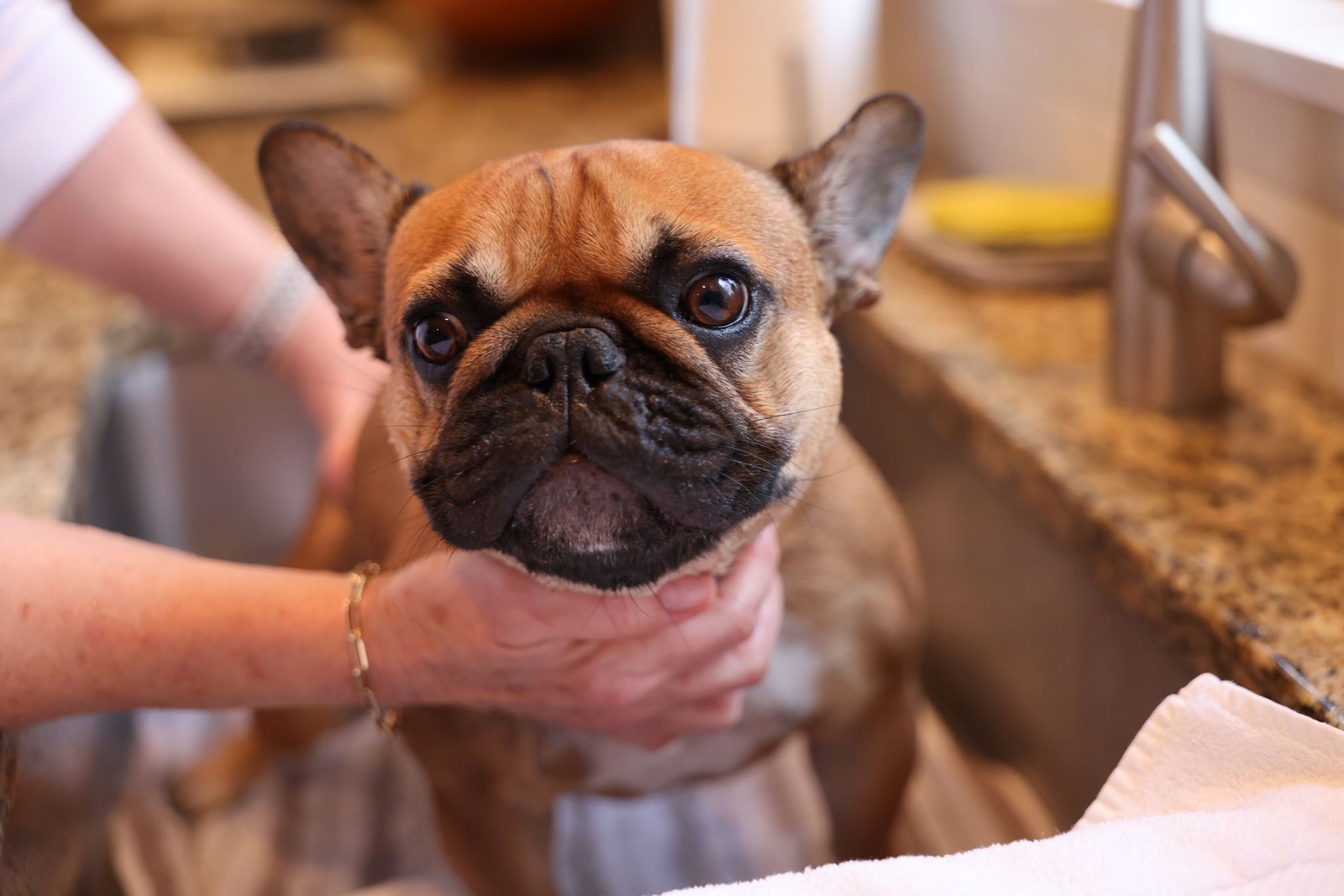
Always use a shampoo made specifically for dogs — that is the non-negotiable rule. Human shampoo, baby shampoo, and dish soap are the wrong pH for canine skin and can leave your dog itchy, dry, and more prone to irritation, even if the bottle smells wonderful and lathers beautifully. A good dog shampoo cleans without stripping the skin barrier your dog depends on.
Why Dog Skin Is Different From Yours
Human skin is more acidic than dog skin, and products are formulated around that difference. When you use a human product on a dog, you disrupt the thin protective layer on their skin surface. For a one-off emergency rinse with plain water, no harm is done — water alone is always safe. But repeated washing with the wrong product is a common, overlooked reason dogs end up scratching for days after bath day and owners blame the bath itself.
Labels matter more than marketing. Look for a dog shampoo that lists its ingredients clearly, is free of heavy artificial fragrance if your dog is sensitive, and matches your dog's need: a gentle everyday formula for most dogs, a puppy formula for young pups whose skin is still delicate, or a deodorizing formula for the dog who finds every mud puddle in the county.
When Your Dog Is Itchy, Flaky, or Sensitive
If your dog already scratches a lot, has flaky dandruff-like skin, or reacts to grooming products, do not guess your way through the pet aisle. Ask your veterinarian whether a soothing oatmeal-based formula or another vet-recommended option makes sense for your dog's individual skin. What calms one dog's skin can irritate another's, and persistent itching, redness, hot spots, or odor can signal something that shampoo alone will not fix. Your vet's guidance beats any label claim, every time.
A useful habit is the patch approach: when trying a new product, wash a small area first, rinse well, and watch the skin over the next day before committing to a full bath. Keep baths lukewarm, massage gently rather than scrubbing hard, and rinse until the water runs completely clear and the coat feels squeak-free but not squeaky-dry.
What to Avoid on the Label and Off It
Skip products with harsh detergents meant for degreasing, heavily perfumed formulas for sensitive dogs, and any home remedy trend that promises to cure skin problems — vinegar rinses, essential oil mixtures, and similar experiments can burn or irritate, and essential oils can be genuinely unsafe for pets. Never use flea shampoo alongside other flea treatments without checking with your vet first, since layering products is not always safe. And never reach for human anti-dandruff or medicated shampoos unless your veterinarian has specifically told you to.
Store your dog's products together, note what you used and how the skin responded, and rotate only when there is a reason. Consistency makes it much easier to spot which product is the problem if itching starts.
Keeping Every Groomer in the Loop
The best shampoo choice does no good if the person bathing your dog does not know about it. With KinsLe's Pet Passport — the records packet that holds vaccines, medications, allergies, and important documents — you can also note shampoo sensitivities and skin issues in one place and share it with vets and sitters, so a groomer knows what to use and what to avoid before the water runs. That small note prevents the classic problem of a well-meaning groomer using a fragranced house shampoo on a dog who needed the gentle formula. Enter each trial in the Pet Passport file on KinsLe — the shampoo used, the date you tried it, and how the skin looked a day later — so a groomer reads facts instead of guessing.