
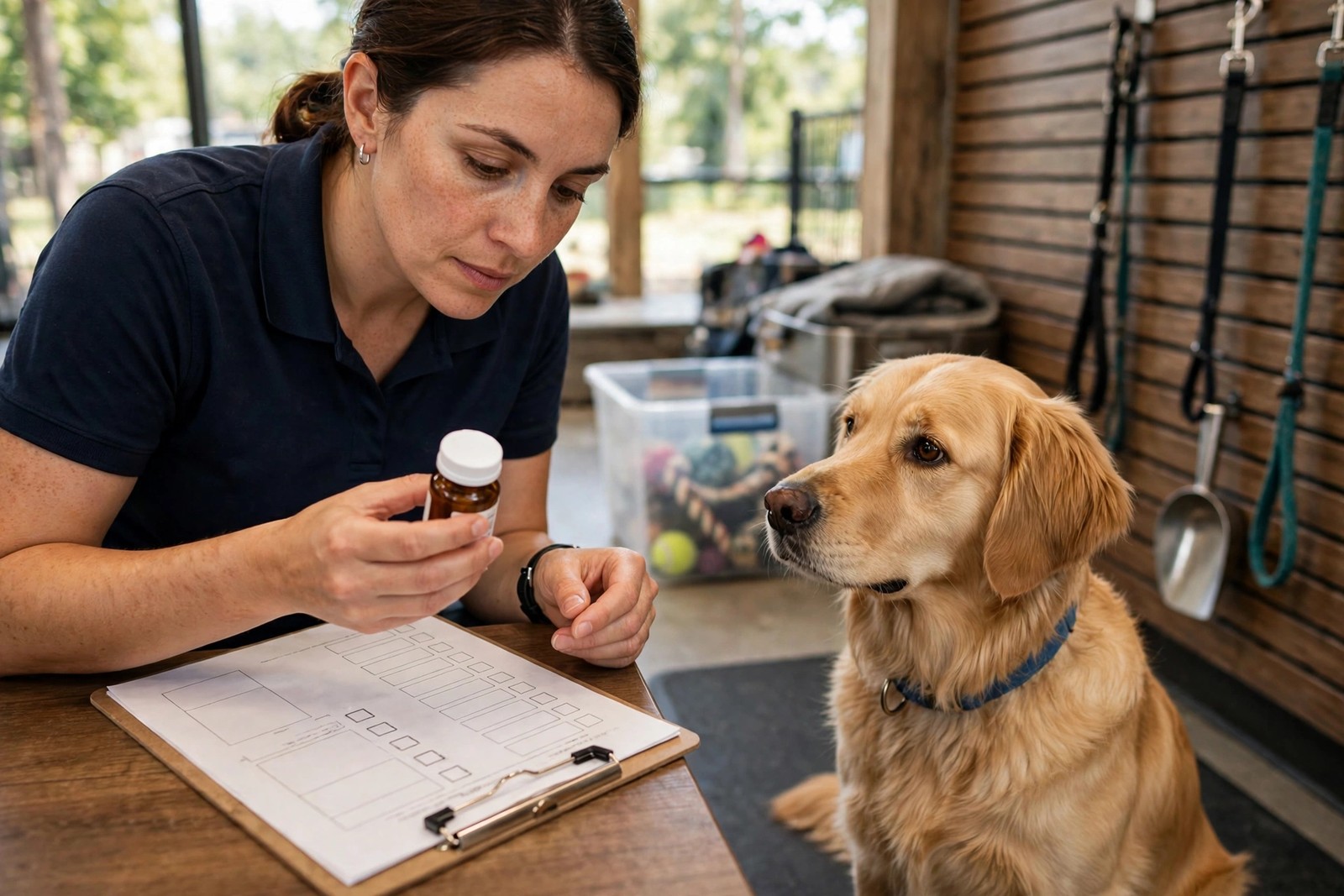
Before you board a dog who takes medication, ask four things: who administers it, how each dose is logged, whether there's an extra charge, and what the facility does if a dose is refused or your dog seems unwell. A good kennel answers all four clearly and without hesitation. Medication handling is where boarding stops being about play yards and becomes about trust, so get specific answers in writing before drop-off day.
The questions that actually protect your dog
Work through this list when you tour or call:
- Who gives medications — any staff member, or trained staff only?
- How do you record doses? Is there a chart initialled at each administration?
- Can you handle my dog's format — pills in food, a pill pocket, eye drops, ear medication, or injections? (Be honest if your dog fights oral meds; staff need to plan.)
- Is there a per-dose or per-day medication fee?
- What happens if my dog spits out, refuses, or vomits a dose?
- How are medications stored — refrigerated if needed, and kept separate from other dogs' supplies?
- If my dog seems unwell, who decides whether to call my vet or an emergency clinic, and how quickly will you contact me?
A facility that gives medication 'whenever someone gets to it' is not the same as one that doses on your dog's schedule. Timing matters for many long-term medications, so ask whether they can match your home times or how they adjust them.
What to bring so there's no guesswork
Bring medications in their original labelled containers — not a mixed weekly pill pot — with your dog's name, the medication name, and the prescribing vet's details visible. Add clear written instructions: dose, time, with or without food, and what to do if a dose is missed. If your dog takes medication only when needed, describe the signs staff should watch for in plain language.
Bring a little extra beyond the stay, in case your return is delayed. And tell the kennel about allergies and any past reactions, not just current prescriptions — a dog who can't have a common treat ingredient needs that known before treat time, not after.
If your dog's health is more complex
Dogs who are elderly, diabetic, epileptic, or recovering from surgery may be better served by a veterinary boarding facility or a trusted in-home sitter than a standard kennel. Ask your own veterinarian for an honest recommendation; they know both your dog's condition and the local options. This article can't assess your dog's individual needs — your vet can.
Keeping the medication list current in Pet Passport
KinsLe's Pet Passport is your dog's records packet — vaccines, medications, allergies, and documents together in one place, shareable with vets and sitters. Keep the medication list in the Passport updated every time a prescription changes, and share that packet with the boarding facility before the stay. Staff then have the medication names, allergy warnings, and your vet's details in one consistent document instead of scattered texts and sticky notes.
Clear questions plus a complete, current packet is how medication stays routine even away from home. Send the Pet Passport file on KinsLe to the facility before drop-off, so staff can follow each medication exactly as prescribed alongside the allergy warnings and prescribing veterinarian's number.