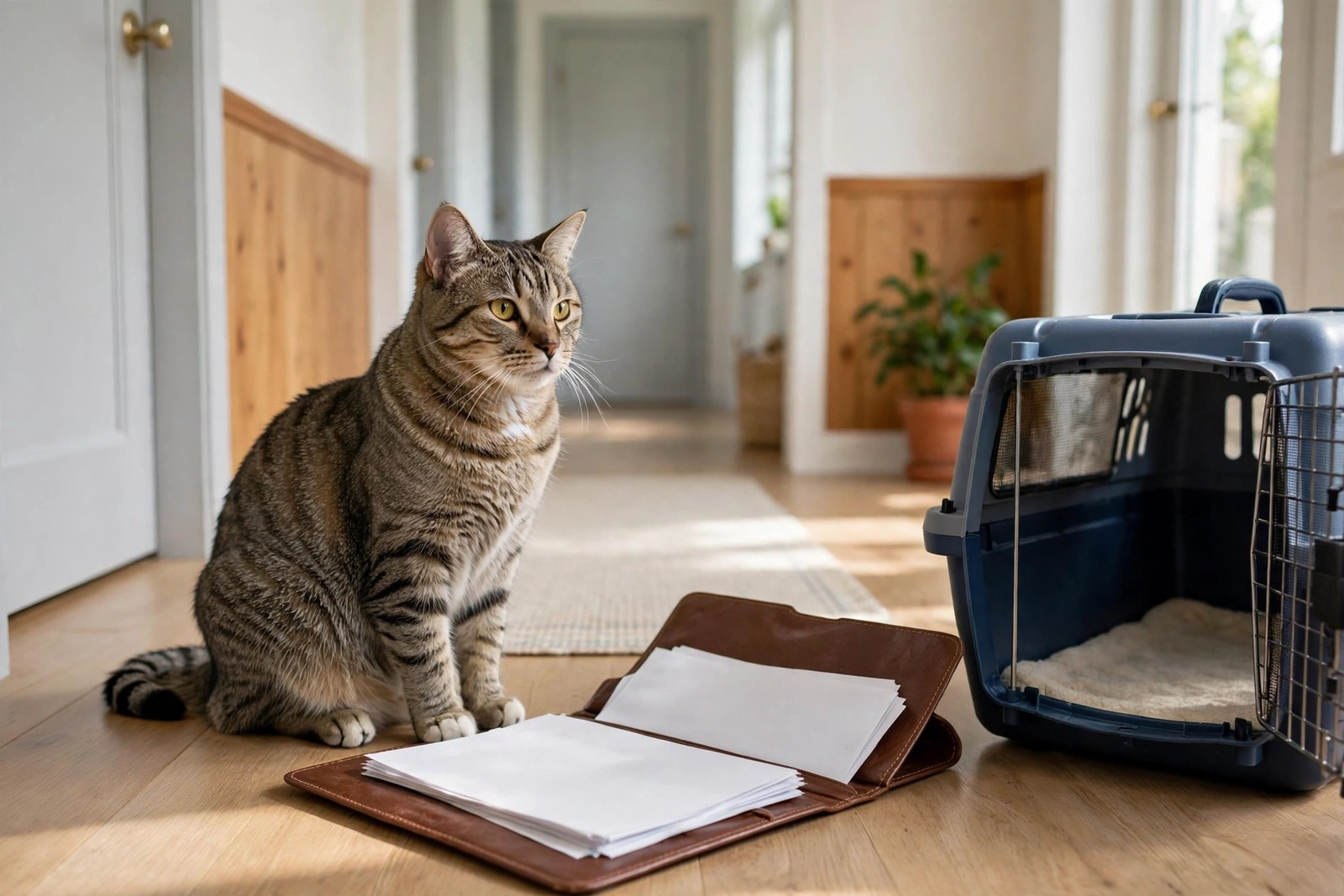
Keep five sets of records, each with its own job. A folder that holds only vet invoices will fail you the day a boarder asks for a rabies certificate or a finder needs your microchip number, so build the file by purpose rather than by where the paper happened to arrive.
Identity and Ownership Papers
Keep your cat's microchip number, the registration confirmation showing your current phone number and address, and the chip paperwork from implantation. Add adoption or purchase paperwork, any lineage papers for a purebred cat, and clear recent photos: a face shot, a full-body side view, and close-ups of unusual markings, ear tips, or a kinked tail. Update the photos yearly, and sooner for a kitten, because a grey-muzzled senior no longer matches a young cat's picture. If your details change, re-registering the chip matters more than the certificate in the drawer; an unregistered chip identifies nobody.
Health Records Worth Filing Properly
File the rabies vaccination certificate itself, not just a reminder card, plus the full vaccination record with dates for each booster. Keep spay or neuter certificates, laboratory reports, imaging summaries, dental procedure notes, and discharge instructions in date order. For a cat on long-term medication, note the name of the medicine, what it treats, when it started, and which clinic prescribed it. Weight readings deserve their own running line: a slow drift across six visits tells a vet far more than one number remembered roughly at the appointment.
Insurance, Money, and Daily Care Notes
If your cat is insured, keep the policy number, the insurer's claims contact, the renewal date, and a note of any exclusions or pre-existing conditions the policy lists. Alongside it, record the daily facts a stand-in carer needs: exact food and measured amounts, feeding times, litter type and box locations, water preferences such as a fountain, favourite hiding places, handling limits, and the behaviours that are normal for this cat, from 3 a.m. zoomies to skipping a meal during a thunderstorm.
Storing, Sharing, and Updating
Keep one paper folder at home and photographed or scanned copies in a digital folder a family member can reach. Share a trimmed copy with your sitter and emergency contact, covering identity, health essentials, feeding, and contacts rather than the whole archive. Review the file twice a year and whenever something changes: a new diagnosis, a house move, a changed phone number, or a new insurer. KinsLe's Pet Passport keeps this cat file together as one portable packet, so the certificate, chip number, and care notes travel as a set to every vet visit, boarding stay, or emergency handoff.