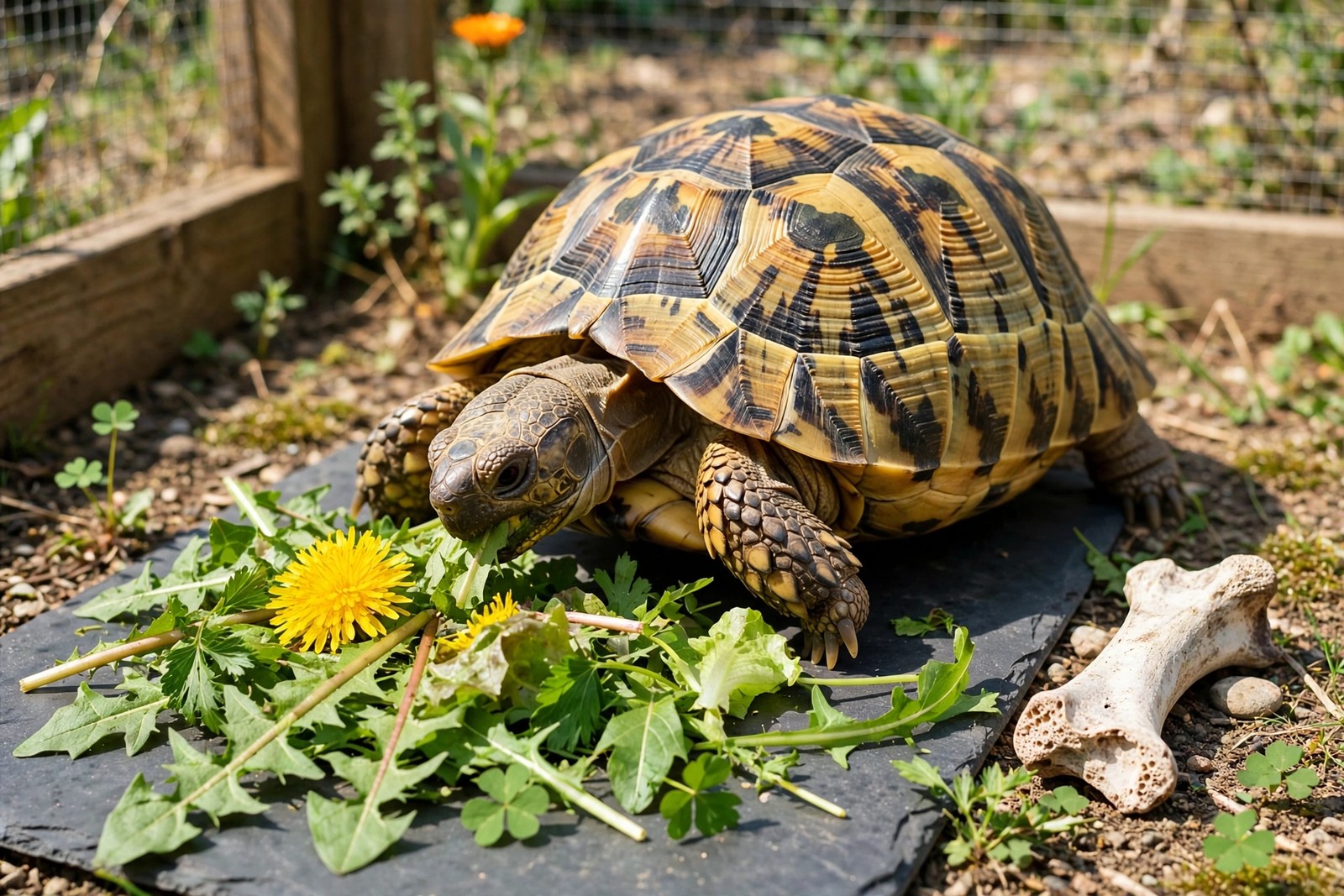
The daily question for a herbivorous tortoise — a Hermann's, a Russian, a marginated, or a grazing sulcata — is not what treat to add but whether the basic pile is right. In the wild these species walk and graze low-growing plants all day: fibrous, mineral-rich, and poor in protein and sugar. A captive diet that copies that pattern, leafy greens and safe weeds offered fresh every day, prevents more health trouble than any supplement sprinkled over the wrong base.
The Daily Pile: Greens and Safe Weeds
Offer a mixed pile roughly the size of the tortoise's shell each morning, built from several greens rather than one: dandelion leaves and flowers, collard greens, mustard and turnip greens, endive, chicory, and lamb's lettuce all serve well, joined by garden weeds you can identify with certainty and know are spray-free, such as plantain, clover, and sow thistle. Rotate the mix across the week so no single plant dominates, rinse everything, and remove the wilted remainder in the evening. Grassland grazers, sulcatas above all, should also have grass and good grass hay available to chew through the day; the long fibre keeps the gut moving as it should.
Dust the pile lightly with plain calcium powder on most feeds, and keep a cuttlebone in the enclosure for the tortoise to gnaw at will. Ultraviolet lighting and calcium work as a pair for shell and bone, so a fading lamp quietly undermines a perfect diet — note lamp dates rather than trusting memory.
Foods to Keep Rare, and Foods to Keep Out
Fruit is the classic well-meant mistake. The gut of a grassland tortoise is built for fibre, not sugar, and regular fruit — including tomato and strawberry fed as staples — can upset digestion and crowd out the greens; keep it as an occasional small treat or skip it entirely. Iceberg lettuce fills the bowl with water and almost nothing else, so it never counts as a feed, and spinach is best kept occasional because its oxalates bind calcium the tortoise needs. Protein is the hard line: meat, eggs, and manufactured dog or cat food are never offered to these herbivorous species, however eagerly a tortoise investigates them, because a high-protein diet damages kidneys and shell growth over time. Pellets made for tortoises can garnish a pile for a fussy eater but do not replace fresh greens as the staple.
Water, Weighing, and Watching
Set a shallow, heavy water dish the tortoise can climb into and out of safely, refreshed daily, even though much of its water arrives in its food. Weigh monthly and keep the figures; a steady line suits an adult, while a growing juvenile should gain slowly and evenly, and either a sudden drop or rapid gain is worth a vet conversation. A tortoise that leaves the whole pile untouched for several days in warm, active season, rather than in a natural pre-winter slowdown, needs checking, starting with temperatures. KinsLe's Family Sharing puts the approved greens list, the calcium routine, and the never-feed items on the shared profile, so a feeding favour from family cannot turn into fruit and lettuce by mistake.