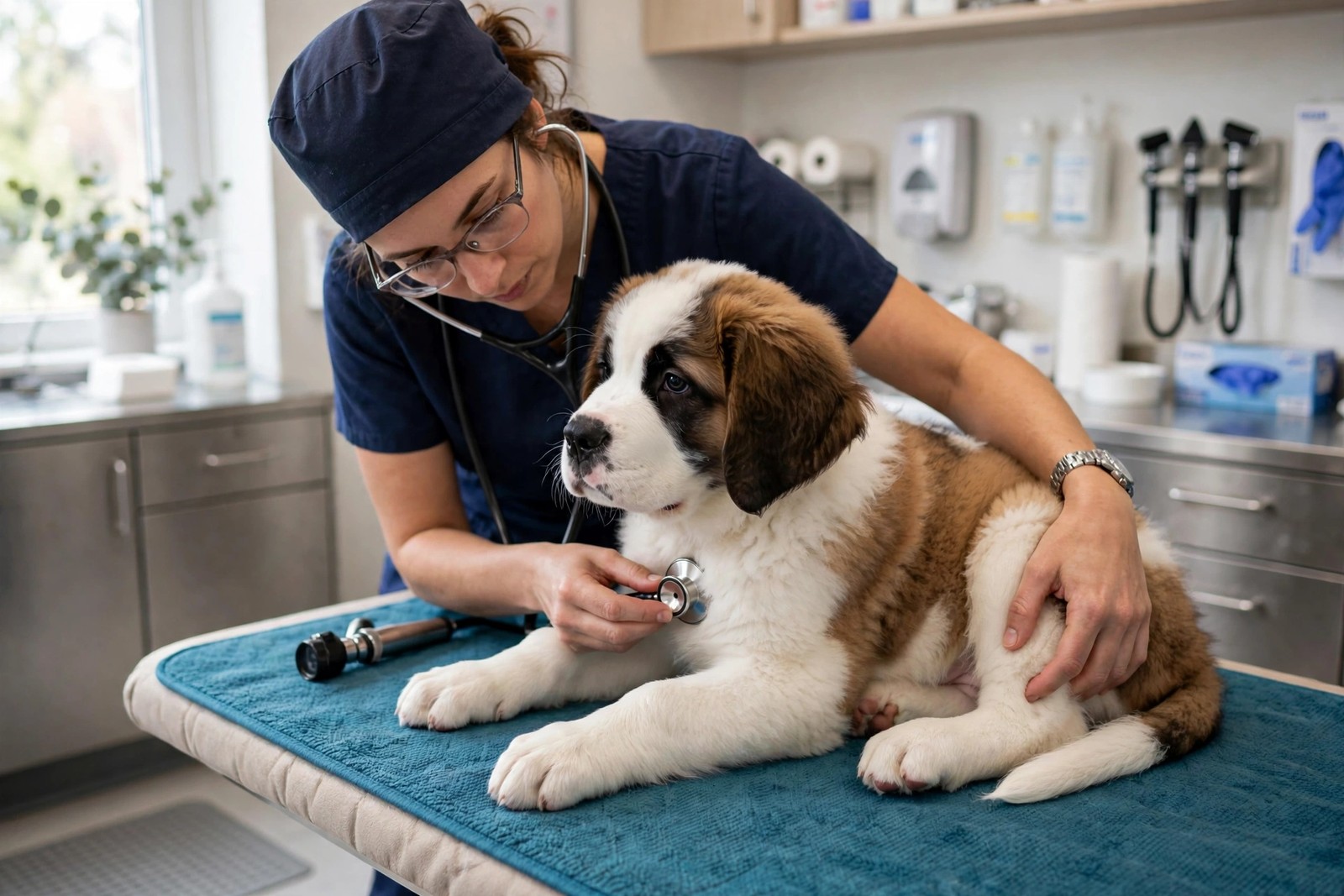
For a breed that can outweigh its owner within a year, screening paperwork is not a formality to glance at on collection day. Hip, eye and heart results for the parents shape what you can reasonably expect for this puppy's joints, vision and stamina, and a breeder who tests should be able to show the documents and explain them without hesitation.
Hip screening in a giant breed
Ask for the hip scores of both parents, the age at which they were scored, and what those figures mean alongside scores for the breed as recorded on the certificates themselves. Ask whether other relatives were scored, whether any needed surgery or long-term medication for joint problems, and how the breeder manages growth in the puppies: feeding for slow, steady growth, limited stair work and controlled exercise all matter more in a Saint Bernard than in a small breed that finishes growing early.
Eye examinations: ask for dates, not assurances
Eye results have a shelf life, so a certificate from several years ago tells you less than a recent examination. Ask when each parent was last examined, what was found, and whether any eye condition has appeared in the wider family. A breeder who repeats examinations at sensible intervals, and who can say plainly what a finding means for breeding and for a puppy's daily life, is giving you something you can weigh rather than a reassurance you have to take on trust.
Heart screening and the questions behind it
Hearts deserve particular attention in this breed, so ask what form the screening took, who carried it out, and what the result was for each parent. Ask whether heart problems have appeared in relatives, at what age, and whether the breeder would breed again from a pairing that produced a concern. Listen for specifics: dates, grades where a scheme records them, and follow-up examinations. Vague claims that a line has never had a problem, offered without any testing behind them, are not the same thing.
The breeder's wider answers
- Will you take a dog back at any age if an owner's circumstances change?
- Are the parents mature, sound dogs I can meet, and how do they move and breathe at rest?
- What growth feeding, stair and exercise guidance will you give me in writing?
- Which results will you hand over in copy when the puppy leaves?
- What health problems, honestly, have you seen in dogs you have bred?
Keep every hip, eye and heart result filed from the start; if this Saint Bernard later joins another household, KinsLe's Transferrable Profiles carries that file forward when ownership changes.