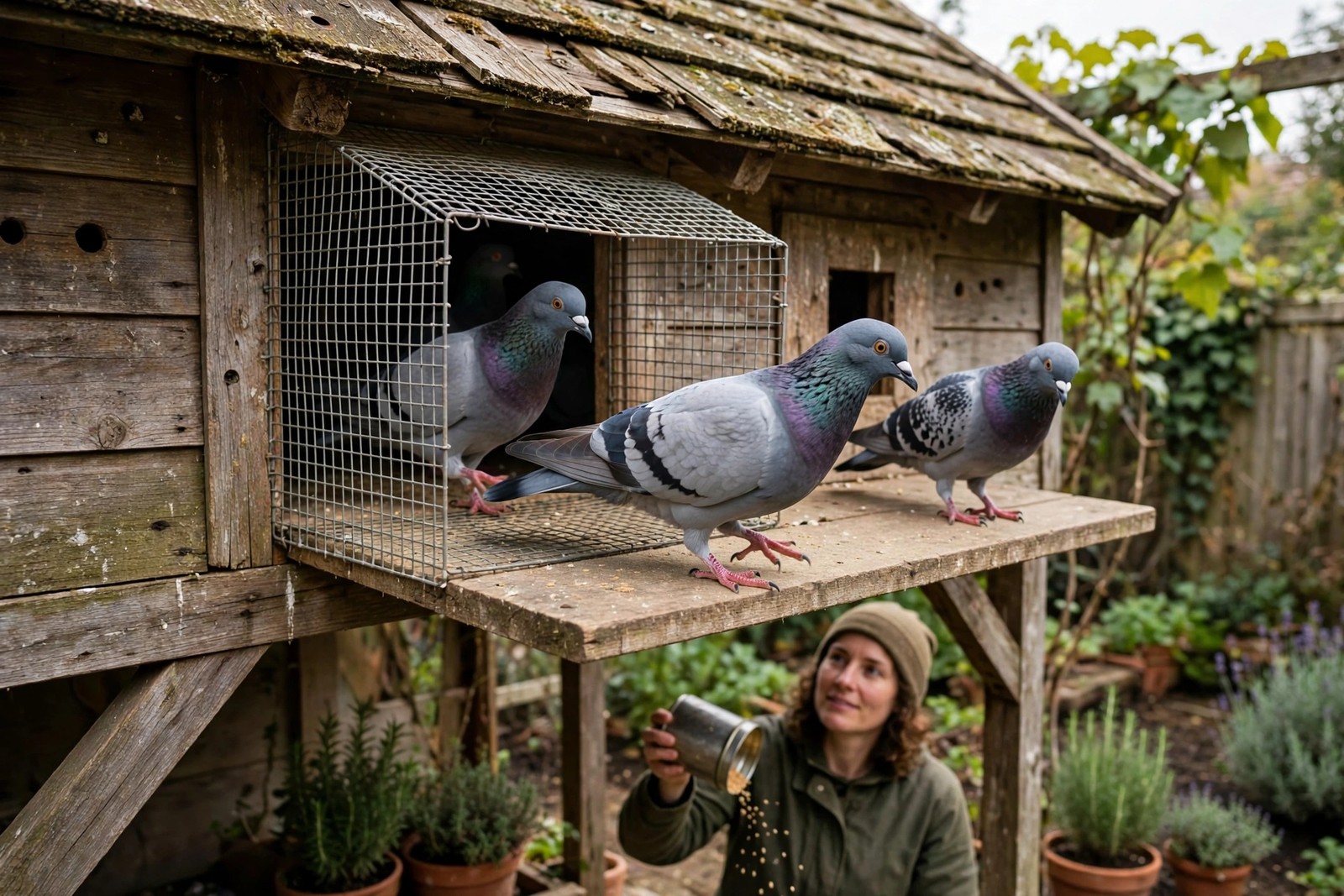
A first flight from a new loft succeeds or fails weeks before the door opens. A pigeon returns to the place it has learned to call home, to the trap it has practised, and to the feed call it trusts — not simply to the building where it happens to sleep. Work through settling, training, weather, and predator checks in that order, and postpone the release if any one of them is weak.
Settling and Loft Imprinting Come First
Keep a newly arrived pigeon confined in the loft for several weeks before any release. A viewing aviary or wire-fronted section matters: the bird needs to study the roofline, garden, trees, and flight paths it will see on its return, because that view is the map it will use. Young birds raised at your loft usually settle fastest. An older bird, especially a proven racer or breeder moved from another loft, may remain imprinted on its previous home and attempt to fly back there no matter how well you feed it. Ask the previous keeper honestly about age and homing history, and treat an adult transfer as a long settling project, never as a bird to release on week one.
During settling, the loft itself must feel safe and rewarding: dry perches, clean water, grit, ventilation without a draught at perch level, and no gaps a cat or rat could exploit.
Trap Training and the Feed Call
The trap — whether a sputnik, a bob-wire entrance, or a landing board with a one-way door — must be boringly familiar before flight. Let the pigeons walk through it daily from the aviary to reach their feed, so entering is a habit rather than a decision. Pair every feed with the same whistle, voice call, or shaking feed tin, and feed only after they come in. For the final training days, release them hungry into a small enclosed aviary or garden net, call them, and let them trap in for breakfast. A bird that hesitates at the trap on the ground will hesitate far longer when tired, high up, and unsure.
Check the trap physically the morning of the release: bobs move freely, the landing board is clear and not slippery, and nothing new — a ladder, a bin, a washing line — has appeared beside it to spook returning birds.
Choosing the Morning
Release hungry, before the morning feed, so the strongest motivation points home. Pick a calm, dry morning with good visibility and a light wind at most; skip fog, heavy rain, gusty days, and any morning when a storm is building. Early in the day gives a lost youngster the maximum daylight to circle, recognise landmarks, and come down, while a late-afternoon release leaves a confused bird out overnight. Check your local predator picture too: if a sparrowhawk works your gardens at a set hour, or neighbourhood cats gather at dawn, shift the timing — and keep the first flights short rather than encouraging long ranging.
Send settled, experienced loft mates out with first-timers where you can. Older guide birds that trap promptly demonstrate the whole route — down to the board, through the trap, to feed — and a young bird following them learns in one flight what weeks of solo circling may not teach.
Fitness for the Day
Finally, look at the bird itself: bright-eyed, keen for feed, droppings firm, breathing quiet, and in good body condition without being fat. A pigeon in a heavy moult, recently ill, or still hand-shy and panicky in the loft is not ready, whatever the calendar says. Record band numbers and take a clear photograph of each bird before its first flight, so a found bird can be identified quickly. A careful first release makes help unlikely to be needed, but if a youngster still drifts beyond the rooftops, KinsLe's Lost Pet Alert System can put its photograph and profile in front of nearby members within minutes, giving the people most likely to spot it on a roof or in a garden a direct way to reach you.