
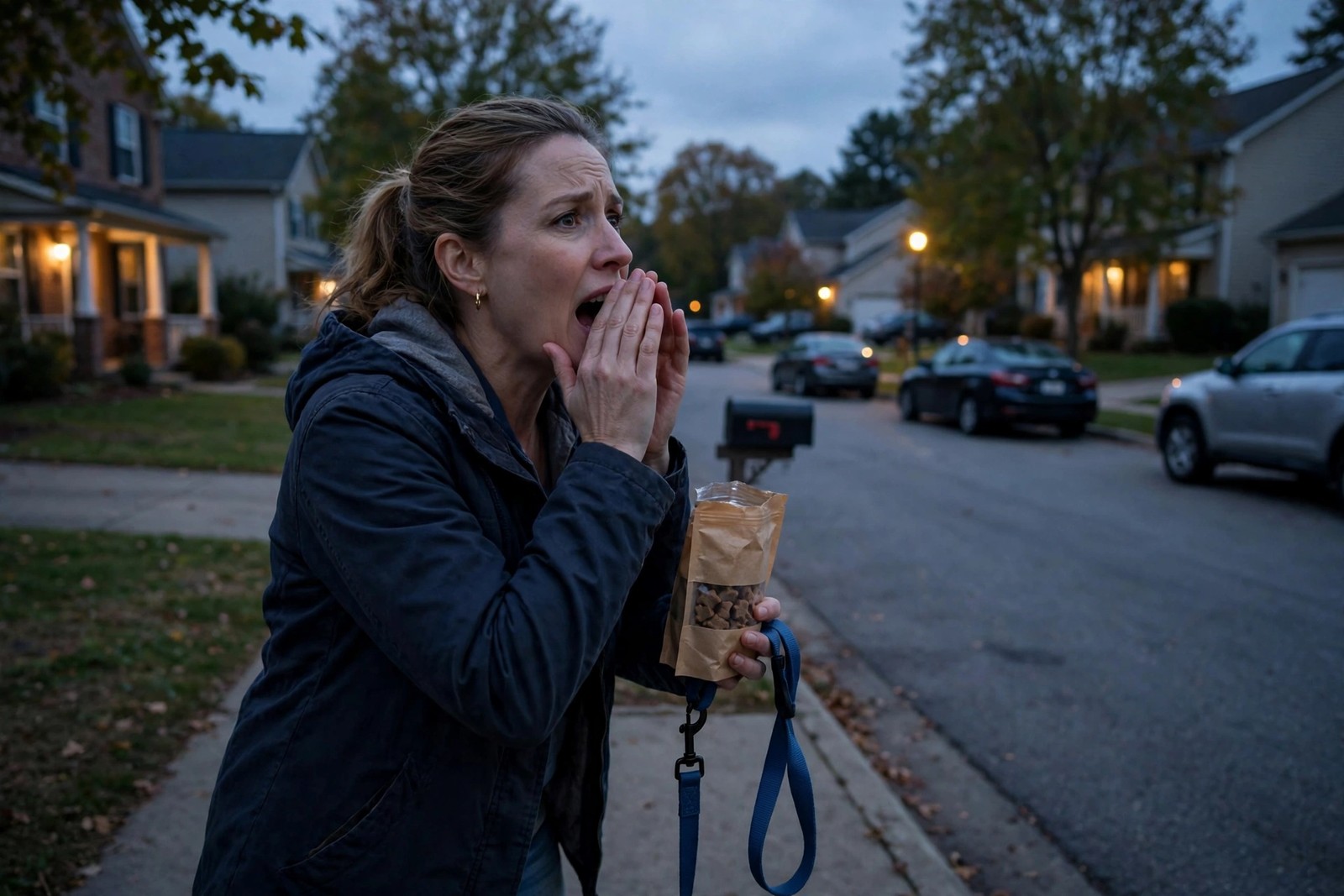
The first move is close to home: check garages, sheds, closets and under decks, then work the streets your dog knows, calling calmly with a favourite toy that squeaks in hand, and alert neighbours, shelters and vets with a clear, recent photo and your contact details.
The First Hour Matters Most
A missing dog may still be close to home in the first hours, especially a frightened one hiding quietly. Check your own house and yard thoroughly first — garages, sheds, under decks, closets, and behind fences — because frightened or injured dogs hide silently in familiar places. Then walk the immediate streets your dog knows from daily walks, and ask a family member or friend to stay home in case your dog returns on their own.
Call calmly and pause to listen. Shouting in panic can frighten a nervous dog further away, while a familiar, relaxed voice, the shake of a treat bag, and the smell of strong food like cooked chicken can draw a hungry dog in. Bring a leash, a flashlight if it is getting dark, and a recent photo on your phone to show everyone you meet.
Spread the Word Fast and Wide
Tell every neighbor you can reach, knock on doors on your usual walking routes, and call local animal shelters, animal control, veterinary clinics, and emergency vets to file a lost report with your dog's description, microchip details if you have them, and your phone number. Post in local community and lost-pet groups with one clear photo, where and when your dog was last seen, distinctive markings, and whether people should approach or simply call you — shy dogs are often best not chased.
Put simple, large-letter posters at intersections near the last sighting with the photo, your number, and the words LOST DOG. Keep one identifying detail, such as a specific marking, out of public posts so you can verify genuine sightings and callers.
Safety While You Search
Do not chase a frightened dog into traffic, and coach helpers not to run after sightings — ask them to note the location, direction, and time, crouch down, avoid direct staring, and let the dog approach if it chooses. Be cautious with anyone claiming to have your dog: meet in a public place, verify the identifying detail you withheld, and be wary of anyone demanding payment codes or personal information, which is a common scam targeting desperate owners.
Keep searching at dawn and dusk, when quieter streets make a hiding dog more likely to move, and revisit favorite parks, trails, and dog friends' houses, because dogs often retrace familiar scent routes.
A backup built into KinsLe
KinsLe's Lost Pet Alert is free in every profile and shows on the map, so whoever finds your dog can send you a message from the profile page. Every pet on KinsLe has a unique QR ID for their profile, which helps a finder reach the right owner quickly when a collar tag is scanned. Act in that first hour, and let KinsLe's Lost Pet Alert System carry your dog's details onto the map display, where whoever spots him can send you a message.