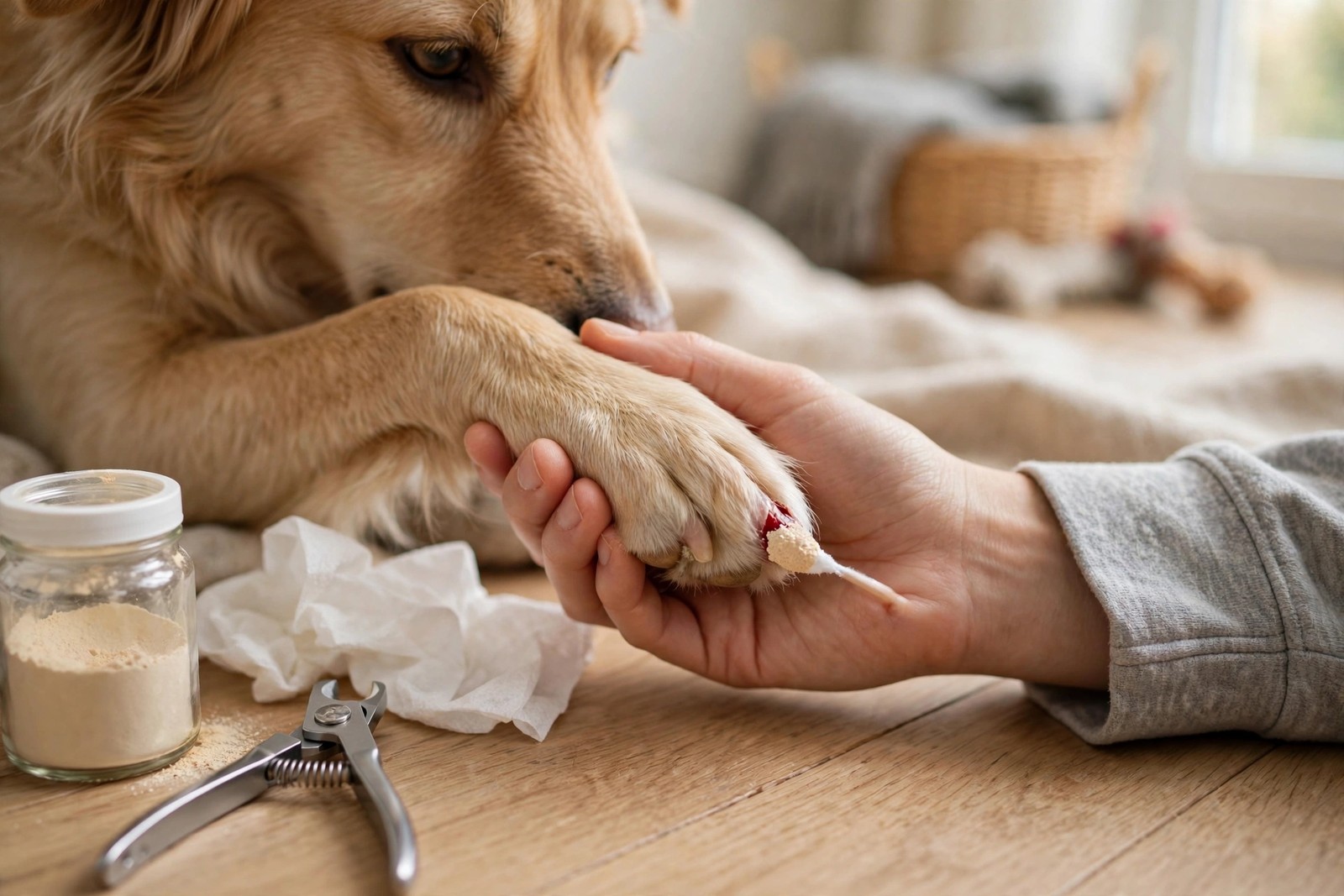
A nail clipped into the quick looks alarming out of proportion to the injury. Inside each nail sits living tissue carrying a small blood vessel and a nerve, which is why a cut that reaches it produces a sharp flinch and a surprising amount of bright blood from such a tiny wound. Your job in the moment is pressure, stillness, and time — nothing more complicated — and your job over the following week is watching that the seal holds.
Pressure First, Then Quiet
Hold a folded clean cloth or a wad of gauze directly over the nail end and press with real firmness, not a light dab. Keep pressing for several minutes without lifting the cloth to peek, because each peek can disturb the forming seal. A helper who strokes the dog, speaks quietly, and prevents pawing or licking makes this far easier than working alone. If styptic powder or a styptic pencil is in the house, press a little onto the nail tip and hold it there; if neither is available, pressure and patience do the work on their own. Once the bleeding stops, settle the dog somewhere calm and postpone the walk, the garden game, and any rough play until the next day, so the seal is not knocked open on hard ground.
Watching the Nail Over the Next Days
A sealed nail should stay sealed. Check the toe that evening and again the next morning for fresh blood on bedding, a limp that was not there before, swelling around the nail bed, or the dog worrying at the foot. Brief oozing that stops with another few minutes of pressure is common; bleeding that restarts repeatedly, continues despite firm pressure, or arrives with swelling, heat, discharge, or obvious soreness needs veterinary advice the same day. Mention the trim when you call, say which nail was cut, and note roughly how long the bleeding lasted — those details help the clinic judge whether the dog should be seen or simply monitored at home.
Cutting So It Does Not Happen Again
Prevention is technique, repeated in small doses. Work in bright light with sharp clippers, because dull blades crush rather than slice and make the dog flinch at exactly the wrong moment. Take tiny slivers from the tip instead of one confident cut, checking the fresh surface after each slice. On pale nails the pink quick is visible, so stop well before it. On dark nails the quick hides, so shave gradually and watch the centre of the cut surface: when a grey or pink oval appears in the middle, the quick is close and that nail is finished. Trim little and often — every week or two — because regular trimming encourages the quick to recede and keeps each session short. Practise paw handling and clipper touches on non-trimming days, paid for with treats, so the tools stop predicting a bad experience.
In KinsLe, a shared note attached to Care Teams records which nail bled, who will recheck the paw tonight, and when the next cautious trim falls due, turning one messy clip into a calmer routine for everyone helping.