
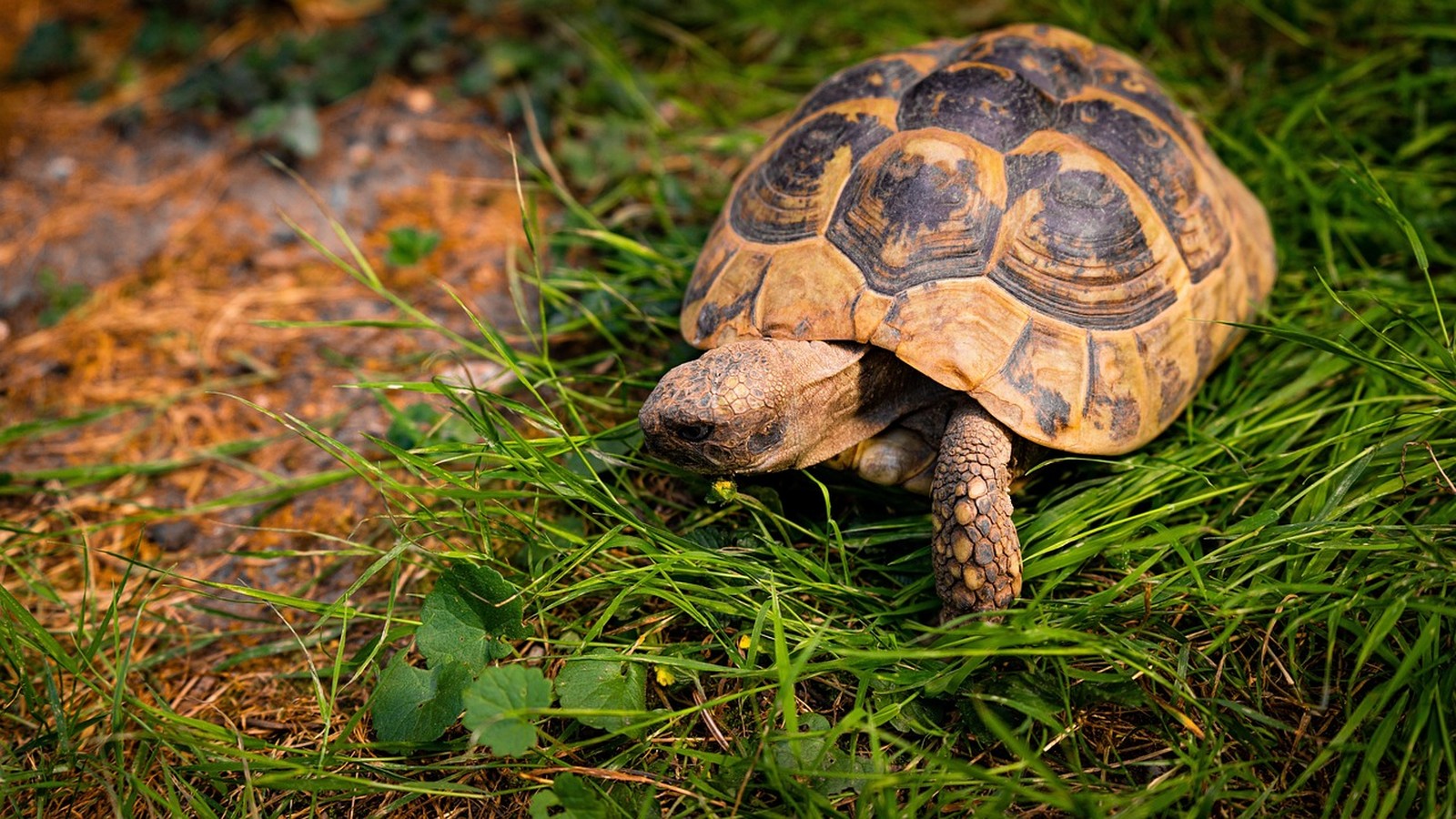
An escaped tortoise is almost never a fast-moving problem — it is a hiding problem. Tortoises are strong, determined diggers and surprisingly good climbers for their shape, but once out they usually travel slowly, follow edges, and settle somewhere warm and sheltered within a garden or two. Most are found close to home by owners who search methodically rather than frantically, and who search at the right times of day.
Search in a grid, on your knees
Divide the garden into sections and work through one at a time, slowly, at ground level — a tortoise that fills your whole view from standing height becomes nearly invisible lying flat in grass. Part long grass and ground cover by hand. Check the places a tortoise actually chooses: sun-warmed paving and the bases of south-facing walls, under shrubs and hedges, inside log and compost piles, beneath sheds, decking and garden furniture, and along fence lines, which tortoises follow like roads. Look for fresh scrapes and loosened soil: many escapees dig themselves in under a bush or into a flowerbed and sit tight, only the top of the shell showing. Check any pond or deep water feature first, since a tortoise that falls in may not get out.
Time the search to basking hours
Tortoises are cold-blooded and pattern their day around warmth. Early morning, just as the sun reaches the garden, and again in the warm part of the afternoon are the hours an escaped tortoise comes out to bask and feed — and the hours you are most likely to spot one in the open. A midday search in hot weather often fails because the animal has retreated into shade, and an evening search in cool weather fails because it has dug in for the night. If the first day fails, repeat the same grid at basking times for several days; tortoises also reappear after rain and on the first warm morning following a cold spell.
Widen the circle and set a lure
If the garden search comes up empty, ask neighbours on all sides to check the same hiding places in their gardens, and put a note through doors with a photo, your number, and the key instruction: pick the tortoise up, keep it in a secure box, and call you — well-meaning finders sometimes release them again over a fence. Leave the enclosure gate or escape gap open with a shallow dish of water and a pile of favourite food — fragrant leaves, a piece of melon or a much-loved weed — just inside, and check it at basking times; a hungry tortoise close to home often walks back to food and water. Tell local vets and rescue contacts too, because found tortoises are handed in.
When you find it, and stopping the sequel
Offer water first, check the shell, legs and eyes for scrapes or dog bites, and see a vet promptly if there are wounds, a cracked shell, or the tortoise has been missing through cold nights. Then walk the boundary as the tortoise experienced it: buried edges stop diggers, a smooth overhang or a taller barrier stops climbers, and gates that stand open during gardening are the commonest exit of all. For the widening-the-circle step next time, KinsLe's Lost Pet Alert System sends a free alert to nearby Circle of Love members with your tortoise's photo and details, and a finder can message you directly — turning neighbours' gardens into part of the search within minutes.