
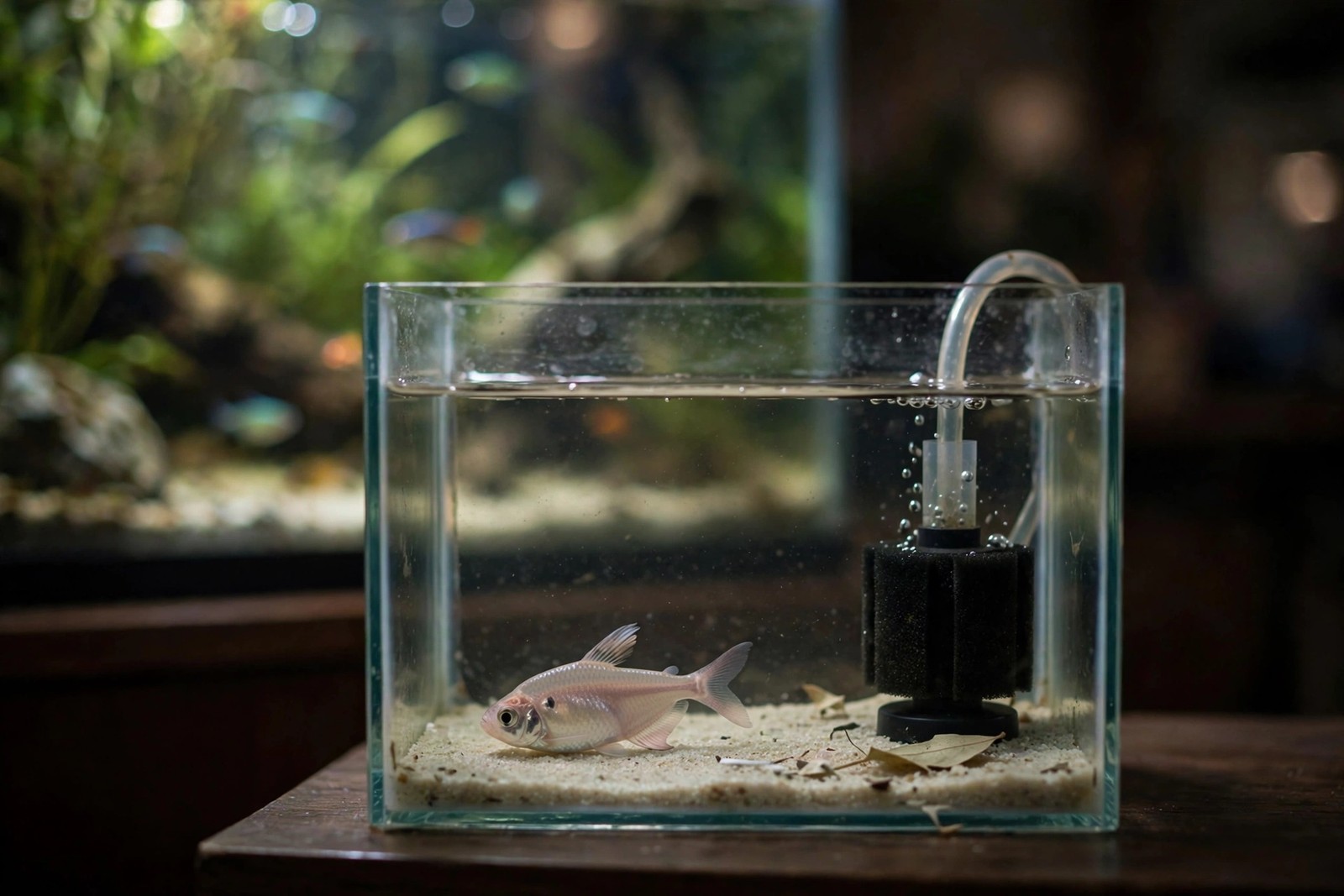
When one fish in your community tank gets sick, act to protect the many without panicking about the one: move the sick fish to a quarantine or hospital tank if you can, test the main tank's water, and watch every other fish closely for the same signs over the next week or two. Most community-tank problems — parasites, bacterial infections, water-quality crashes — are shared through the water, so the main tank needs your attention even when only one fish looks ill. Don't dump medication into the display tank on a guess; wrong treatments stress healthy fish, crash your cycle, and harm plants and invertebrates.
Step one: separate and observe
A bare quarantine tank with a seeded sponge filter and heater is ideal. Move the sick fish gently in a container rather than chasing it with a net through the whole tank, which stresses everyone. In the hospital tank you can watch it eat (or not), photograph symptoms clearly, and keep water pristine with small daily changes. If you have no spare tank at all, a clean food-safe tote with a heater and air stone works as an emergency setup — the goal is separation and observation, not beauty.
Step two: investigate the main tank
Test ammonia, nitrite, nitrate, pH, and temperature in the display tank, because poor water often underlies the first illness and predicts the second. Look for a hidden cause: a dead snail behind the rocks, an overfed corner, a filter that stopped flowing overnight. Check every tank mate daily for the next two weeks — early symptoms like clamped fins, flashing, spots, or hovering alone are your best chance to act early. Quarantine timelines exist because many diseases incubate silently.
What not to do
Don't treat the whole community tank "just in case" — preventive dosing is a myth that mostly breeds resistant problems and dead filter bacteria. Don't tear the tank apart chasing one fish; chaos stresses healthy fish and can spread pathogens on your hands and nets. Don't add new fish to "replace" the sick one while the problem is unresolved. And don't mix advice from five forums into a cocktail of remedies — pick one qualified source, ideally an aquatic veterinarian, and follow it.
Getting a real diagnosis
Write down what you see: which fins, how many spots, breathing rate, appetite, feces, timeline of changes, and your water readings. Photos under tank light help enormously. Take this to an aquatic vet or a trusted fish store with genuinely experienced staff. For anything beyond the obvious, a professional assessment beats guesswork every time — fish diseases mimic each other, and the same white spot can mean very different things.
How KinsLe helps
Caring for a sick fish often needs extra eyes — and KinsLe's Care Pass is a temporary scoped link that lets a sitter or family member see the care notes for that fish with no account or app needed on their end. They can check feeding instructions and symptom notes while you are at work, and you stay in control of what's shared and for how long. During your workday, the family member watching the tanks can open a Care Pass on KinsLe for just those hours and see only the hospital-tank routine: the small daily water change, whether the isolated fish ate, and any new spots or clamped fins to note.