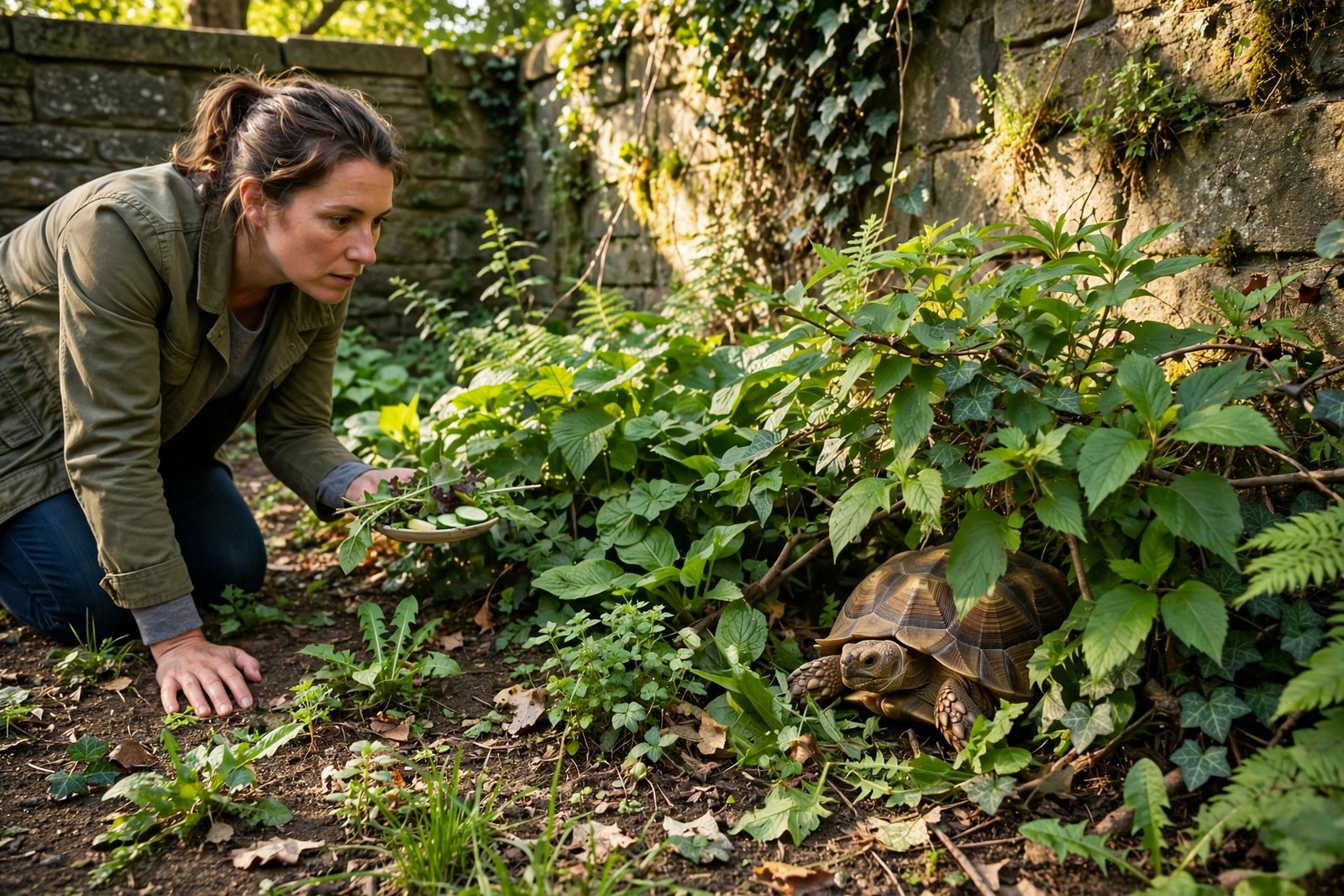
A tortoise escape looks slow and is anything but. A healthy tortoise walks purposefully, covers surprising ground in an hour, and is an expert at vanishing: wedged under a shrub, buried into loose soil at a border's edge, or pressed into the shadow under a shed. Panic searching, where everyone tramples the garden calling, wastes the hour when the animal is usually still close. A methodical search, run in a deliberate order, is what the first hour is for.
Minute One: Secure the Scene
Before searching outward, close every other route. Shut gates, block the gap the tortoise used if you can find it, and keep dogs and other pets indoors so they do not flush the escapee further or find it first. Note the time you discovered the empty pen and think back to when the tortoise was last definitely seen; that interval sets how far it could realistically have travelled. Look at the pen itself for the escape route: a climbed corner, a dug-out edge, a board pushed aside. The route points you toward the direction of travel, which is where the search begins.
The Widening-Rings Search
Work outward in widening rings from the pen, on foot, slowly, at tortoise height. Get low and look under things rather than across them: beneath shrubs and dense plants, under decking edges, behind bins and water butts, inside open sheds and garages, and along fence lines where a walking tortoise naturally funnels. Check warm hiding spots with particular care, because a tortoise out in the morning sun will often stop in a sheltered warm patch, while one out later may have dug into leaf litter or soft soil to sit out the heat or the night. Run a hand gently through border plants and compost edges, since a buried tortoise can be invisible except for a slight dome of shell. Search each ring completely before widening, and mark checked structures off in your head or on paper so effort is not duplicated while gaps remain.
The Risks That Make the Hour Urgent
State them plainly, because they set the pace: a tortoise that reaches a road cannot dodge traffic, and one that reaches a garden pond or deep water butt can drown, since tortoises swim poorly. Lawnmowers, strimmers, and bonfire piles are garden-level dangers worth warning neighbours about before anyone tidies up. If your rings reach the garden boundary, extend the search along pavements, verges, and neighbouring front gardens, and check any pond on your route first rather than last.
Luring and Enlisting Help
Set favourite food, the foods this tortoise reliably comes for, in a shallow dish near the pen and at the garden's likely exit points, and check those dishes on each circuit; a hungry tortoise often retraces toward familiar feeding spots. Tell neighbours within the hour, in person where possible, showing a clear photo and asking them to check under their own shrubs, sheds, and decking rather than simply keeping an eye out. Leave your phone number with each of them so a sighting reaches you in minutes, and ask anyone who spots the tortoise to watch where it settles rather than grabbing at it, since a calm sighting with a location is worth more than a chase that drives it under cover again. If the hour ends without a find, widen the rings, re-search the warm spots as the sun moves, and repeat the inner rings at dusk when a tortoise may move again.
Alongside the foot search, KinsLe widens the net beyond your street: raising a Lost Pet Alert System alert notifies nearby owners at once, and anyone who finds your tortoise can reach you with a direct message through the profile, while you keep searching the rings on foot.