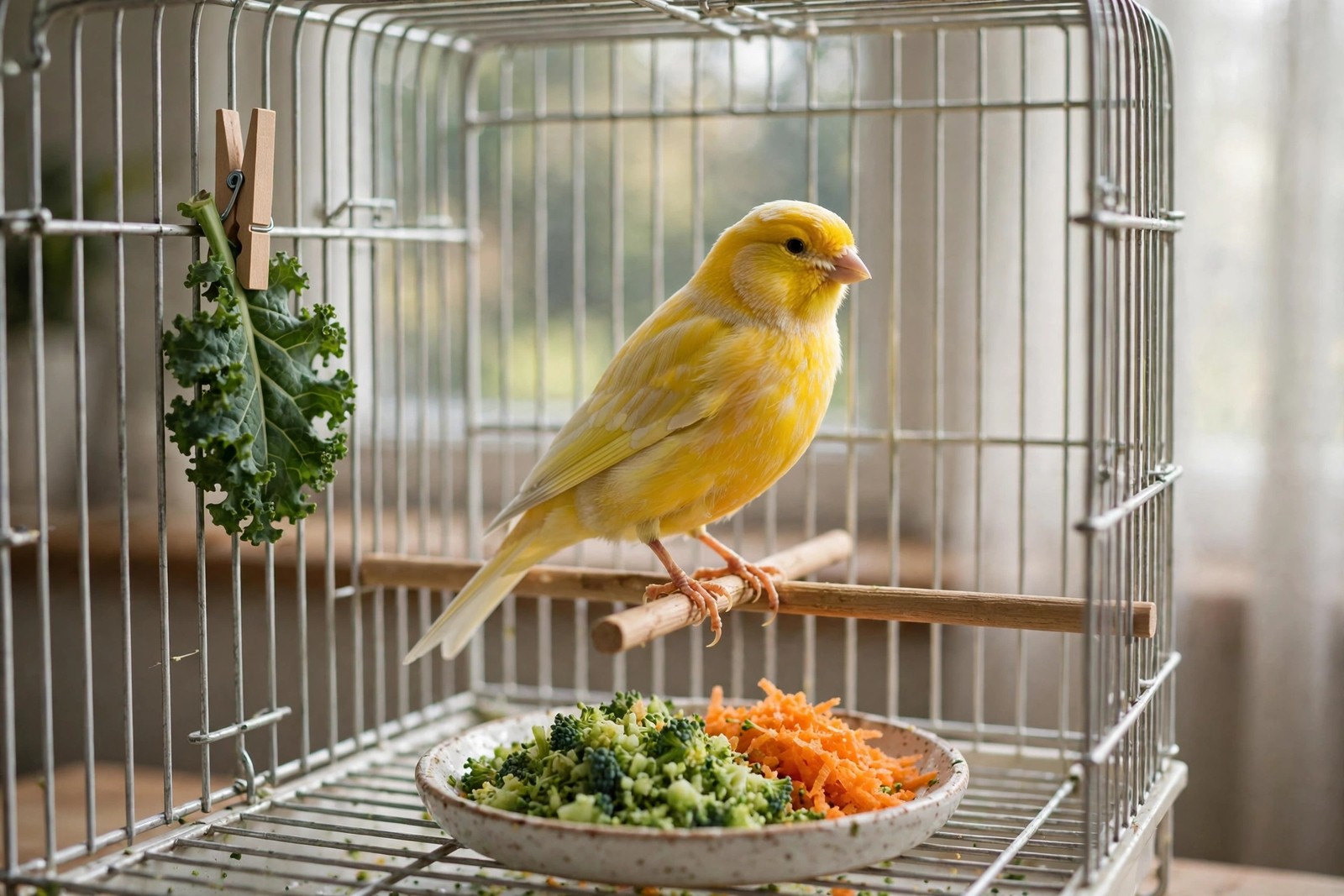
A seed-only canary is eating a high-fat, low-variety diet that is famously short on vitamin A, calcium, and protein. Canaries in the wild eat far more than dry seed, and a pet bird does best when seed stays as the base while fresh foods fill the gaps. The trick is small portions offered often, because a canary is a small bird and a whole broccoli floret is a feast it will mostly ignore or spoil.
Greens and Vegetables for Every Day
Leafy greens are the easiest daily extra. Clip a small leaf of kale, romaine, or dandelion greens to the cage bars, or offer a tablespoon of finely chopped broccoli, grated carrot, or cooked sweet potato in a separate dish. Washed pea shoots, endive, and a little sweetcorn or peas also go down well. Serve fresh food in the morning when your canary is hungriest, wash everything thoroughly, and take out anything wilted or soiled after a few hours so it cannot turn sour in the cage. Spinach and chard are fine occasionally rather than daily, as part of a rotation instead of a habit.
Egg Food, Pellets, and Fruit in Their Places
Protein and calcium come from egg food: hard-boil an egg, mash a teaspoon of it finely, and offer it two or three times a week, more often while your bird is moulting or feeding chicks, when feather growth and chick rearing make real demands. Crushed, clean eggshell mixed through the mash adds calcium. Formulated pellets made for small finch-type birds can sit in a second dish alongside seed; swap them in gradually over a week or two, because many canaries ignore an unfamiliar dish at first and a bird that will not eat needs its seed back while you try again more slowly. Fruit is a treat, not a staple: a thin sliver of apple with the pips removed, pear, or melon once or twice a week is plenty, and sugary fruit offered daily crowds out better food.
Introducing New Foods to a Wary Bird
Expect suspicion at first. A canary that has only ever seen seed may treat a leaf as cage decoration for days before tasting it, so offer the same new food on several mornings in a row before deciding it is refused. Chopping greens finely and pressing a few familiar seeds into them helps, because the bird picks at the seeds and tastes the greens by accident. Put fresh food in the same dish, in the same spot, each time, since canaries are creatures of routine. Never remove the seed dish to force the issue: a small bird that will not eat loses condition fast, and hunger is a dangerous teaching tool.
What to Limit and What Never to Offer
Millet sprays are candy for canaries: enjoyable, useful for taming and training, and far too fatty to hang in the cage all day, so offer a short spray as a reward rather than a fixture. Keep seed itself fresh, because old seed loses goodness and can harbor dust and mould, and store it dry and sealed. Never offer avocado, chocolate, onion, garlic, fruit pips or stones, caffeine, alcohol, or anything salty or fried, and never share food from your own plate on impulse. Watch droppings and body condition as you widen the menu: a canary whose keel bone feels sharp under your fingers is too thin, while one that goes quiet and sits fluffed needs a vet, not another new food. Putting the greens, egg food, and pellet tasks into KinsLe's Care Teams, each with its own day and a tick when done, stops fresh food quietly dropping off the routine in a busy household.