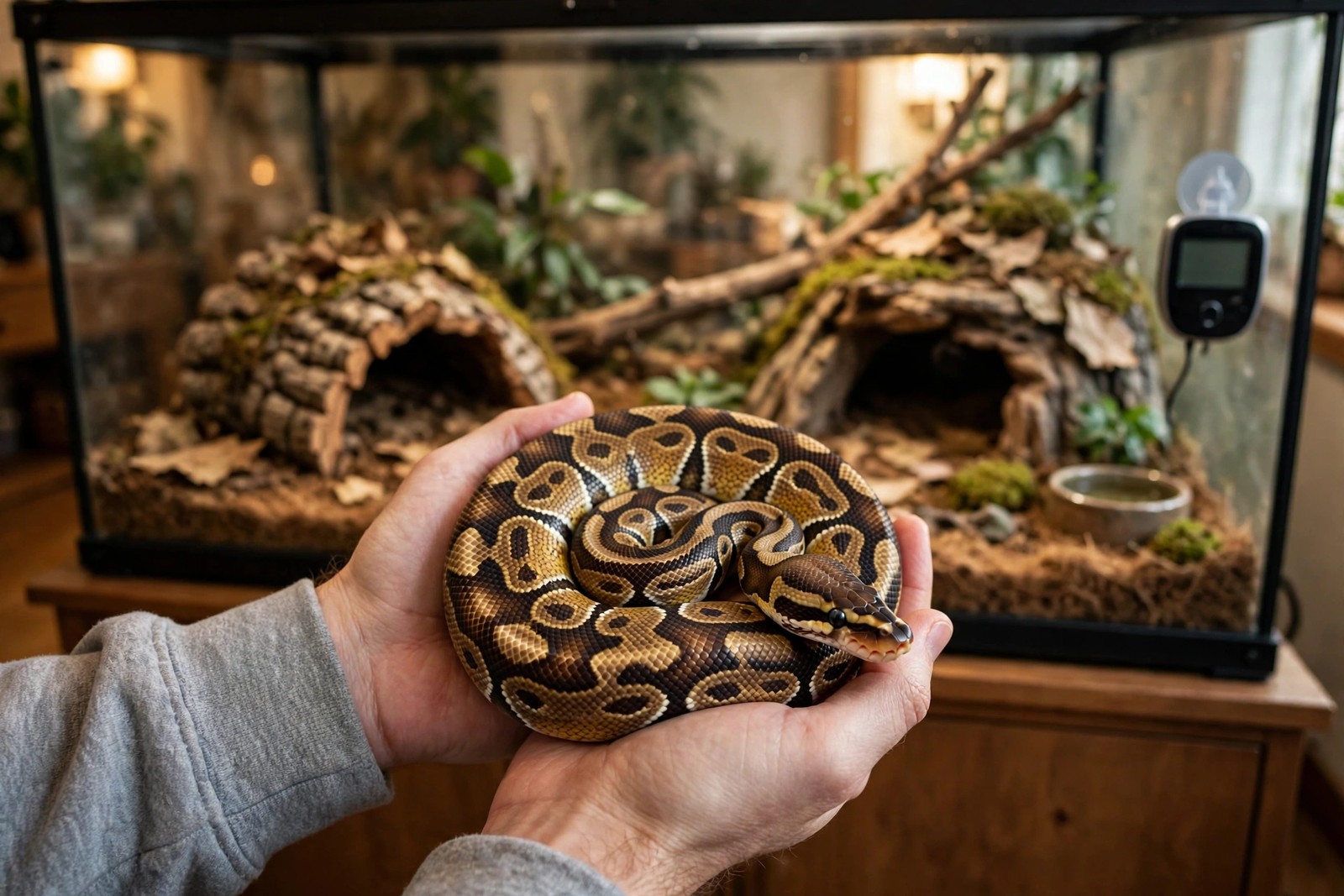
A ball python is one of the calmest, most handleable snakes a keeper can own — and one of the longest commitments in the reptile world. A healthy ball python commonly lives twenty to thirty years, so this is not a starter pet you try for a season; it is an animal that may still be with you through house moves, jobs and children growing up. Know what it needs, what it famously does, and what to ask the seller before the enclosure is even built.
Space, heat and humidity, set up before arrival
An adult needs an enclosure long enough to stretch out along one side — many keepers now house adults in enclosures around four feet long — with a lid or doors that genuinely lock, because a calm snake is still a strong, patient escape artist. Heat is a gradient, not a single temperature: a warm end around the high eighties to low nineties Fahrenheit, a cooler end in the high seventies to low eighties, controlled by a thermostat on every heat source, without exception. Provide a hide at each end so the snake can thermoregulate without feeling exposed. Humidity in the mid range, rising a little during shedding, supports clean sheds; a large water bowl the snake can soak in helps, and persistently dry air shows up first as stuck shed and retained eye caps.
Feeding: frozen-thawed rodents, and the fast
Ball pythons eat rodents, offered frozen-thawed and warmed — never live as a routine, since a defensive rodent can injure a snake badly. Young snakes typically eat weekly, adults every two to three weeks, taking prey roughly the width of the widest part of the body. Then comes the trait every new keeper should hear about in advance: ball pythons fast. Healthy adults, especially males in the cooler months, may refuse food for weeks or occasionally months while remaining active, well-bodied and otherwise normal. Weigh the snake monthly during a fast: a snake holding its weight comfortably is usually a snake to monitor; steady weight loss, wheezing, mucus, mites — tiny dark specks moving around the eyes and under chin scales — or repeated incomplete sheds are vet matters, not fasting.
Temperament and handling
The name comes from the defence posture: a shy ball python curls into a ball, head tucked in the middle, rather than biting. Most settle into slow, tolerant handling in short sessions, but a new snake needs a settling week with no handling and a first successful feed before regular sessions begin. Support the body fully, never dangle by the tail, and wash hands before and after — and keep the snake away from your face if you have just handled rodents, because a feeding response is honest, not aggressive.
Questions to ask before you buy
Ask what the snake is eating, how reliably, and when it last fed and shed; a good breeder or shop answers from records, not memory. Prefer a snake already feeding confidently on frozen-thawed prey, handle it if you can, and check for clear eyes outside shedding, clean skin and a well-fleshed body that is neither triangular and thin nor swollen. If you adopt a rehomed adult, its history is worth as much as its markings: KinsLe's Transferrable Profiles lets the previous keeper transfer the snake's profile to you with its feeding record, shed dates and routine intact, so a python that has fasted every winter arrives with the evidence that this is its normal, not its emergency.