
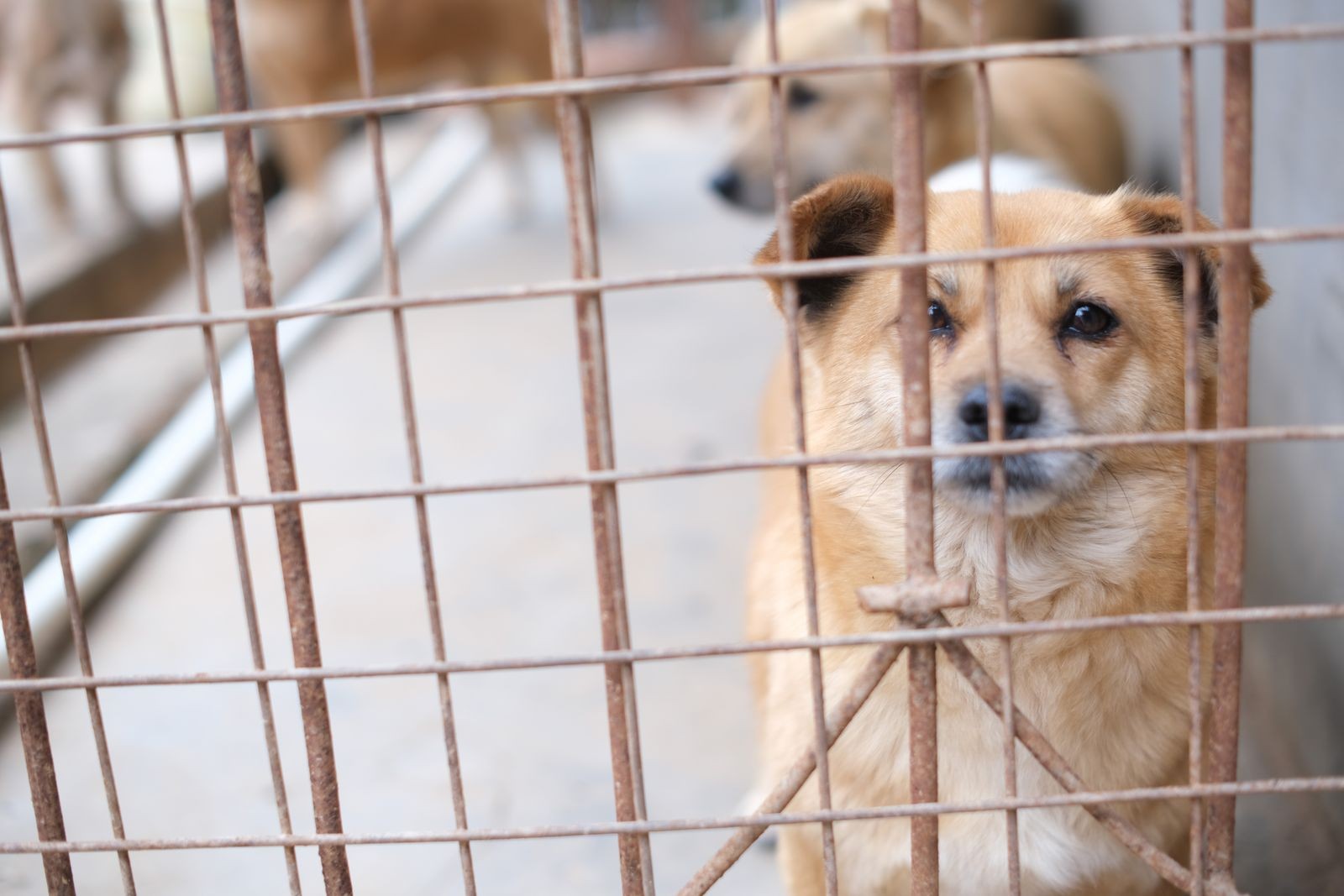
Look for a dog whose energy and comfort level around you feel manageable: curiosity, a loose wiggly body, and the ability to relax near you are good signs, while extreme fear or frantic intensity may need experienced handling. A first meeting is not a test the dog passes or fails — it is information. Your job is to gather as much of it as you can, in the kennel, on a walk, and from the people who know the dog best.
Read the body, not the story
Dogs in shelters are stressed, and kennel behavior can mislead in both directions. The dog bouncing off the walls may settle beautifully in a home; the silent one at the back may be shut down rather than calm. Look at the whole picture: soft eyes, a relaxed mouth, a tail at natural height with a loose wag, and a dog who approaches, sniffs, and can also wander off and explore. A dog who checks back in with you after exploring is showing you something valuable.
Warning signs to take seriously — not as automatic rejections, but as "needs experience" flags — include hard staring, freezing over toys or food, lunging at other dogs, or trembling that does not ease during your visit. Ask honestly whether your home and skill level match what that dog needs.
Spend real time, in different settings
Ask to take the dog out of the kennel — to a play yard and, if allowed, a short walk. Outside, you will see leash manners, reactions to traffic, people, and other dogs, and how the dog recovers from a surprise noise. Offer a treat and see how they take it: gentle mouth or snatching hard? Try a little gentle handling — touching paws, ears, and collar — and watch the response. If you have children or another dog, ask about a supervised introduction rather than improvising one.
Go back for a second visit if you can, ideally at a different time of day. Consistency across visits tells you far more than one good hour.
Ask the staff the questions that matter
Shelter staff and foster carers are your best source. Ask: How does this dog behave outside the kennel and in a home, if fostered? What is their energy like across a full day? Any known history with children, cats, or other dogs? Any medical issues, fears, or resource guarding? Why were they surrendered, if known? Good shelters answer plainly — they want matches that last as much as you do.
Compare notes before you decide
Resist deciding in the car park on pure emotion. Talk it through with everyone who will live with the dog, while the details are fresh: what each of you noticed, what worried you, what delighted you.
KinsLe Messenger makes that debrief easy to keep in one place — it is the per-pet communications hub on KinsLe, built around each individual pet rather than a scattered group chat. Once your dog has a profile, the same hub carries the conversations that follow adoption: updates, questions, and coordination all attached to that dog. Start the conversation well, and it keeps serving you for years. After the visit, keep everyone's impressions in the KinsLe Messenger hub on KinsLe, so what each person noticed about that dog stays together in one per-pet conversation instead of scattering across separate texts.