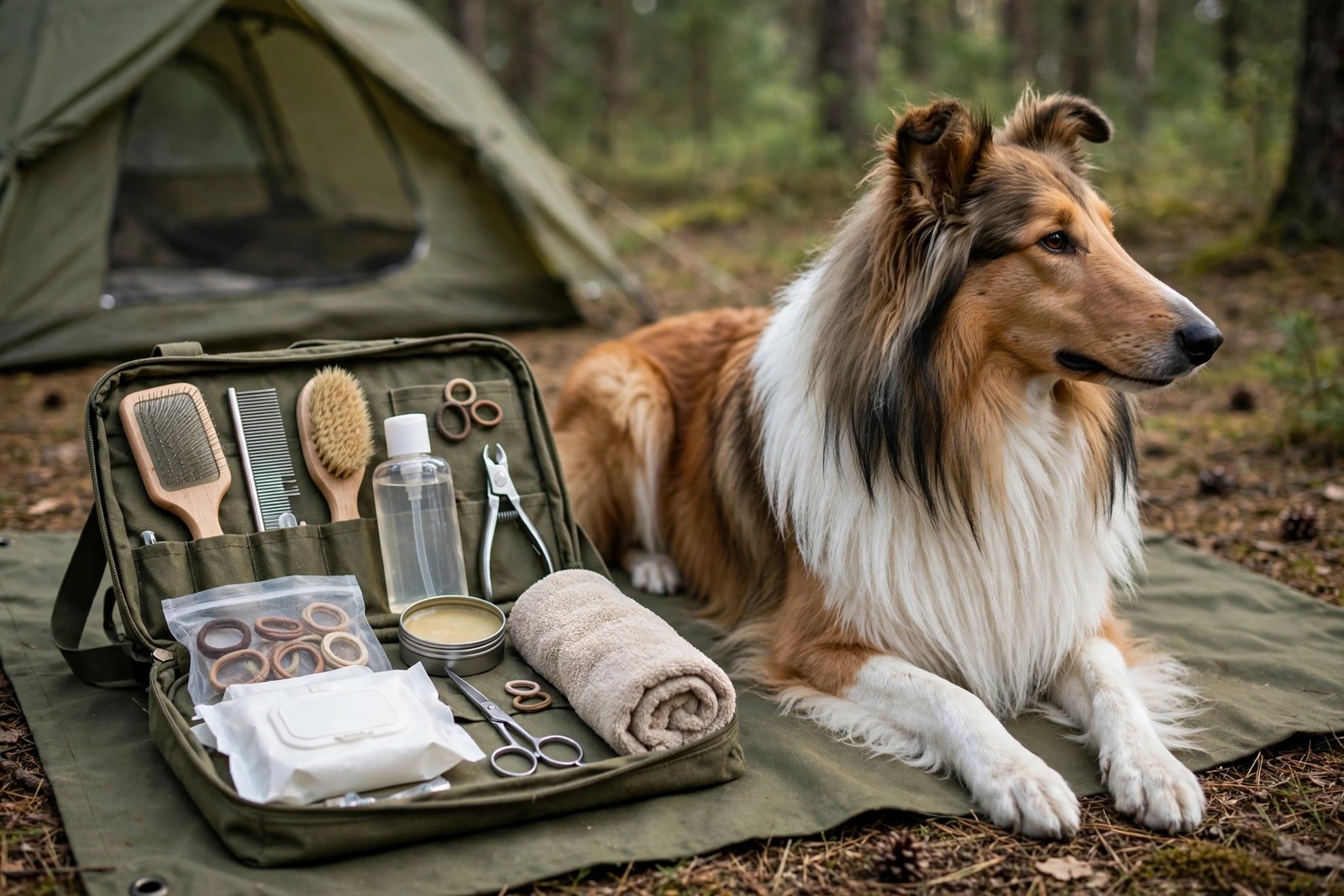
Seven days outdoors asks something different of a long coat than seven days at home. At home a skipped groom is a tangle next week; at a campsite it is mud dried into the feathering, burrs worked down to the skin, grass seeds in the armpits, and a damp undercoat that never quite dries and starts to smell by Thursday. The kit below is built around one promise: a short comb-through and dry-off after every walk, so nothing accumulates long enough to become a clipping job when you get home.
The Core Coat Tools
The slicker brush does the fast surface work, lifting out loose hair, dried mud, and debris after a walk. The steel comb is the inspector: run it gently through the coat down to the skin, section by section, and wherever it snags you have found a forming mat — behind the ears, in the armpits, along the belly line, and in the trousers are the usual campsites for trouble. Detangling spray, used on the snag rather than the whole dog, lets you tease a tangle apart with fingers and comb instead of cutting it out. Add a small pair of blunt-ended scissors for the single burr or mat that defeats patience, used flat against the skin with extreme care, and a tick remover, checked for after every outing in sheep or deer country.
Wet Weather, Mud, and Drying
Towels do heavy lifting on a camping trip — pack at least two, one reserved for heavy mud at the tent door and one kept clean and dry for the final rub-down. Pet wipes handle paws, bellies, and beards between proper washes, and a stream-side rinse deals with the day the dog finds something unspeakable to roll in. The drying coat is the piece owners doubt and then swear by: fitted after a wet walk, it wicks moisture out of a long coat while the dog rests, so bedding stays dry and the undercoat dries fully instead of stewing. That full drying matters — a coat combed while still damp underneath felts as it dries, which is how one rainy week produces a mat that was not there on Monday.
Storage, Spares, and First-Aid Basics
Keep the whole kit in one waterproof bag that lives by the tent door, because a comb-through that requires unpacking the car does not happen. Into the same bag go the spares: a second lead and collar, since a soaked or chewed-through set has no replacement an hour from any town, and a small torch for evening tick checks in poor light. The first-aid basics ride along too — gauze, tape, a pet-safe antiseptic for scrapes and grazes, and tweezers for thorns. Each night, work the routine in order: paws and legs first, tick check over the whole body, comb through to the skin, towel or drying coat on, and settle.
Before the trip, KinsLe can hold the plan in Care Teams — the nightly groom listed as a shared duty with a completion mark, so a companion can take a turn without the routine slipping.