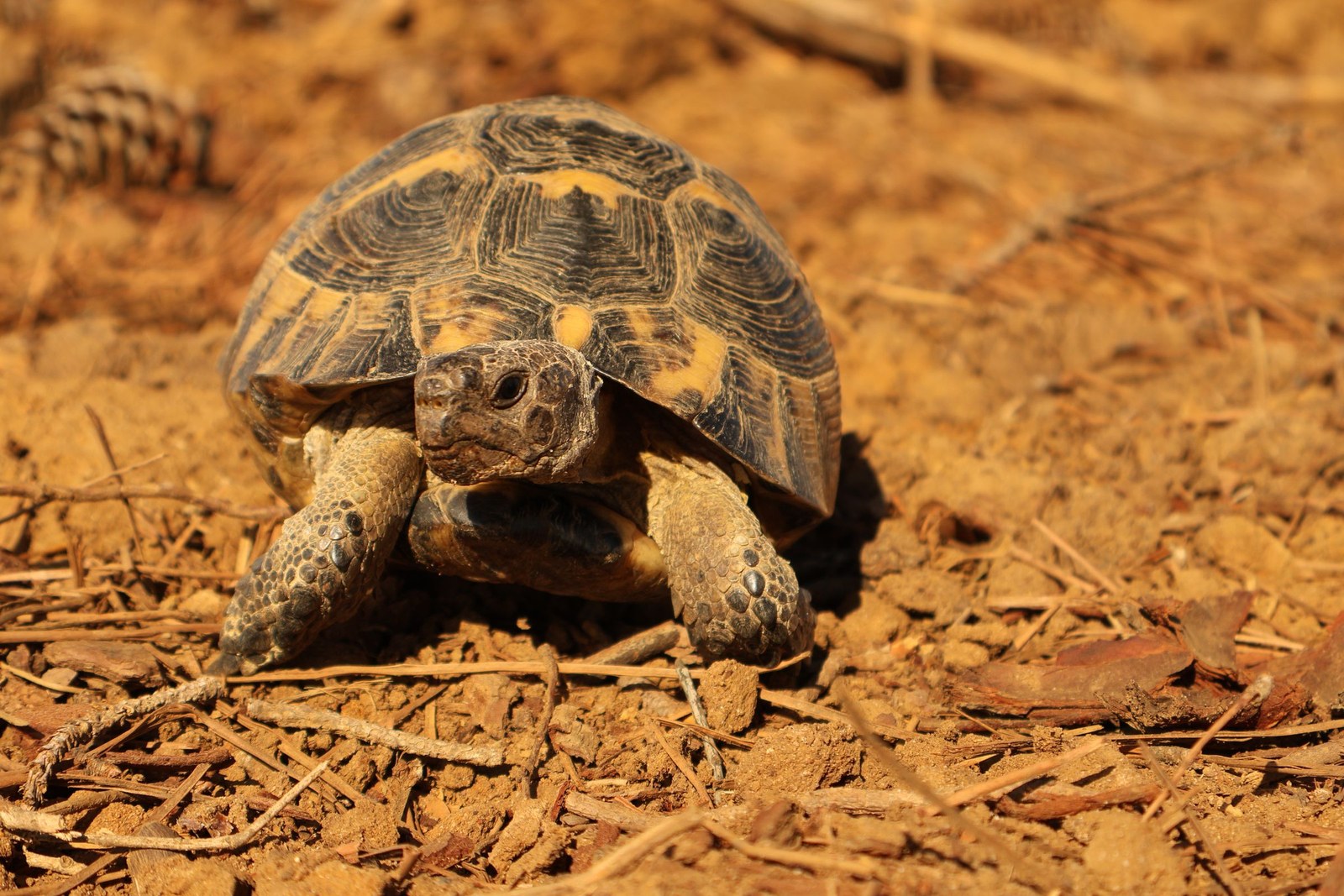
A tortoise's indoor enclosure should include a safe substrate for digging, a hide at both the warm and cool ends, a shallow water dish it can climb into for a soak, and a basking lamp plus UVB lighting. Add flat rocks or cuttlebone for natural beak and nail wear, and keep every piece of decor sturdy so nothing can tip onto your tortoise. Think of it as a small landscape with choices, not a box with a bowl.
Substrate and Hides: The Foundation
Choose a substrate your species can dig and burrow in safely — many keepers use soil-based mixes suited to tortoises, kept slightly moist in places for humidity without being soggy throughout. Avoid substrates that are dusty when dry, sharp, or likely to be eaten in quantity, and check recommendations for your exact species, since a Hermann's tortoise and a young sulcata have different needs and very different growth ahead of them.
Hides at both ends let your tortoise thermoregulate while still feeling secure. A tortoise that must choose between being warm and feeling hidden will stress over that choice daily. Hides can be simple — a sturdy half-log, a plant pot on its side secured against rolling, or a purpose-built shelter — as long as the entrance fits comfortably and the structure cannot collapse. Add a humid hide area for species and youngsters that benefit from it.
Heat, Light, and Water
Place the basking lamp at one end to create a warm spot with a gradient down to a cooler end, verified with a thermometer at tortoise height. UVB lighting must cover the basking zone without glass in between, and bulbs need replacing on schedule as UV output fades. A consistent day-night light cycle, ideally on a timer, keeps behavior and appetite regular.
The water dish should be shallow, heavy, and easy to step into and out of, with water changed daily. Many tortoises soak themselves if the dish truly fits them; a dish they can only drink from at the edge is too small. Position it away from the hottest spot so it does not warm excessively, and check that substrate dragged into it gets cleaned out promptly.
Enrichment, Wear, and Safety
Flat rocks around the basking and feeding areas give natural wear for nails and beak as your tortoise walks and eats across them. A cuttlebone provides calcium and beak exercise and is a staple in many enclosures. Feed on a flat slate or tile rather than directly on substrate to reduce accidental ingestion and add a little more beak wear.
Edible-safe plants, repositioned decor, and a varied terrain of gentle slopes keep a smart, persistent animal engaged. Safety-check weekly: decor must not create a tipping trap in corners — tortoises famously flip themselves climbing — cables must be out of reach, and there should be no small items that can be bitten off and swallowed.
Covering the Daily Routine With Care Teams
Indoor tortoise care is a chain of small daily jobs that are easy to drop: morning light checks, fresh water, spot cleans, soaks, and evening checks. KinsLe's Care Teams let you assign duties like daily soaks, spot cleans, and light checks to family members, with timestamped completions so everyone can see the routine was covered that day. It turns good intentions into a visible, shared rhythm. In the Care Teams plan on KinsLe, each job is written down beside a named family member — spot cleans, soaks, fresh water, and the morning check of the basking light — and each completion is marked off as it is done, so the routine never rests on memory alone.