
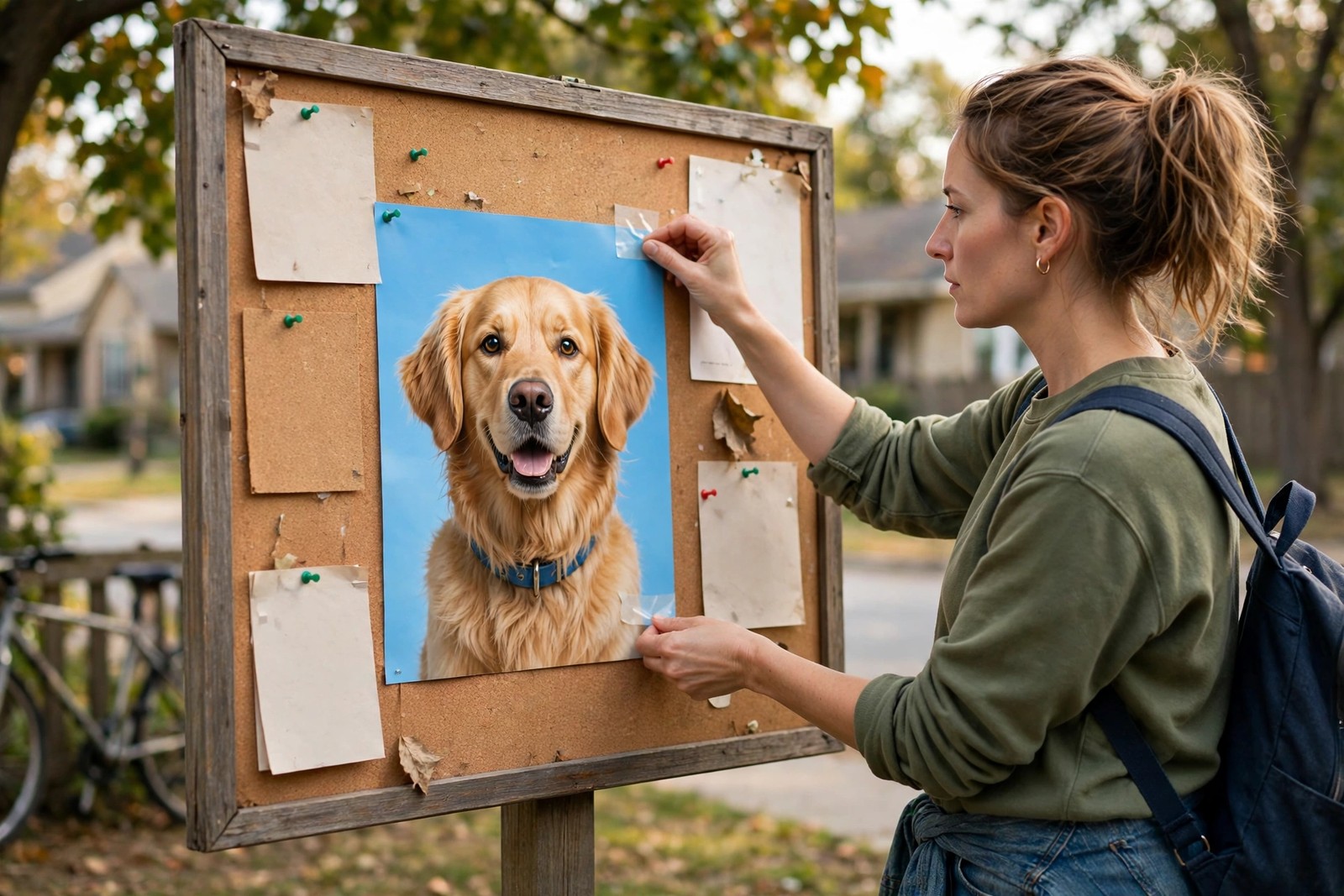
A good lost dog flyer has one large, clear, recent photo of your dog, the word LOST in bold letters, your dog's name, breed or mix, size, color, and distinctive markings, the area and date they went missing, and your phone number printed big enough to read from a car. That is the core — everything else is support.
Choose the Photo Like a Stranger Would See It
Pick a photo that shows your dog's whole body and true coloring in natural light, not a dark snapshot, a costume picture, or a group shot with three other dogs. A finder scanning a bulletin board has two seconds to decide if the dog in their yard matches your flyer. If your dog has one floppy ear, a white chest patch, a docked tail, or a distinctive spot, choose the image that shows it, or add a second smaller photo highlighting it.
Update the photo if your dog's coat has changed. A shaved-down poodle, a puppy who has doubled in size, or a senior whose muzzle has gone gray will not match an old picture, and mismatches cost reunions.
The Details That Belong — and the Ones That Don't
Include:
- Name, breed or best-guess mix, weight or size, and sex
- Coat color and any markings a stranger could spot from a distance
- Collar color, if your dog was wearing one
- Cross streets or neighborhood where your dog was last seen, and the date
- Your phone number in the largest type on the page, plus a backup number if you have one
Leave your home address off the flyer. Also hold back one identifying detail — a specific marking, a tooth quirk, or the exact collar pattern — so you can ask callers to describe it and confirm a sighting is really your dog. Mention if your dog is shy and ask people not to chase, but to call you immediately with the location instead. If you offer a reward, a simple "REWARD" works; you do not need to print an amount.
Make It Impossible to Miss
Print on bright paper if you can, use a bold headline, and keep the layout uncluttered. Post flyers at intersections, trailheads, dog parks, vet offices, groomers, pet stores, and community boards within at least a mile of where your dog vanished, with the photo facing foot and slow car traffic. Slip copies into neighbors' doors, and ask permission before taping flyers to poles or mailboxes where local rules apply.
Replace weather-damaged flyers, and expand your circle if days pass. Keep a digital copy ready to share in neighborhood groups and lost-pet pages, using the exact same photo and wording so sightings stay consistent.
How KinsLe Speeds Up Flyer-Making
When minutes matter, you should not be hunting through your camera roll. On KinsLe, your dog's profile already holds a current photo and key details behind its unique QR ID, so you can pull up accurate information instantly to build your flyer and verify callers. A finder who encounters your dog can scan that QR ID and reach you directly, which works alongside the paper flyers on every corner.
Keep that profile photo fresh as your dog grows and grays, and you will always be ready. Verified QR ID Pet Profiles turn a found dog's collar into a way home: a quick scan of the code on its collar opens the profile on KinsLe; the finder can then contact you directly instead of guessing who to call.