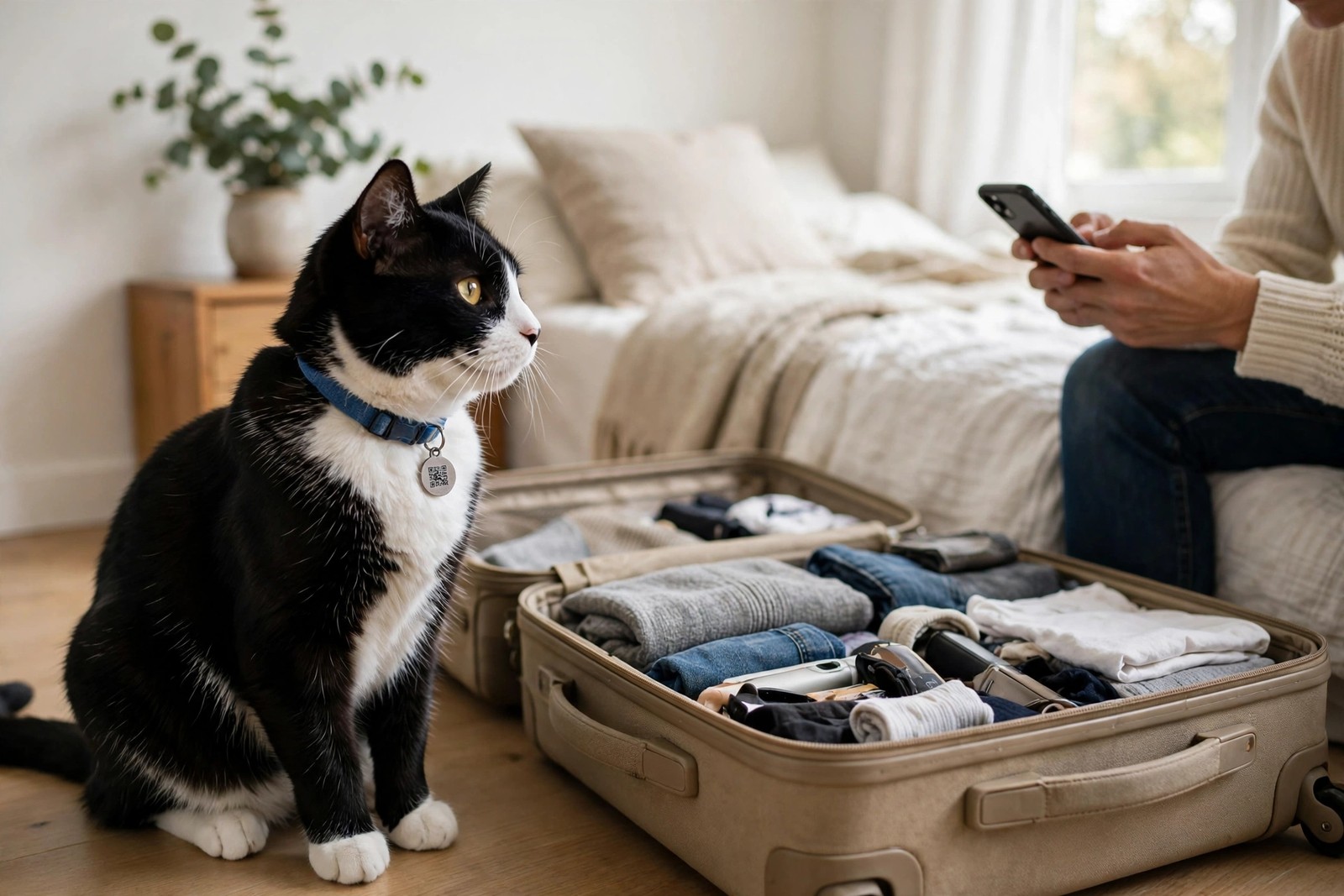
A microchip only reunites a cat if the registry entry behind it points at people who answer. A two-week vacation changes exactly that: you may be abroad, on a different number, or slow to see messages, while the person actually holding your cat is a sitter whose details are nowhere on the record. Spend fifteen minutes on the registry before you travel, because an escaped cat found on day three cannot wait for you to land on day fourteen.
Check the Core Details You Will Be Reached On
Log in to the registry that holds your cat's chip, or call it, and read every field rather than assuming. The mobile number should be the phone you will carry on holiday, switched on and able to take calls, not a landline at an empty house or an old work number. Check the email address is one you will actually open while away, and confirm the home address is still where your cat lives. Then verify the match itself: the chip number stored on the registry should be identical to the number on your vet's record and any paperwork from implantation. Registration is also worth confirming outright, because a chip can be implanted without the registration ever being completed, and an unregistered chip leads a finder nowhere.
Add the People Who Are Actually There
If the registry lets you add a secondary or temporary contact, add your sitter or house-sitter by name and mobile number for the length of the trip, and tell them you have done it. A finder, vet, or rescue that scans your cat will then reach someone local who can collect her the same day. Add or refresh a local emergency contact as well: a nearby friend or family member who knows your cat, knows where her carrier is, and has your vet's number. Leave that same person a short written note covering feeding, the vet's address, and permission to authorize urgent care, because the chip record itself holds contact details, not care instructions. Remove the temporary contact when you get home so the record stays accurate.
Reduce the Escape Risk the Record Cannot Fix
The best registry entry is the one nobody needs, so pair the paperwork with door discipline at home. Ask your sitter to use one entrance, to check where your cat is before opening it, and to keep her out of the hallway during arrivals with shopping and luggage, because escapes often happen in the first distracted moments of a visit. If your cat is normally indoor-only, say so plainly in the sitter's notes, and if she does slip out, the sitter should know to leave the door she left by ajar with food inside rather than chasing her down the street. Agree in advance who rings the registry, the local vets, and any rescue if she is missing for more than a few hours.
Test the Whole Route Before You Go
Ask your vet or a rescue to scan your cat at her next visit, or pop in before the trip, to confirm the chip still reads and sits where a scanner will find it, because chips can occasionally migrate under the skin. Save a screenshot or printout of the registry entry with the chip number, and leave a copy with your sitter alongside a recent clear photograph of your cat. Check your collar tag too, if your cat wears one, since a worn or outdated tag wastes a direct route a finder has. If anything on the registry is wrong and cannot be fixed online, phone the registry rather than leaving it, and note who you spoke to. Refreshing the contact details on your cat's KinsLe Verified QR ID Pet Profiles at the same sitting means a finder who scans her collar reaches current details straight away, while the registry update covers the chip route behind it.