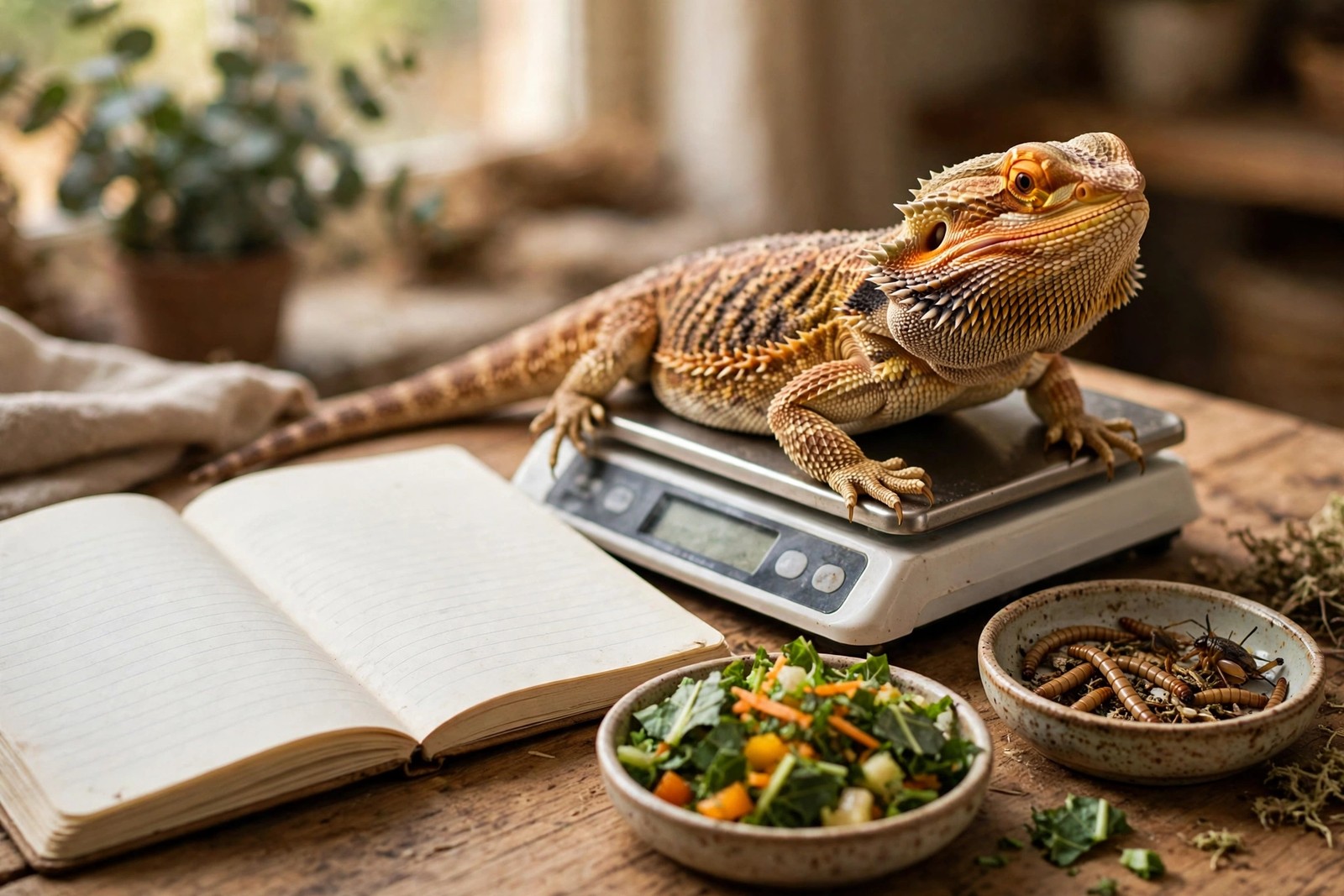
At a vet visit months from now, 'he has been off his food a bit' starts a guessing game, while a log that shows insect counts falling for three weeks, salad untouched since a UVB tube aged out, and weight flat through it all starts a diagnosis conversation. The difference is fields. A useful bearded dragon feeding log records the same specific things at every feed, in the same order, so patterns survive the gap between writing and reading.
Food In and Food Refused, Split by Type
Keep two food columns, because the two halves of the diet fail in different ways. In the insect column, write the kind and the count offered and the count eaten — crickets, locusts, dubia roaches or black soldier fly larvae, with sizes if you buy more than one size — since a dragon dropping from twelve insects to three is showing you something a total would hide. In the salad column, list the ingredients served, such as butternut squash, dandelion greens and bell pepper, and mark whether the salad was eaten, picked at or ignored. Refusals are data: a dragon that still hunts insects but has stopped touching salad, or the reverse, gives a vet a far narrower starting point than a general loss of appetite. Note treat insects separately, so waxworms offered as a bribe do not blur the staple pattern.
Dusting, Stool and Weight
Add a supplement column and tick which dusting was given at that feed — calcium or a multivitamin — following the schedule your vet has advised for your dragon's age. Months later, that column proves whether mineral intake was steady or patchy, which matters in any conversation about bone and shell health. Record stool on the day it appears: whether it was passed, whether it was well formed, and whether the white urate portion looked normal and soft rather than hard and chalky, because stool is the diet's output report and changes often show there first. Once a week, weigh the dragon on a gram scale and write the figure in the log's weight row, always at the same point in the routine, so growth in a youngster and slow drift in an adult both read as clean trends.
The Setup Numbers Behind Appetite
Appetite in a bearded dragon runs on heat and light, so the log should carry the enclosure numbers that explain it. Note the basking spot and cool-end temperatures whenever you check them, and write them beside any appetite change — a dragon that stops eating the week its basking spot slipped is a husbandry story, not a mystery illness. Record the date the UVB tube was fitted in the log's header, and note the date it is replaced, because tubes lose their ultraviolet output long before they stop glowing, and a vet reading the log will look for exactly that gap. Shed dates belong here too: many dragons eat less in the days around a shed, and a shed note stops a normal pause from looking like the start of a decline.
What the Vet Reads From It
Six months of these fields answer the questions a vet actually asks: when the change began, whether it tracked a setup change, whether growth kept pace, whether supplements were consistent, and whether stool changed with appetite. Short daily lines beat occasional long essays, because consistency is what makes trends visible. KinsLe's Pet Passport keeps the log together with your dragon's weight record and vet notes as one portable packet, so you hand over the whole story at the visit instead of reconstructing it in the waiting room.