
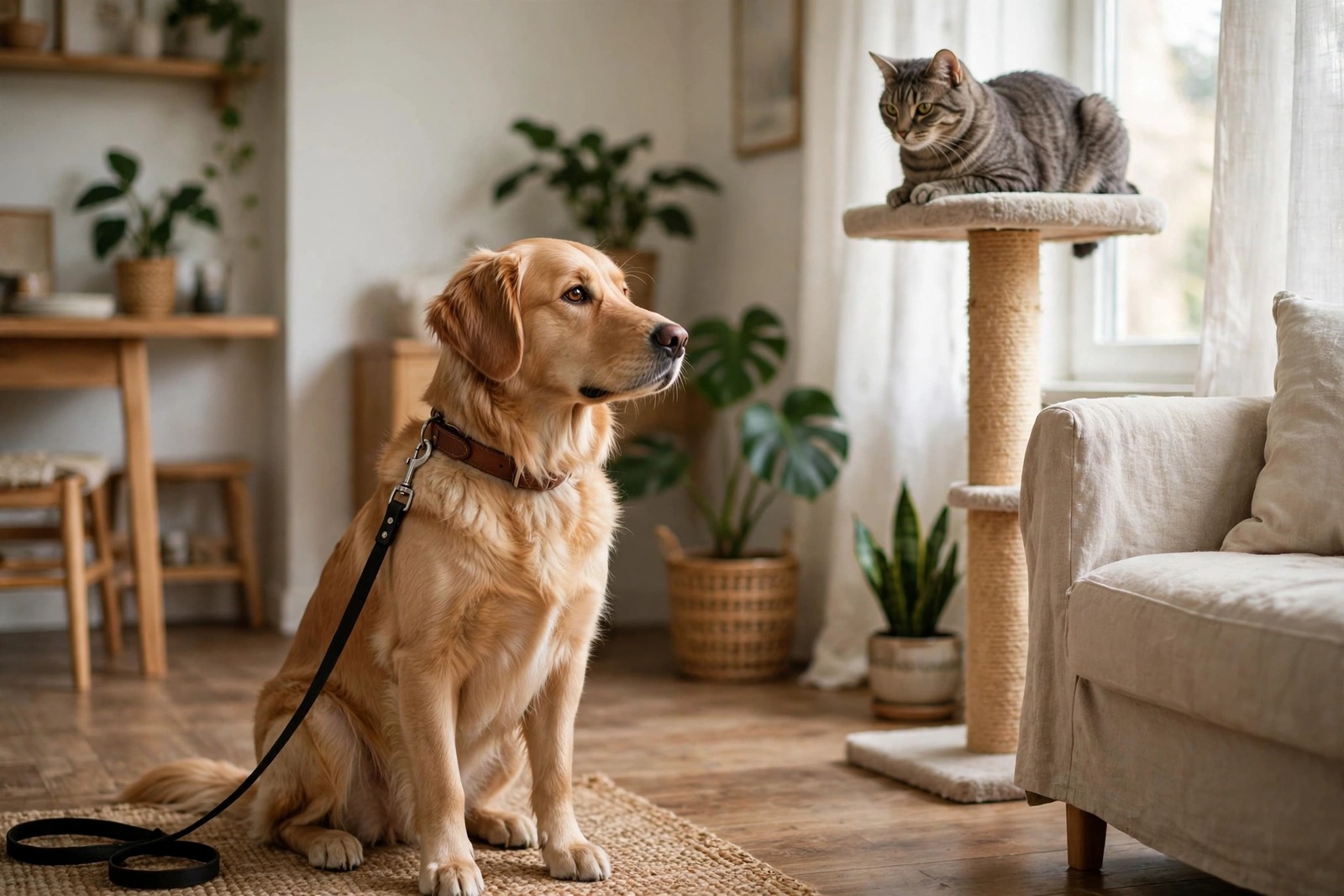
The first face-to-face meeting should be short, leashed, and entirely on the cat's terms: your dog stays on a leash at a comfortable distance, your cat is free to approach, watch from a perch, or leave the room altogether — and the cat must always have a high perch or a clear exit route available. If your dog shows a stiff, fixated stare, a closer meeting is the wrong response; step back and return to barrier work first.
Before You Open the Door
This meeting only happens after the earlier stages have gone well: both animals eating calmly on opposite sides of a closed door, relaxed visual contact through a gate, and your dog able to look at the cat and then back at you for a treat. Choose a room your cat knows well, with furniture to climb and a doorway the cat can slip through but the dog cannot follow. Tire your dog out with a walk or play session first — a dog with the edge taken off is a dog who can think. Have genuinely high-value treats ready, the kind reserved for exactly this: small pieces of chicken or cheese beat a dry biscuit when a cat is in the room.
How the Meeting Itself Should Run
- Bring the leashed dog in and settle at the far side of the room. Let the cat enter — or not — on their own.
- Reward every glance at the cat that turns back to you. That reorientation is the behavior you are building.
- Keep the leash loose. A tight leash telegraphs tension straight down the line to your dog.
- End after a few minutes, while it is still boring. Boring is a triumph.
- Repeat daily, closing distance only as both animals stay loose and disinterested.
Watch the dog's body, not just the cat's. Soft eyes, a gently wagging whole body, and easy treat-taking are green lights. A frozen posture, hard stare, raised hackles, whining that escalates, or refusing food are all signs to increase distance and return to gate work for a few more days.
Mistakes That Set Introductions Back
Never carry the cat over to "meet" the dog, never let the dog rush up to a resting cat, and never scold a growl — a growl is information, and punishing it removes the warning without removing the feeling. The most damaging mistake is allowing one chase: a single thrilling pursuit can install a habit in a young, drivey dog (young herding and terrier types are the usual suspects) that takes weeks of careful work to undo. Keep the leash on until shared time has been calm many times over, even if your dog seems angelic — seeming is not the same as proven.
When to Bring in Professional Help With KinsLe
If meetings stay tense after a couple of weeks of patient work, if your dog cannot disengage from staring, or if there has been any snap, lunge, or chase, bring in help rather than pushing through. KinsLe's Pet Services Directory can help you find a local trainer experienced with dog and cat introductions, who can watch your particular animals in your particular rooms and adjust the plan in ways general advice cannot. There is no prize for doing this unaided, and a good outcome is worth far more than pride. Pet Services Directory on KinsLe turns up local trainers who handle first meetings between dogs and cats, so outside eyes can reset a stalled introduction in your own rooms.