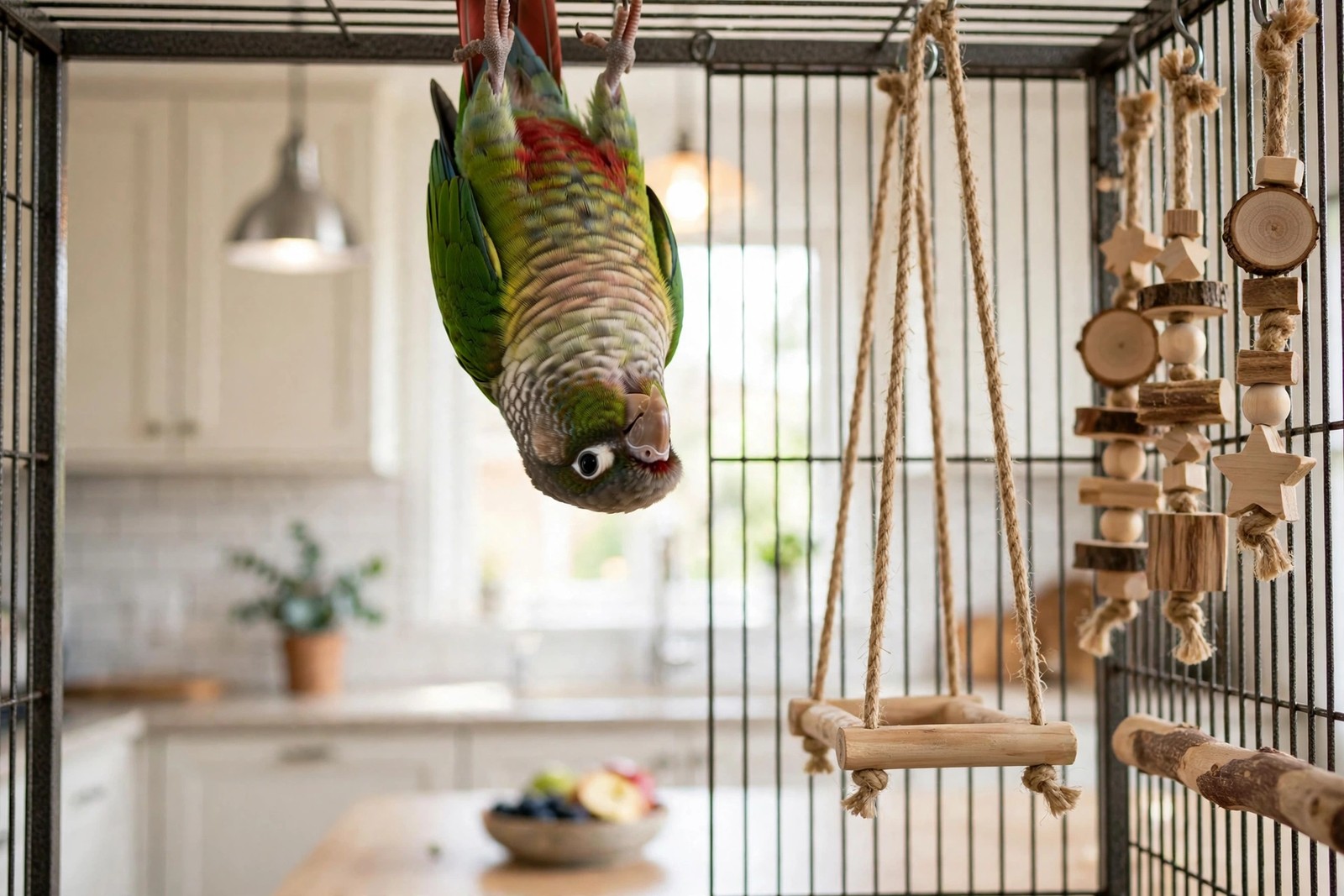
A green-cheeked conure needs a cage at least 24 inches wide, 24 inches deep, and 24 inches tall, with bar spacing of 5/8 to 3/4 inch. That is the minimum for one of the smaller conures. A sun conure, a janday, or any of the larger species needs a bigger footprint, so aim for a cage at least 32 inches wide and give the bird room to hang upside down, flap hard, and swing a toy without striking the bars.
Size for a bird that uses every inch
Conures do not sit still. They climb the bars, hang from the roof, wrestle toys on the cage floor, and take short, busy flights between perches. A cage that is only tall wastes most of its volume, because a conure crosses a cage sideways far more often than it drops down through it. Leave a clear middle for flight and put perches at different heights at the ends. Check that the tail, which is long in most conures, clears the bars and the floor grate when the bird sits on its lowest perch, and keep dishes where a playful bird cannot easily tip or foul them.
Strong bars and honest latches
Bar spacing is a safety measurement, not a style choice: too wide and a conure can wedge its head, too narrow for a larger species and toes can catch as it climbs. Judge the gauge as well as the gap. Conures have powerful beaks for their size and work at welds, corners, and door catches, so pick powder-coated or stainless bars with smooth welds and a latch the bird cannot lift from inside, because many conures learn to open a simple catch within weeks. Add a lockable feeding door if you can, since reaching in through the main door invites a territorial nip from some birds.
Furnishing a conure cage
Offer perches of varied diameter and texture, a swing, and toys built to be destroyed: wood to chew, cardboard to shred, and foraging toys that hide a piece of food. Rotate toys weekly so the cage keeps changing even when its size cannot. Put the most destructible toys near a perch the bird already favours, keep a quiet corner with a higher perch for sleeping, and avoid crowding the centre. Plan a full clean weekly and spot-cleaning daily, because a conure's fresh food and enthusiastic bathing splash a wide area. Recording who handles the weekly clean, the water change, and the evening cover in KinsLe's Care Teams keeps that conure cage routine running the same way whoever is home that day.