
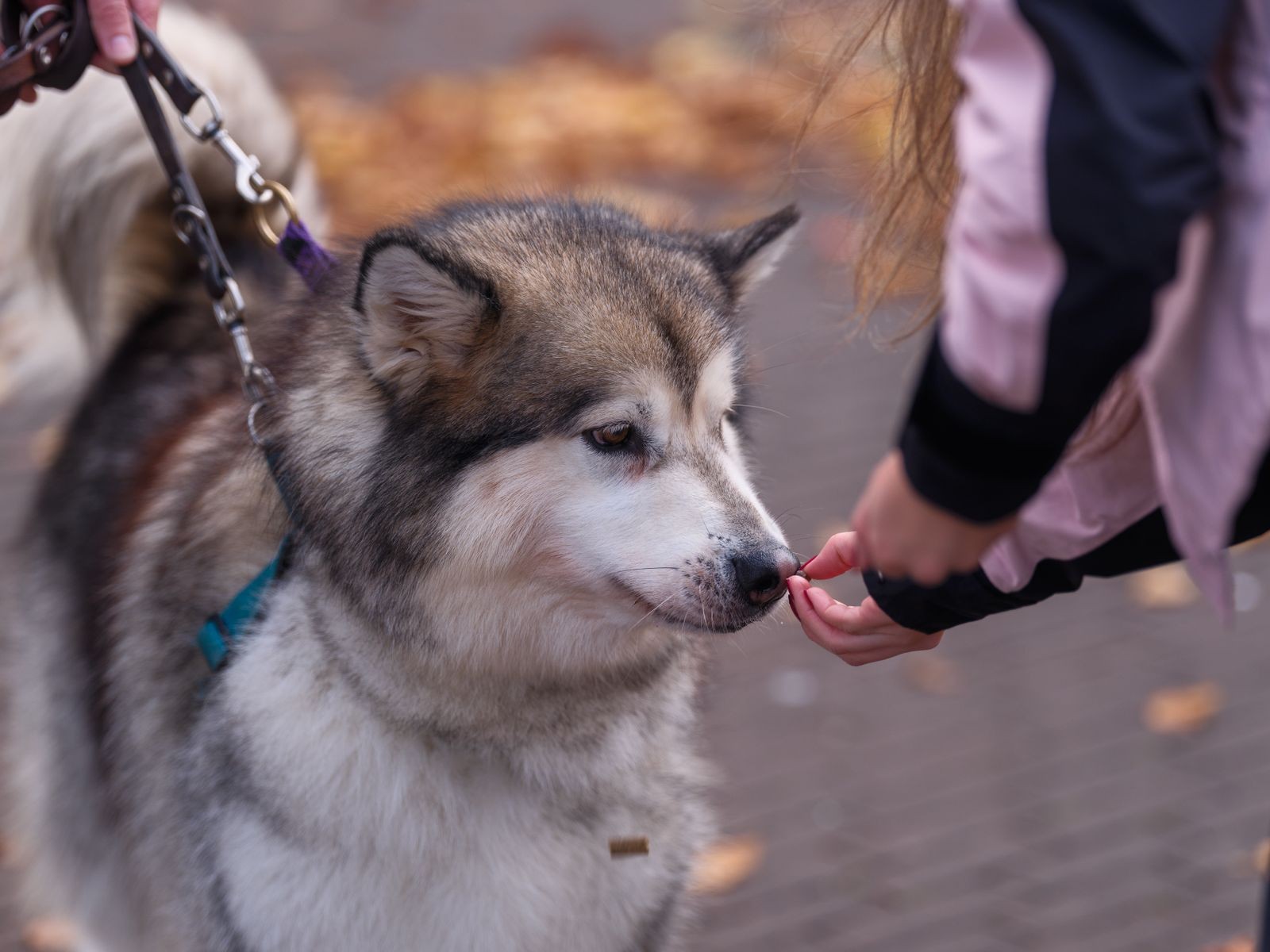
The best training treats for your dog are small, soft, and seriously smelly: pea-sized pieces your dog can swallow in a second or two, so their focus stays on you instead of on chewing. If a treat takes ten seconds to crunch through, you have lost the repetition — and in training, quick repetitions are where learning actually happens.
What makes a treat work for training
Think about the job the treat has to do. In a session you might reward thirty or fifty times, so each reward must be tiny, quick to eat, and interesting enough to compete with other dogs, squirrels, and fascinating smells. Soft treats win over crunchy biscuits because they go down fast and smell carries. Good options include tiny cubes of cooked chicken, small pieces of hot dog or cheese used sparingly, commercial soft training treats made to be low-calorie per piece, and — for low-distraction practice at home — pieces of your dog's own kibble. For recall training or anything safety-critical outdoors, upgrade to the highest-value food your dog adores; you are paying for their attention against the whole world.
Size, value, and the distraction ladder
Match the treat to the difficulty of the moment:
- At home, learning something new: small, medium-value treats or kibble; the environment is easy, so the pay can be modest.
- In the garden or on a quiet street: step up to something softer and smellier as distractions rise.
- At the park, near other dogs, or for recall: bring out the top tier — the food that makes your dog's head spin around.
Cut or break treats down before the session starts, keep them in a pouch at your hip for fast delivery, and reward within a second or two of the behaviour you liked. For tiny dogs like Chihuahuas, 'pea-sized' means truly tiny — their calorie budget is small and treats add up fast.
Balancing treats against meals
Training calories are real calories. On heavy training days, reduce the regular meal slightly to compensate, or take treats out of the daily allowance by using part of their kibble for easy repetitions and saving special treats for breakthroughs. Watch body condition over weeks, not days. Puppies need meals kept nutritionally complete, and dogs on special diets need treat ingredients checked as carefully as food — ask your vet rather than improvising with rich scraps.
Treats are only half the reward system
Food is powerful, but it is not the only currency. Many dogs — retrievers especially — will work for a thrown ball, a tug game, or praise, and mixing rewards stops you becoming a vending machine your dog only listens to when you smell of chicken. Also use 'life rewards': being released to sniff or greet a friend. Fade food rewards gradually for learned behaviours, paying intermittently like a slot machine, while always paying generously for recalls and new or difficult work.
Keep the whole household consistent
Training unravels when one person uses chicken and clear rules while someone else hands out biscuits for looking cute. KinsLe's Family Sharing gives your dog a per-pet care circle with roles, so family members and regular helpers can all follow the same training treats, portion adjustments, and house rules — what is being taught, which words are used, and what never gets rewarded, like jumping up. Open the Family Sharing view on KinsLe before training, and every helper can check the same treat list, portion adjustments, and cue words, so rewards stay consistent from person to person.