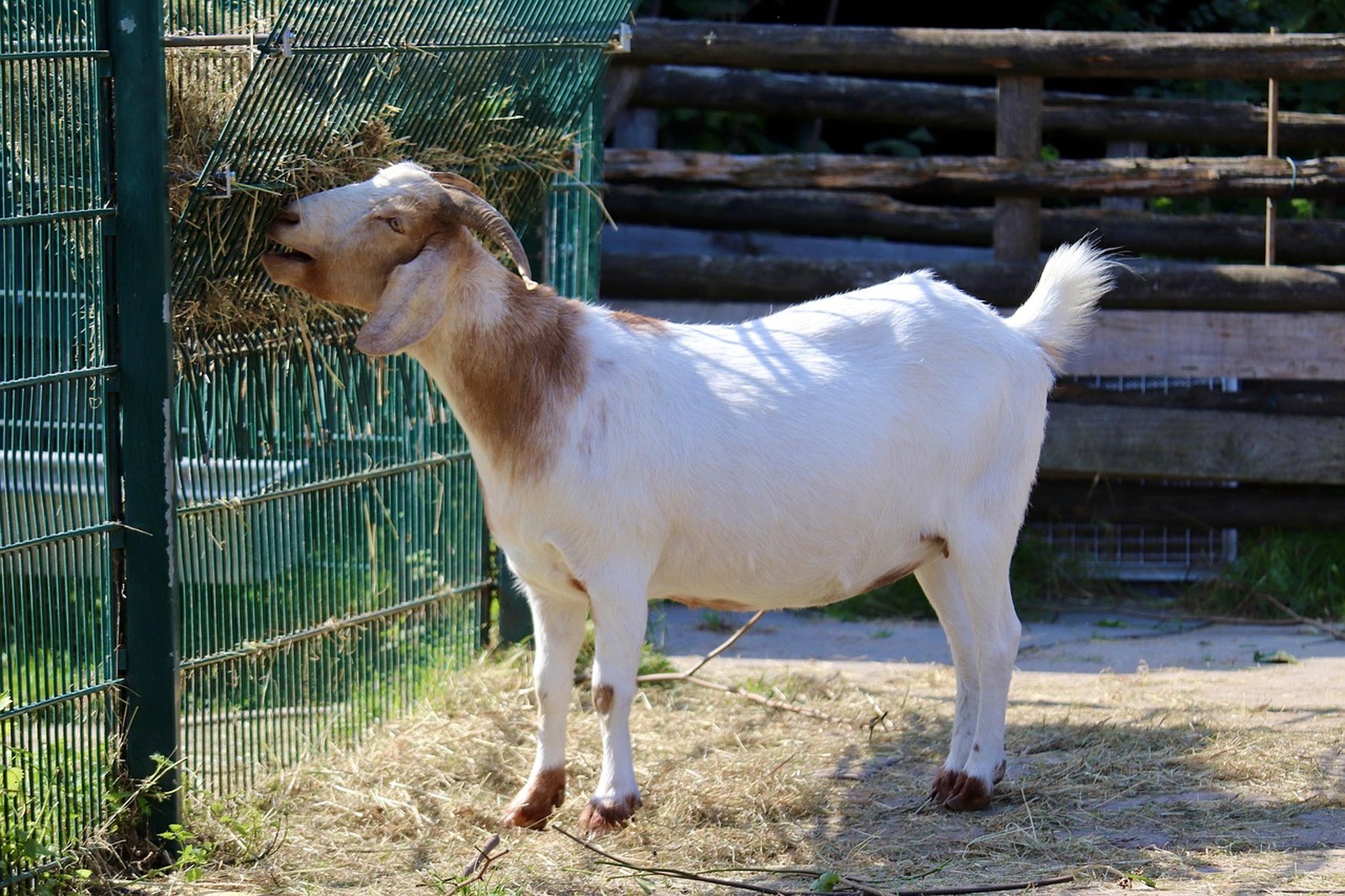
Goats enjoy treats and work eagerly for them, but a treat is only safe when the food itself suits a ruminant gut and the amount stays small against a diet that should remain mostly hay and forage. Small pieces of familiar fruit and vegetables, offered a few at a time and introduced one food at a time, are the reliable pattern.
Fruit and vegetable treats goats usually enjoy
Apple cut into small chunks with the seeds removed, carrot in batons or coins, and slices of banana, skin included for many goats, are widely accepted. Watermelon flesh and rind, pumpkin and squash flesh, cucumber, courgette and celery pieces all work as fresh, watery treats on a warm day. A small handful of raisins makes a high-value training reward for leading, hoof trimming practice or loading, precisely because it is sweet and should stay occasional. Black oil sunflower seeds, offered in a small handful, are another popular reward and add a little oil to the coat ration. Cut everything to a size the goat can chew comfortably, because an excited goat bolting a large apple chunk can choke; flat, small pieces are safer than balls and whole fruit.
How much, and how to introduce a new treat
Treats should stay a garnish on the day, not a second meal. A practical pattern is a small handful per goat at a time, once or twice a day, adjusted down for miniature breeds and youngsters. The rumen is a fermentation system tuned to fibre, and a sudden load of sweet or starchy food can cause bloating, scouring and a miserable goat, so introduce any new treat in a few pieces on the first day and build up over several days while you watch droppings and appetite. Sweet grain mixes and bread are the usual culprits when treats cause trouble: goats adore both, and both ferment fast. If several people visit your goats, agree one treat pot and one amount, because the goat will not tell the fourth visitor that three people have already fed it. Wethers deserve extra restraint with grain-based treats and rich extras, since their urinary tract is vulnerable; leafy and vegetable treats are the kinder default for them.
Plants and foods that must never be offered
Azalea and rhododendron are highly poisonous to goats and even a small quantity of leaves can cause vomiting, drooling, weakness and collapse. Oleander, yew, foxglove and lily of the valley are also highly poisonous, as are wilted wild cherry leaves, which become more dangerous as they wilt after a branch falls. Nightshade family leaves, including potato and tomato foliage, rhubarb leaves and green potatoes should never be fed, and ornamental shrubs should be treated as unsafe unless you have positively identified them as harmless. Never offer chocolate, caffeine, alcohol, mouldy feed or dog and cat food, and keep goats away from garden clippings whose contents you have not checked plant by plant; well-meaning neighbours tossing hedge trimmings over a fence are a recurring cause of poisoning. If a goat eats a plant you cannot identify, or shows drooling, bloating, staggering or repeated retching, call your veterinarian promptly rather than waiting to see whether it passes.
Using treats for training instead of just feeding
Because goats are quick learners, the same safe treats do more work when they pay for behaviour: stepping onto a stand for hoof care, walking to a target, standing quietly for an injection, or coming to call across a field. Keep pieces small so a training session can include many rewards without adding up to a meal, and deliver the treat the moment the behaviour happens. Note which treats each goat values and which it ignores, since individuals differ sharply. KinsLe's Care Teams helps here by letting you attach a short treat note and a named treat duty to each goat's routine, marked complete with a timestamp, so training rewards stay consistent and nobody doubles them up.